
Alfred Maudslay found the carved stone already fallen. His diary entry for 19 March 1882 records the lintel at Yaxchilan and the instruction to shave it down for removal. The stone went to Britain. Its carving shows a torch held above Lady K’abal Xook as she draws a thorn-studded rope through her tongue, with writing arranged around the scene.[1]
Modern readers can connect those signs with people and events. The route to doing so required two discoveries to meet: that Maya writing recorded sounds, and that many monumental texts told histories of human lives. Yuri Knorozov helped establish the first; Tatiana Proskouriakoff made a decisive case for the second. Their approaches eventually let readers ask what a named person did on a particular date.[3]
That achievement concerns the scholarly decipherment of an earlier script. Maya people and Mayan languages had continued through the centuries in which European scholars could not read the Classic inscriptions. The words being recovered belonged to their history, with living languages offering part of the knowledge needed to understand them.[2][7]
The wrong kind of alphabet
Diego de Landa destroyed Maya books in the sixteenth century and later recorded information about Maya life and writing. The contradiction is difficult to escape: a man involved in suppressing the written tradition also left a document that became useful in its decipherment. That later usefulness does not undo the destruction.[4]
His account contained signs matched to Spanish letter names, the so-called Landa alphabet. Landa was asking about one kind of writing while his Maya informants supplied signs working within another. If a sign represented a syllable, treating it as a single alphabetic letter would lead the reader astray. The record held useful information inside a mistaken expectation.[3][4]
Numbers and calendars proved more accessible than most words. Constantine Rafinesque recognised the values of dots and bars in the nineteenth century; Ernst Förstemann later worked through astronomical and calendar material in the Dresden Codex. Those advances established that detailed calculation survived in the books, without yet making the wider inscriptions readable.[7]

Only a few Maya screenfold books survive. Dresden, Madrid and Paris gave their names to three long-recognised codices. A fourth, formerly called the Grolier Codex, faced a prolonged dispute over authenticity. A study published in 2016 by Michael Coe, Stephen Houston, Mary Miller and Karl Taube made a strong case for its authenticity and thirteenth-century date.[5]
The few surviving books could not stand for everything once written. Stone inscriptions, painted vessels and other objects supplied different kinds of text, each with its own conditions of survival. Readers needed to understand the system across those materials, rather than assuming every unfamiliar sign was another calendar symbol.[2][6]
A dog supplies a sound
Knorozov treated Landa’s record as evidence for syllables. A sign could represent a consonant followed by a vowel, making the script partly phonetic. Testing that possibility against the codices gave him a way to compare an apparent spelling with the language and with the picture beside it.[3][8]
One example concerned a dog. A proposed reading of a sign as tzu helped connect the written form with a word for the animal. The picture did not serve as a translation of the whole script. It offered a controlled place to test a relationship between signs and sounds, which could then be tried elsewhere.[6]
His work, published in 1952, challenged a powerful view in Maya studies. J. Eric S. Thompson had contributed substantially to calendrical research and the cataloguing of signs, but resisted Knorozov’s phonetic approach. A difference over how writing worked became entangled with the authority of established scholarship and the divisions of the Cold War.[7][9]
Michael Coe later criticised Thompson’s influence in unusually strong terms. That judgement came from a participant in the debate, not a neutral observer looking down on it. The important change was a method that could generate readings and expose them to further tests. Scholarly standing could not make a proposed sound value succeed or fail across the texts.[4][3]
A dramatic story about Knorozov rescuing codices from wartime Berlin often accompanies the discovery. The accounts are inconsistent, and he disputed the burning-library version. The sound-sign argument does not require that adventure. It rests on what he did with reproductions and language, work that can be assessed without an origin scene from a fire.[8][9]
Peter Mathews and Péter Bíró describe the resulting system as logosyllabic: it combines signs for whole words with signs for syllables. Knorozov had supplied a crucial way in, while individual readings still needed correction and expansion. Understanding the kind of script was a beginning to reading particular texts.[10][3]
Proskouriakoff gives the dates a lifetime
Tatiana Proskouriakoff arrived at Piedras Negras with training in architecture. Her drawings reconstructed buildings from surviving remains, requiring close attention to what the stones could support. A staircase she proposed was found when excavators tested the ground. Her ability to see structure in incomplete material later served another kind of reconstruction.[11]

She studied the site’s stelae in groups. Each series began with a figure seated within a niche, followed by monuments carrying further dates. Rather than treating the images as a procession of gods, she considered whether the groups belonged to the careers of rulers. The intervals began to resemble events within human lives.[12]
Some repeated dates could be understood as births; others as accessions. The sequence held across several groups of monuments. A date associated with an event had a relationship with later dates in the same reign, making the proposal testable beyond a single attractive example.[12]
Her argument did not begin by sounding out all the words. It identified what kinds of events the texts recorded through the arrangement of dates and recurring signs. That historical approach could meet Knorozov’s phonetic work: one asked what the sequence described, while the other helped reveal how the words were written.[3]
Earlier scholars had suspected historical content, but Proskouriakoff made a systematic case others could build on. She then recognised comparable patterns at Yaxchilan, including name signs associated with rulers. The figures on the monuments were becoming participants in a chronology, with relationships and succession taking the place of an undifferentiated world of sacred symbols.[12]
Moises Morales opens the meeting
The first Palenque Round Table met in December 1973. Merle Greene Robertson’s account traces the idea to a discussion on the porch of her home, Na Kan-Balam, with colleagues including Linda Schele. A small gathering devoted to Palenque grew into a working conference drawing researchers and students from several countries.[14]
Moises Morales built an open-air shelter for the meetings and helped make the arrangements work. Local guides attended, and interest from people in the village led the organisers to open more sessions. Robertson’s preface records a conference whose audience and practical hosts became part of its development, rather than remaining outside a closed scholarly conversation.[14]
Schele, Peter Mathews and Floyd Lounsbury worked on the dynastic inscriptions. The meeting’s celebrated result was a reconstructed sequence of Palenque rulers, linking names with dated events. Schele had come to the field from teaching art; the collaboration brought close looking, language and chronology into shared work on the same inscriptions.[13][7][14]
Morales also suggested that the rulers receive Chol Maya names instead of English or Spanish labels. The group adopted names including Pacal, the word for shield. Robertson cautioned that these were working names, not necessarily the exact forms used by the rulers’ contemporaries. The effort to use Maya words came with an acknowledgement of what remained uncertain.[14]

That distinction kept a useful label from hardening prematurely into a final reading. Decipherment advances through proposals that can be changed when another spelling or text supplies better evidence. The conference gave those proposals people to argue with and inscriptions against which to test them.[3][14]
A tomb and a name meet at Palenque
The ruler once called Pacal is now generally named K’inich Janaab’ Pakal. He became king as a child and ruled Palenque for decades. His dated life gives a human scale to the dynastic sequences: a birth, an accession and a death, recorded within the political world of a particular city.[15]
Alberto Ruz Lhuillier had reached the burial beneath the Temple of the Inscriptions in 1952, after excavators cleared a hidden stairway. The tomb’s material evidence and the inscriptions’ account came into sharper relation as the texts became readable. Jade objects, stone and written dates belonged to one royal history, though each required its own kind of interpretation.[16]
The striking burial did not itself explain how the script worked. Nor could the written record make examination of the remains unnecessary. Decipherment let researchers bring different kinds of evidence into a more detailed conversation about the ruler and his reign, including questions that neither the tomb nor the text could settle alone.[15][16]
Pakal’s name also illustrates why earlier convenient labels had to remain provisional. A reading could become fuller as signs acquired sound values and spellings became clearer. The progress lay in explaining more of the writing, including details that an English nickname had passed over.[15][10]
A jaguar can be written several ways
The word b’alam, jaguar, can be written with a whole-word sign. It can also use that sign with syllabic hints, or be spelled through syllable signs. These are different written forms of a related reading, not necessarily different words. The scribe had choices that a reader had to learn to recognise.[10]
A syllable sign commonly combines a consonant and a vowel. It therefore does a different job from an alphabetic letter. Landa’s list became useful once readers stopped requiring its signs to behave like Spanish letters.[10][3]
A glyph block gathers signs within a compact space. The main sign may carry smaller elements around it, while an inscription commonly runs through paired columns. The expected order is generally left to right and top to bottom, though layouts can vary, especially when writing is fitted into a scene. Knowing where to look next is part of reading.[6][10]

David Stuart helped show how signs sharing a sound could substitute for one another. A text that seemed to contain too many unrelated forms could become intelligible once those substitutions were recognised. The variety expressed possibilities within a writing system, rather than evidence that each new-looking form stood for a wholly new idea.[7]
Stuart’s early work drew attention while he was still a teenager. In 1984, he received a MacArthur Fellowship at eighteen, before beginning college. His case is memorable because the achievement rested on sustained engagement with actual inscriptions: repeated signs, alternative forms and patterns that could be checked by other readers.[17]
The language behind the script remains a subject of detailed research. In a 2026 presentation, Marc Zender argued that Classic texts record a distinct Eastern Ch’olan language most closely related to Ch’orti’ and the historically recorded Ch’olti’. That is a specific linguistic proposal, not a claim that all Maya people spoke one unchanged language across centuries.[18]
Reading a sign and identifying the language it records are connected tasks, but they are not identical. Sound values can reveal a word while grammar and historical comparison help locate it within a language family. The living Mayan languages remain relevant to the comparison without being interchangeable copies of a single ancient speech.[18]
The steps at Copán lose their order
Copán’s Hieroglyphic Stairway carries a long carved text across its steps. Excavators found many blocks displaced within the fallen material, with only a portion of the stairway still in place. The later rebuilding restored a visible stair, but could not restore the exact textual order of every block.[19]
The Penn Museum’s history of the excavation identifies the loss of careful records about the blocks’ positions as a serious problem. A carved sign can remain legible while its place within a sentence is lost. Physical reconstruction and textual reconstruction therefore have different limits, even when they concern the same stone.[19]
Other monuments supplied a dynastic sequence. Altar Q presents the rulers of Copán, placing the founder Yax K’uk’ Mo’ within a line of kings. Stuart’s account follows how those names and dates made the site’s political history more accessible. A damaged text did not leave the whole city without a history, because related evidence survived elsewhere.[20]
Nor did recording inscriptions automatically protect them. At Yaxchilan, the guardian Ulíses de la Cruz and members of his family helped keep the site from looting. Their work preserved material for further study. The history of reading the stones includes the local work of making sure the stones remain there.[1]
Writing returns to the workshop
Schele’s workshops helped take methods beyond specialist publications. From the late 1980s, she worked with Nikolai Grube and Federico Fahsen in workshops for contemporary Maya participants in Guatemala and Mexico. The inscriptions could become a subject of study within communities whose histories the monuments concern.[13]
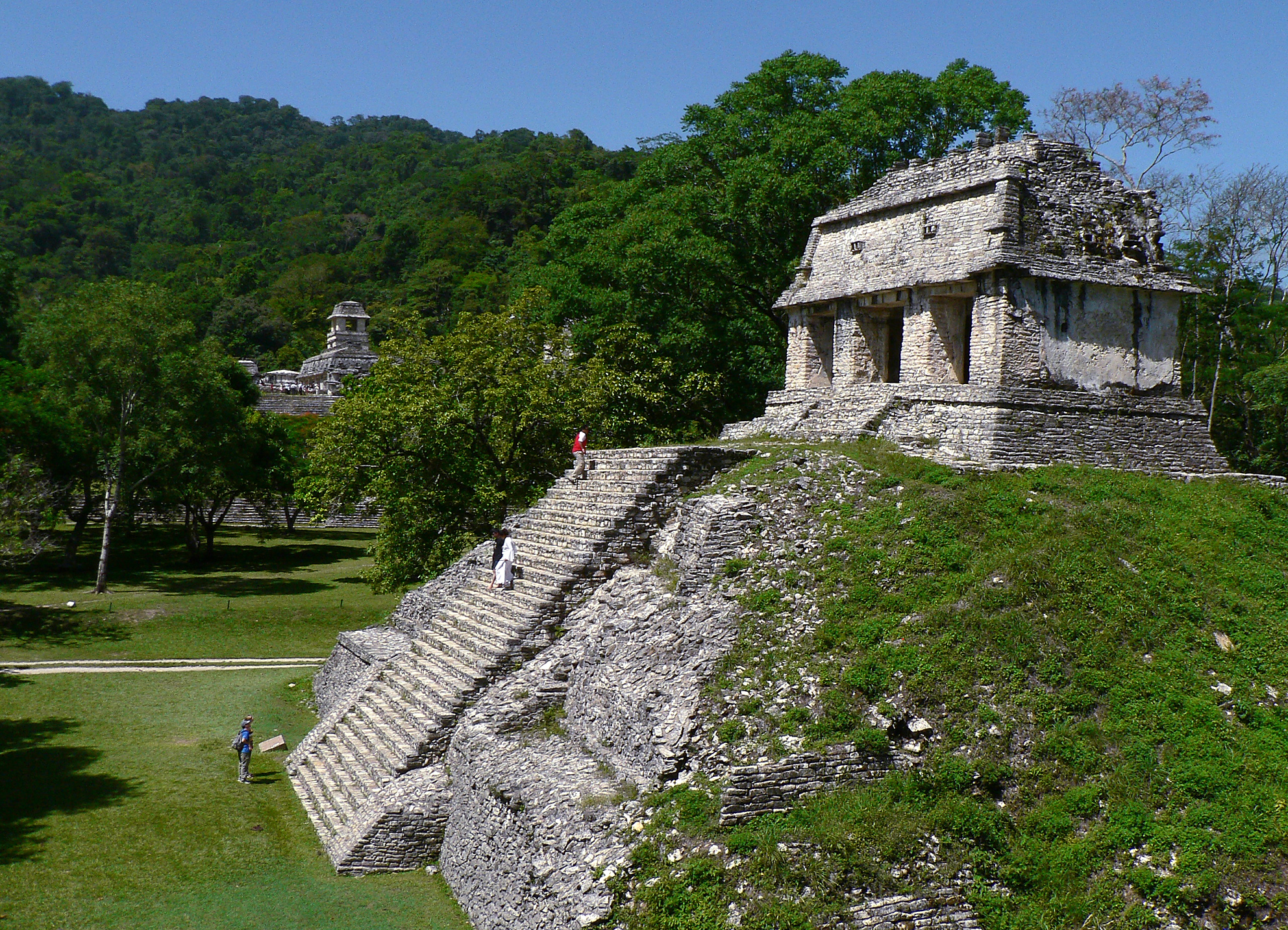
Maya communities’ later use and study of the script belong to a continuing history of language and learning. They should not be described as the return of a vanished people. The rupture lay in the transmission and scholarly reading of a particular writing system, amid conquest and its consequences; people and spoken languages persisted.[7][2]
The decipherers supplied methods rather than a final inventory of everything worth saying about the past. Historical sequences and phonetic readings made it possible to encounter particular actions and names. New texts and better comparisons can still refine what a damaged sign or an unusual spelling means.[3][10]
On the lintel from Yaxchilan, the kneeling woman and the torchbearer remain surrounded by carved words. Their images once travelled abroad on a shaved-down stone. The writing now lets a reader approach the people within the scene by more than their posture: through the names that Maya scribes placed beside them.[1][3]


Share what you know
Been there, grew up there, or know something we missed? Add a comment; corrections with a source are especially welcome.