




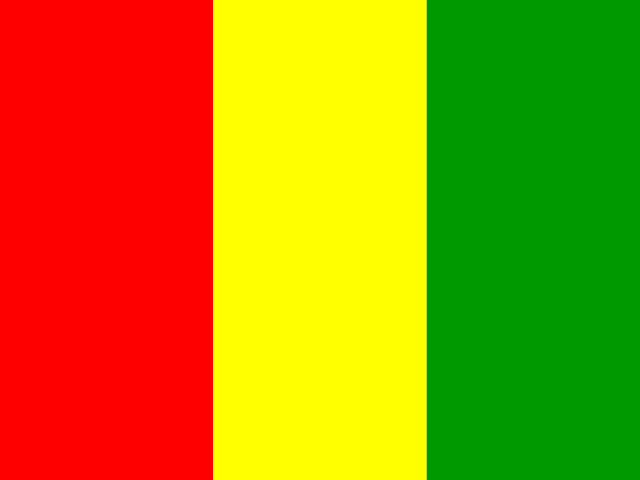

Guinea bends in a crescent across West Africa, stretching from the Atlantic mangrove estuaries of the low coast through the fractured sandstone ramparts of the interior highlands to the dense, mist-enshrouded rainforests bordering Liberia and Côte d’Ivoire. Often termed the château d’eau—the water tower of West Africa—this territory of two hundred and forty-six thousand square kilometers occupies a singular hydrological position on the continent. Within the high, sponge-like sandstone plateaus of the Fouta Djallon, heavy monsoonal rains gather in highland bogs and fissures, feeding the infant headwaters of three of West Africa’s greatest river systems: the Niger, the Senegal, and the Gambia. These continental arteries course outward in diverging arcs across thousands of kilometers of Sahelian savanna and fertile floodplains, sustaining tens of millions of farmers and pastoralists from Bamako to Saint-Louis before discharging their silt into the Atlantic Ocean.
Yet Guinea is defined as much by its deep human complexity as by its physical hydrology. Four sharply delineated geographical and cultural realms partition the nation: the coastal plains of Maritime Guinea (Basse-Guinée), home to the Susu and Baga peoples; the temperate highland plateaus of Middle Guinea (Moyenne-Guinée), dominated by the Fula pastoralists of the Fouta Djallon; the expansive northern and eastern savannas of Upper Guinea (Haute-Guinée), the ancestral Mandinka heartland of the ancient Mali Empire; and the lush, montane southern reaches of the Forest Region (Guinée Forestière), where Kissi, Kpelle, and Loma communities maintain ancient forest sanctuaries and sacred groves.

The Sandstone Fortress: The Fouta Djallon and Highland Theocracy
Rising abruptly from the coastal lowlands, the Fouta Djallon forms a labyrinth of stepped sandstone escarpments, deep river canyons, and rolling grassy plateaus elevated between nine hundred and fifteen hundred meters above sea level. Here, cool mountain breezes relieve the tropical humidity, and nocturnal temperatures can dip toward single digits during the dry harmattan season. Waterfalls such as the Chutes de Kinkon and Kambadaga plunge into dramatic granite chasms, while natural stone formations—most famously the rock outcrop known as the Dame de Mali, sculpted by millennia of wind erosion to resemble the profile of a noblewoman—crown the northern massifs near the border with Senegal.
Historically, the Fouta Djallon served as a mountain fortress and a major center of Islamic erudition. In 1725, pastoralist Fula (Peul) scholars led by Karamokho Alfa initiated a religious movement that culminated in the establishment of the Imamate of Fouta Djallon, a decentralized theocratic confederation centered at Timbo and Labé. The confederation was governed by an elected leader, the Almamy, who alternated power between two rival dynastic houses (the Alfaya and Soriya) to preserve political equilibrium. For nearly two centuries, the imamate maintained a sophisticated written legal tradition using the Arabic script adapted to write the Pulaar language (an orthography known as Ajami), fostering a rich corpus of religious poetry, theological treatises, and agricultural manuals that circulated widely across West Africa.
Today, the highland economy remains anchored in traditional cattle husbandry and intensive terrace farming. Fula households practice tapade cultivation—intricate, fenced kitchen gardens enriched with cattle manure, compost, and biochar—where women cultivate taro, sweet potatoes, fonio (an ancient, drought-tolerant African grain), and vegetables. The zebu cattle, prized for their long lyre-shaped horns, are not merely economic assets; they represent social prestige, bride-wealth, and spiritual continuity across generations.
Coastal Estuaries, Mangroves, and the Peninsula of Conakry
Descending westward from the plateau, the landscape breaks into Maritime Guinea, a low-lying alluvial littoral incised by sprawling tidal river deltas, mudflats, and thick mangrove forests. Rivers like the Fatala, the Konkouré, and the Rio Pongo twist through labyrinthine channels where Atlantic tides penetrate dozens of kilometers inland. In these brackish wetlands, Baga and Susu farmers developed sophisticated systems of tidal rice cultivation, constructing earthen dykes with hollow-log sluice gates to leach salt from alluvial mud and trap fresh monsoon rainwater for planting.

At the tip of the narrow Kaloum Peninsula lies Conakry, Guinea’s capital and primary commercial seaport. Originally founded on Tombo Island and subsequently connected to the mainland by causeways, Conakry is a linear city stretching along a thirty-kilometer spit of land between the Atlantic Ocean and mangrove lagoons. The city is crowned by the Grand Faisal Mosque, completed in 1982 through funding from Saudi King Faisal. Featuring four towering white minarets and an expansive green-carpeted prayer hall capable of accommodating over twelve thousand worshippers, it stands as an enduring architectural landmark of Guinean Islam.
Just offshore from Conakry lie the Îles de Los, a cluster of palm-fringed volcanic islands that provided early European traders with anchorages during the Atlantic slave trade. Today, the islands—particularly Kassa and Roume—serve as peaceful maritime retreats from the capital’s crowded avenues, where wooden motorized pirogues ferry commuters and market women carrying smoked fish, palm oil, and fresh pineapples. Along the mainland quays of the port of Boulbinet, hundreds of artisanal wooden pirogues unload bonga shad and barracuda directly into smoking ovens tended by coastal women cooperatives.
The coastal Baga people are also celebrated worldwide for their sculptural traditions, most notably the colossal D’mba (or Nimba) shoulder mask. Carved from a single massive trunk of hardwood, the D’mba represents an idealized mother and protector of pregnant women, harvests, and village harmony. Weighing upwards of forty kilograms, the mask rests over the dancer’s shoulders, supported by four carved legs, while raffia fibers conceal the dancer’s torso. During planting and harvest celebrations, the mask appears to tower over the village square, embodying community fertility and social cohesion. Although colonial suppression and religious conversions diminished public masquerades in the mid-twentieth century, contemporary Baga artisans along the Boffa and Rio Nuñez coastline continue to carve sacred figures that maintain their link to ancestral river spirits.
The Mandinka Savanna: Griots, the Kora, and Ancient Empires
To the northeast of the Fouta Djallon, the land flattens into the expansive, sun-bleached savanna of Upper Guinea. Centered on the historic trade hub of Kankan and the upper reaches of the Milo and Niger rivers, this region forms the historic cradle of the Mandinka (Maninka) people. During the thirteenth century, the legendary warrior-monarch Sundiata Keita unified regional clans to establish the Mali Empire, formalizing the Kurukan Fuga—one of the world’s earliest oral charters of human rights, which established social divisions, professional guilds, peace covenants, and judicial protections across the western savanna.
Upper Guinea remains the spiritual heart of the West African bardic tradition. Here, hereditary oral historians and musicians known as griots (or jeliw) preserve centuries of dynastic genealogies, moral epics, and social philosophy. Their primary instrument is the kora—a twenty-one-string harp-lute fashioned from a massive halved calabash gourd covered in cowhide, fitted with a rosewood neck and two parallel rows of fishing-line strings. Alongside the kora, the wooden xylophone known as the balafon (specifically the sacred Sosso-Bala, preserved as an Intangible Cultural Heritage of Humanity in the town of Niagassola) resonates through community gatherings, wedding feasts, and naming ceremonies.
Kankan, the regional metropolis, is also home to the sacred Milo River. Each May, thousands of fishermen converge for the traditional Fête de la Mare (Damba Festival), where local hunters and fishermen cast throw-nets simultaneously into a designated sacred pool to catch giant freshwater catfish, accompanied by the thunder of djembe drums and ancestral invocations honoring water spirits.
Montane Rainforests of Mount Nimba: Biodiversity and Stone Tools
In Guinea’s southernmost corner lies the Forest Region, where the topography rises into the mist-shrouded Nimba Mountain Range, shared across the borders with Liberia and Côte d’Ivoire. The Mount Nimba Strict Nature Reserve, inscribed as a UNESCO World Heritage site, encompasses the highest point in Guinea: the summit of Mount Richard-Molard, rising to 1,752 meters above sea level. This ecological sanctuary rises like an island of green above the surrounding cultivated plains, creating extraordinary microclimatic conditions where distinct flora and fauna have evolved in complete isolation.

The upper reaches of Mount Nimba are draped in high-altitude subalpine grasslands, while the steep ravines below are cloaked in dense primary rainforest. The reserve provides habitat for more than two hundred endemic species found nowhere else on Earth, including the viviparous Nimba toad (Nimbaphrynoides occidentalis), which gives birth to fully formed young rather than laying eggs, and the endangered microrangia tree frog. In the surrounding forests of Bossou, primatologists have conducted groundbreaking multi-decade research on wild western chimpanzees (Pan troglodytes verus). The chimpanzees of Bossou are famous for their sophisticated material culture, utilizing pairs of heavy stones as hammers and anvils to crack open tough oil palm nuts—a learned technological tradition transmitted socially across generations.
However, the Nimba Range and its northern extension, the Simandou ridge, conceal another resource: some of the richest and highest-grade iron ore deposits on the planet. Containing over two billion metric tons of iron ore with a purity exceeding sixty-five percent, the Simandou project has attracted tens of billions of dollars in international mining investment. Balancing the enormous economic promise of rail corridors and deep-water ports against the fragile biodiversity of ancient cloud forests remains one of the defining environmental challenges facing the Guinean state.
The Bauxite Frontier and Global Mineral Geopolitics
In addition to iron ore, Guinea holds a decisive position in the global aluminum supply chain. Beneath the lateritic red soil of the coastal plateaus around Boké, Boffa, and Kindia lies more than a quarter of the world’s proven bauxite reserves. Bauxite—the primary sedimentary ore from which alumina and aluminum are refined—is extracted through open-cast surface mining, where reddish-yellow layers are blasted, loaded into massive haul trucks, and transported along dedicated mineral rail lines to coastal river ports on the Rio Nuñez and Rio Pongo.
International industrial conglomerates from China, Europe, and North America operate extensive concessions across the Boké region. Bauxite revenues have become the primary engine of Guinea’s foreign exchange earnings and public treasury receipts. Yet this extractive wealth presents complex local trade-offs. Open-pit extraction and red dust pollution have raised acute concerns among agricultural villages, displacing cashew orchards, silting seasonal streams, and sparking demands for greater domestic value addition—specifically the construction of local alumina refineries that would transform raw rock into finished industrial commodities on Guinean soil rather than exporting raw ore overseas.
Culinary Heritage: Palm Oil, Fonio, and the Guinean Kitchen
Everyday life across Guinea is scented by woodsmoke, crushed ginger, and pungent red palm oil (huile de palme). In the coastal forests and southern valleys, oil palms yield thick, carotenoid-rich unrefined oil that forms the scarlet foundation of traditional sauces. The most beloved home preparation is sauce feuilles, a slow-simmered ragout prepared with finely shredded sweet potato greens, cassava leaves, or bitter leaves, cooked down with smoked catfish, dried crayfish powder, crushed chili, and tender beef. Simmered for hours over three-stone hearths, the stew achieves a silky, earthy depth that is ladled over mountainous platters of steaming white rice or fufu.
In the drier savanna of Upper Guinea and the rocky terraces of Middle Guinea, the ancient grain fonio (Digitaria exilis) takes pride of place. Considered one of Africa’s oldest cultivated cereals, fonio possesses tiny seeds that mature rapidly during the lean season before the main rice harvest arrives. Steamed multiple times in earthenware colanders and rubbed with clarified butter or peanut oil, fonio yields a light, nutty couscous-like texture that pairs with mafé—a rich sauce of roasted ground peanuts, crushed garlic, and garden eggs (small African eggplants). Alongside fonio, fermented hibiscus leaves (dah) and ground roasted sesame seeds impart sour and nutty accents to festive platters.
Street food in Conakry and provincial market towns offers an immediate taste of urban Guinean hospitality. Roadside charcoal braziers roast skewers of spiced beef brochettes rubbed with crushed peanuts and dry chili, served alongside crisp fried plantains (alloco). Women vendors sell freshly fried dough balls (beignets), sweet ginger juice infused with mint and cloves, and fermented millet porridge (boulakhour) sweetened with condensed milk. At palm wine shelters on the outskirts of forest villages, tappers bring fresh morning sap tapped directly from the crowns of oil and raffia palms, offering a naturally effervescent, mildly sweet drink that marks village hospitality.
Independence, Memory, and the Path Forward
Guinea occupies a singular place in the political historiography of twentieth-century Africa. In September 1958, during the constitutional referendum organized across French colonial Africa by Charles de Gaulle, Guinea stood completely alone among French territories. Under the fiery leadership of trade unionist Ahmed Sékou Touré, Guineans rejected the proposed French Community with an overwhelming ninety-four percent “No” vote. Sékou Touré famously declared: “We prefer poverty in freedom to riches in slavery.” Within weeks, French colonial administrators abruptly withdrew, severing economic ties and dismantling administrative infrastructure.
The subsequent decades under Sékou Touré’s socialist regime were characterized by radical anti-imperialist diplomacy, state-sponsored cultural revival—including the creation of celebrated national orchestras such as Bembeya Jazz National—and severe domestic political repression, epitomized by the notorious Camp Boiro prison camp where political dissidents were interned. Following Touré’s death in 1984, Guinea traversed military dictatorships, civil unrest, and an eventual return to multi-party democracy in 2010, followed by a military intervention in September 2021 led by Colonel Mamadi Doumbouya.
Despite political turbulence, the social resilience of the Guinean people remains deeply grounded in community solidarity, religious tolerance, and cultural pride. In urban markets and rural villages alike, Muslims (representing over eighty-five percent of the population) and Christians celebrate each other’s religious festivals, sharing festive meals of peanut sauce (mafé), cassava leaf stew (sauce feuilles), and freshly pounded fonio. As Guinea navigates the colossal development of its mineral riches and works to preserve the critical river basins that sustain half a continent, it draws enduring strength from the ancient stone plateaus of the Fouta Djallon and the indomitable spirit of its diverse peoples.






Share what you know
Been there, grew up there, or know something we missed? Add a comment; corrections with a source are especially welcome.