
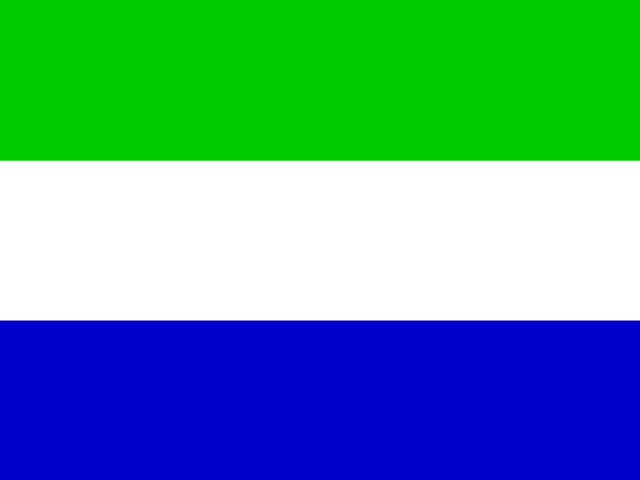

Curving along the Upper Guinea coast of West Africa where the misty ridges of the Lioness Mountains plunge directly into the turquoise swells of the Atlantic Ocean, the Republic of Sierra Leone is a captivating nation of white sand peninsulas, dense lowland rainforests, mangrove-lined river estuaries, and deep historical resonance. Named Serra Leoa in 1462 by Portuguese explorer Pedro de Sintra—who compared the rumbling thunderstorms echoing across its high coastal peaks to the roaring of a pride of lionesses—Sierra Leone occupies a pivotal place in the history of the African diaspora. It became the birthplace of the “Province of Freedom,” an eighteenth-century sanctuary where formerly enslaved Africans from Britain, North America, and the Caribbean returned to their ancestral continent to forge a new civilization anchored by the historic Cotton Tree and the Krio language.
The physical geography of Sierra Leone is divided into four distinct natural regions. Along the coast lies a coastal belt of low-lying mangrove swamps, broad river estuaries, and the mountainous Freetown Peninsula, where volcanic and gabbroic peaks rise steeply to nearly nine hundred meters above sea level. Moving inland, the terrain transitions into a rolling interior plain of lowland rainforest and secondary woodland drained by major river systems—including the Rokel, the Moa, and the Sewa. Farther east and northeast, the landscape ascends toward the interior plateau and the Loma Mountains, crowned by Mount Bintumani (also known as Loma Mansa) at one thousand nine hundred and forty-five meters, the highest peak in West Africa west of Mount Cameroon. Along the northern frontier with Guinea, the forest thins into Guinea savannah woodlands, while to the southeast, the territory borders Liberia within the Upper Guinean tropical rainforest belt.
The Freetown Peninsula: Mountains Meeting the Atlantic
The Freetown Peninsula is one of the most topographically striking coastlines in West Africa. Unlike the flat, sandy shorelines typical of much of the regional coast, here a chain of steep, forested mountain ridges—protected within the Western Area Peninsula National Park—rises dramatically out of the Atlantic Ocean. The rainforest canopy captures moist oceanic winds, generating over four thousand millimeters of annual rainfall that feeds mountain streams cascading down through deep rocky valleys toward a series of sweeping, crescent-shaped beaches.
Among these coastal jewels is Tokeh Beach, situated on the southwestern flank of the peninsula. Spanning miles of powdery, white coral sand fringed by leaning coconut palms and wild casuarina trees, Tokeh overlooks a tranquil turquoise lagoon protected from the full force of Atlantic rollers by offshore sandbanks. Historically a secluded fishing village where local Sherbro fishermen launched wooden dugout canoes into the surf, Tokeh developed in the 1980s as a premier coastal retreat, hosting international travelers who sought its serene, unhurried atmosphere.

Just north of Tokeh lies River Number Two Beach, where an emerald freshwater river emerges from the dense mountain jungle, slicing through a broad spit of brilliant white quartz sand before meeting the Atlantic surf. The beach is managed entirely by a local community development association, whose members pool tourism revenues to fund local schools, water infrastructure, and healthcare facilities. Further south, Bureh Beach attracts surfers from around the globe to ride long, peeling left-hand point breaks over sandy reefs, while Kent Beach serves as the maritime departure point for traditional wooden motor ferries crossing the channel to the historic Banana Islands.
Behind the beaches, the rainforest of the peninsula provides a critical watershed for the capital city of Freetown, as well as an essential biodiversity refuge. In the hills above Regent village sits the Tacugama Chimpanzee Sanctuary, established in 1995 to rescue and rehabilitate orphaned and confiscated western chimpanzees (Pan troglodytes verus). As the national animal of Sierra Leone, the western chimpanzee holds a revered status, and Tacugama plays a central role in wildlife law enforcement, environmental education, and community reforestation initiatives aimed at preserving the shrinking forest corridor of the Western Area.

Bunce Island and the Memorial of the Transatlantic Slave Trade
Twenty miles up the wide estuary of the Sierra Leone River, hidden among mangrove swamps and tidal mudflats, lies Bunce Island. Measuring barely five hundred meters in length, this isolated river islet was the site of one of the most lucrative and consequential British slave-trading castles in West Africa. Operated by a succession of British chartered trading companies—including the Company of Royal Adventurers Trading into Africa and the London merchant firm of Grant, Oswald & Company—Bunce Island functioned from 1670 to 1807 as an industrial fortress dedicated to the transatlantic deportation of human beings.
Because the indigenous coastal peoples of the Upper Guinea coast were expert cultivators of wet rice in tidal mangrove swamps, British slave merchants on Bunce Island deliberately targeted laborers from the rice-growing valleys of Sierra Leone and Senegambia. These enslaved rice farmers were purchased specifically by plantation owners in the British North American colonies of South Carolina and Georgia, where their ancestral agricultural knowledge, dike-building techniques, and rice-milling skills formed the technological foundation of the wealthy American “Rice Coast.” Today, genetic and linguistic research confirms direct ancestral and cultural links between the Gullah-Geechee people of coastal South Carolina and Georgia and the coastal communities of Sierra Leone.
Today, the ruins of Bunce Island are slowly being embraced by tropical ficus roots and tangled vines. Visitors walking along the silent stone pathways encounter the roofless ruins of the Chief Agent’s two-story factory house, the open-air stone slave yards (barracoons) where hundreds of captive men and women were branded and detained, the fortified two-tier cannon bastions commanding the river channel, and the grave monuments of British company traders. Preserved on Sierra Leone’s tentative list for UNESCO World Heritage inscription, Bunce Island represents an indispensable site of conscience, linking the history of West Africa directly to the founding of the modern Atlantic world.
The Province of Freedom, Freetown, and the Krio Genesis
The modern history of Sierra Leone is rooted in an extraordinary experiment in freedom. In the late eighteenth century, British abolitionists led by Granville Sharp and members of the Clapham Sect sought to create a settlement in West Africa for the “Black Poor”—destitute formerly enslaved Africans living in London, many of whom had fought for Great Britain during the American Revolutionary War in exchange for promises of emancipation. In May 1787, three hundred and eighty freed men and women landed on the Freetown peninsula to establish the “Province of Freedom.”
In March 1792, the settlement was reinforced by over one thousand one hundred Black Loyalists from Nova Scotia, led by former slave and preacher Thomas Peters. Assembling on the shoreline, the Nova Scotians walked up the hill to an immense, towering kapok tree (Ceiba pentandra), where they held a solemn thanksgiving prayer service and sang Christian hymns of deliverance, founding the settlement they named Freetown. For over two hundred and thirty years, the historic Cotton Tree stood in the center of downtown Freetown as the ultimate living monument to African emancipation and freedom, sheltering national gatherings until a catastrophic thunderstorm toppled the sacred giant in May 2023.
Freetown grew with the arrival of two subsequent waves of settlers: the Jamaican Maroons in 1800—skilled guerrilla fighters from the mountains of Jamaica—and tens of thousands of “Recaptives” (Liberated Africans) rescued from illegal slave ships intercepted by the British Royal Navy’s West Africa Squadron between 1808 and the 1860s. These diverse African communities—originating from over forty distinct ethnolinguistic groups across West and Central Africa, including Yoruba, Igbo, Kongo, and Popo—settled together in Freetown and surrounding mountain villages like Regent, Gloucester, and Hastings.
From this historic convergence of freed peoples emerged the Krio culture and the Krio language. Krio is an English-based creole language incorporating West African grammar, Yoruba vocabulary, and Portuguese loanwords, functioning today as the universal lingua franca of Sierra Leone. The Krio people constructed a distinctive urban architectural heritage characterized by multi-story timber frame “board houses” built atop raised laterite stone foundations, featuring high pitched shingle roofs, dormer windows, and ornate gingerbread fretwork balconies modeled after colonial American and Jamaican vernacular styles.
The Wildlife Sanctuary of Outamba-Kilimi and the Interior Rivers
Far inland from the Atlantic coast, where the rolling plains of the north approach the border with Guinea, the landscape shifts from humid coastal forests into rolling Guinea savannah woodland and gallery river forests. Here lies Outamba-Kilimi National Park, established in 1995 as Sierra Leone’s premier wildlife conservation sanctuary. Encompassing nearly one thousand square kilometers across two distinct sectors—Outamba to the east and Kilimi to the west—the park is divided by the meandering course of the Little Scarcies River (known locally as the Kaba).

Outamba-Kilimi protects a rich transitional ecosystem where dense evergreen riverine forests border open savannah grasslands dotted with towering shea butter trees (Vitellaria paradoxa) and parkia locust bean trees. Traveling along the river in traditional wooden canoes navigated by local Susu river guides, visitors can spot pods of common hippopotamuses (Hippopotamus amphibius) and the elusive pygmy hippopotamus (Choeropsis liberiensis) basking in sandy shallows. The forest canopy is home to nine distinct primate species, including large troops of western chimpanzees, Campbell’s monkeys, king colobus monkeys, and sooty mangabeys, alongside rare forest ungulates such as the elusive bongo antelope with its striking white-striped chestnut coat.
In the southeastern corner of the country, near the Liberian border, the Moa River embraces Tiwai Island Wildlife Sanctuary. Covering twelve square kilometers of pristine tropical rainforest, Tiwai represents one of the highest densities of wild primates on the African continent, supporting eleven distinct primate species and over one hundred and thirty bird species. Managed jointly by local communities and academic conservationists, Tiwai operates as a pioneering model for community-based ecotourism, where revenue from visiting field researchers directly funds village educational funds and prevents illegal slash-and-burn logging.
Mende and Temne Heritage: Secret Societies and Civic Life
Sierra Leone’s social architecture is anchored in the cultural traditions of its two largest ethnolinguistic groups: the Temne, who predominantly inhabit the northern and northwestern provinces, and the Mende, who reside in the southern and eastern regions. Both groups maintain sophisticated traditional chieftaincy institutions that govern rural land tenure, dispute resolution, and community development alongside modern parliamentary systems.
Central to traditional civic life are ancestral fraternal and sororal societies, most notably the Poro for men and the Sande (or Bondo) for women. The Sande society holds a globally recognized artistic distinction: it is one of the very few traditional institutions in Africa where wooden masks are carved exclusively for and worn by women. During initiation ceremonies, elder female leaders known as the Sowei wear the iconic Ndoli Jowei helmet mask. Meticulously hand-carved from local hardwood and stained a deep lustrous black with palm oil, the mask depicts stylized feminine beauty: ringed neck folds symbolizing health and prosperity, an elaborate braided coiffure representing order, and a calm, downcast countenance symbolizing wisdom, modesty, and spiritual reserve.
The culinary traditions of Sierra Leone are an explosion of bold West African flavors centered on rice (which locals consider the only true food, proclaiming that “if I haven’t eaten rice, I haven’t eaten today”). Rice is served with an array of nutrient-dense vegetable sauces cooked in red unrefined palm oil, led by cassava leaf stew—fresh young cassava greens pounded in a wooden mortar with garlic, onions, and scotch bonnet peppers, simmered for hours with smoked fish, tender beef, and rich ground peanut paste. Other cherished dishes include potato leaf stew, krín-krín (wild jute leaf sauce), and fufu made from fermented cassava dough, accompanied by whole seasoned sea fish grilled over mangrove wood coals and served with spicy pepper sauce.
Reconciliation, Democratic Endurance, and Contemporary Renewal
Sierra Leone’s modern history has been tested by severe adversity, including a devastating eleven-year civil war (1991–2002) fueled by illicit trade in alluvial “blood diamonds,” followed by the catastrophic 2014–2016 West African Ebola epidemic. Yet out of this severe hardship, the people of Sierra Leone demonstrated a remarkable capacity for national reconciliation, communal healing, and democratic resilience. Through community truth and reconciliation hearings and traditional village dispute resolution, former combatants were reintegrated into rural communities without widespread vengeance or lasting ethnic fragmentation.
Today, Sierra Leone represents a peaceful, multi-party constitutional democracy characterized by enduring religious tolerance. In Freetown and provincial towns like Bo and Kenema, Christian and Muslim families intermarry freely, celebrate each other’s religious holidays, and attend mutual community prayers, presenting an international model of interfaith harmony. The economy is modernizing, diversifying away from traditional diamond and rutile mining toward sustainable agriculture, international maritime logistics, and high-value ecotourism along the pristine beaches of the Freetown Peninsula.
In Freetown, along the ocean promenade of Lumley Beach, evening breezes draw crowds of citizens enjoying grilled skewers of spiced beef (suya), listening to buoyant Afrobeats and gumbe music, and watching local youth play football on the golden sands as the sun sets over the Atlantic. Rising from its historic struggles with unyielding dignity and warmth, Sierra Leone shines as a resilient, welcoming gem of West Africa: a nation where towering green mountains meet the sea, where ancient freedoms are remembered, and where community solidarity lights the path toward an enduring sovereign future.






Share what you know
Been there, grew up there, or know something we missed? Add a comment; corrections with a source are especially welcome.