


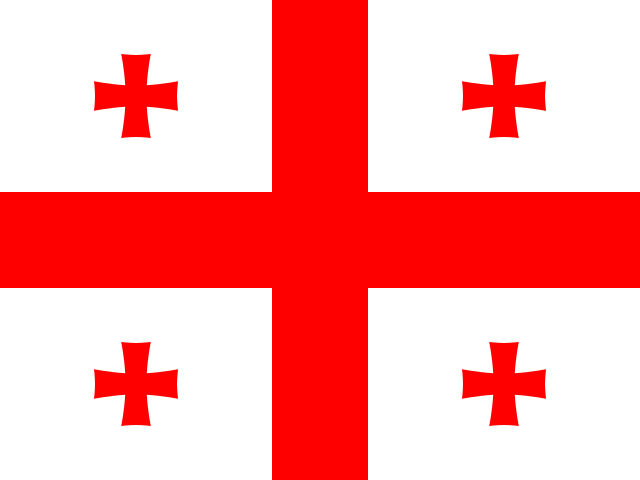

Cradled in the mountainous embrace of the South Caucasus where Eastern Europe meets Western Asia, Georgia occupies one of the world’s most dramatic geographic and cultural frontiers. Bordered by the Russian Federation along the glaciated spine of the Greater Caucasus to the north, Azerbaijan to the southeast, Armenia and Türkiye to the south, and washed on the west by more than three hundred kilometers of Black Sea shoreline, this territory of nearly seventy thousand square kilometers encompasses extraordinary ecological and topographic diversity. Home to roughly 3.94 million people, Georgia has spent millennia preserving its singular Kartvelian language, distinctive thirty-three-letter Mkhedruli script, and independent Christian Orthodox civilization against the successive tides of Persian, Roman, Byzantine, Arab, Mongol, Ottoman, and Russian empires.[1][4][6]
Indigenous inhabitants know their country not as Georgia, but as Sakartvelo—meaning “the land of the Kartvelians”—a designation tracing to Kartlos, the mythic ancestral patriarch of the central province of Kartli. The Western designation “Georgia” likely arose during medieval crusader encounters, linked either to the Greek word georgos (tiller of the soil), the Persian term gurgan (land of the wolves), or the nation’s deep veneration of Saint George, whose red-cross emblem adorns the five-cross national banner. Within its compact borders, travelers encounter an astonishing geographic continuum: from warm, palm-fringed subtropical Black Sea wetlands to arid eastern steppe valleys, and up to jagged glaciated peaks exceeding five thousand meters.[4][9][12]
The Caucasian Ramparts: Kazbegi and Svaneti
Georgia’s northern perimeter is defined by the Greater Caucasus Mountain range, a formidable geological wall thrown up by the collision of the Arabian and Eurasian tectonic plates. The range contains several of Europe’s highest summits, anchored in Georgia by Mount Shkhara, which soars to 5,193.2 meters on the border with Russia. Further east along the Georgian Military Highway rises Mount Kazbek (Mkinvartsveri, or “glacier peak”), a dormant stratovolcano reaching 5,047 meters. According to classical mythology, it was to these icy crags that the Titan Prometheus was chained by Zeus for gifting divine fire to humanity, an ancient story mirrored in the indigenous Georgian legend of Amirani.[4][11]
Perched on a high ridge at 2,170 meters directly beneath the snowfields of Kazbek sits Gergeti Trinity Church (Tsminda Sameba). Constructed in the fourteenth century out of dark weathered granite blocks, this cross-cupola sanctuary stands solitary against a staggering backdrop of hanging glaciers and sheer mountain precipices. During times of foreign invasion in the lowlands, the church served as a high-altitude sanctuary where sacred national relics, including the cross of Saint Nino fashioned from twisted grapevines and bound with her own hair, were brought for safekeeping.[4][11]

To the northwest lies Upper Svaneti, an isolated highland region enclosed by towering alpine ridges that remained largely autonomous for centuries. In villages like Ushguli, situated at 2,200 meters as one of the highest permanently inhabited settlements on the European continent, families constructed defensive stone tower houses (koshki) between the ninth and thirteenth centuries. These four- to five-story tapered watchtowers served both as refuges against regional raiders and devastating winter avalanches, and as defensive bastions during fierce internal blood feuds. UNESCO recognized this exceptional medieval mountain landscape by inscribing Upper Svaneti onto the World Heritage list in 1996.[3]

The western lowlands along the Black Sea basin, ancient Colchis of the Argonaut legend, present an entirely different ecological world. Fed by moist maritime winds, the Colchic Rainforests and Wetlands feature temperate rainforests of Caucasian wingnut, hornbeam, and evergreen understories that survived the Pleistocene glaciations intact. Inscribed on the World Heritage list in 2021, these ancient swamps and peat bogs provide critical rest stops for millions of migratory birds navigating the Black Sea flyway.[9][11]
Southward toward the Lesser Caucasus, Georgia’s landscape is carved by monumental rock-cut cave cities. Near Gori rises Uplistsikhe, an ancient iron-age urban settlement dating from the second millennium BCE, featuring rock-hewn temples, pagan altars, and broad stone streets. Even more breathtaking is Vardzia, a twelfth-century monastic cave city carved into the volcanic cliff face of the Erusheti Mountain under the reign of King George III and his daughter, Queen Tamar the Great. Spanning thirteen subterranean tiers containing over six hundred rooms, refectories, and fresco-adorned basilicas, Vardzia could house thousands of citizens during foreign invasions, standing as an architectural summit of Georgia’s medieval Golden Age.[4][11]
Eight Millennia of Wine: The Qvevri Tradition
Archaeological discoveries in 2017 at the Neolithic sites of Gadachrili Gora and Shulaveris Gora south of Tbilisi pushed back the verified origins of global viticulture to approximately 6000 BCE. Chemical analysis of ceramic jar shards revealed tartaric, succinic, and citric acid residues from cultivated Eurasian grapes (Vitis vinifera), demonstrating conclusively that Georgia is the cradle of world wine. Unlike Western European winemaking, which evolved toward wooden oak barrels and stainless steel tanks, Georgia has preserved an unbroken eight-thousand-year method centered on the qvevri.[2][4]
A qvevri is a colossal, egg-shaped earthenware vessel with an interior lined with melted beeswax, capable of holding up to several thousand liters of liquid. The vessel is buried up to its neck in the dirt floor of a traditional stone wine cellar, known as a marani. Freshly harvested whole grapes—including the skins, seeds, and grape stems (the chacha)—are crushed and poured directly into the submerged vessel. The surrounding earth maintains a naturally stable, cool fermentation temperature without requiring artificial refrigeration or chemical additives.[2]
After fermentation ceases, the vessel is sealed hermetically with a flat stone slab and wet clay, allowing the wine to mature on its skins for five to six months. This extended maceration produces “amber” (or orange) wines of remarkable complexity, rich in natural tannins, dried apricot aromas, roasted walnuts, and mineral depth. Georgia nurtures more than five hundred indigenous grape varieties—such as the bold red Saperavi, whose flesh and skin are both deeply pigmented, and the aromatic white Rkatsiteli and Mtsvane. In 2013, UNESCO inscribed the ancient Georgian traditional qvevri winemaking method onto the Representative List of the Intangible Cultural Heritage of Humanity.[2][10]
Every autumn harvest concludes with the making of churchkhela, known affectionately as the “Georgian energy bar.” Walnuts or hazelnuts are threaded onto long strings, dipped repeatedly into a thick boiling mixture of concentrated grape juice and flour known as tatara (or pelamushi in western Georgia), and hung outdoors to dry in the autumn sun. Historically carried by medieval warriors into mountain campaigns for high-calorie sustenance, churchkhela remains an essential winter sweet and festive holiday gift.[4][10]
Old Tbilisi: Sulfuric Springs and Wooden Lace
Straddling the rocky gorge of the Mtkvari (Kura) River, Tbilisi has served as Georgia’s capital since King Vakhtang Gorgasali transferred the royal court here from ancient Mtskheta in the fifth century CE. According to legend, while hunting in the forested gorge, the king’s royal falcon struck a pheasant, and both birds tumbled into a natural steaming spring, where they were scalded. Impressed by the healing warmth of the waters, the king ordered a city built around the springs, naming it Tbilisi from the old Georgian root tbili, meaning “warm.”[4][12]
The historic core of Old Tbilisi (Kala) clings to the steep hillside beneath the ruined stone walls of Narikala Fortress, which has watched over the river crossing since Persian Sasanian times. At the base of the citadel lies Abanotubani, the historic bathhouse quarter, marked by brick domes that emerge directly from the pavement above natural geothermal sulfuric springs. Here, visitors and locals have gathered for centuries for therapeutic soaks, rigorous scrub downs with coarse horsehair mitts (kisa), and foaming soap massages that Alexandre Dumas and Alexander Pushkin famously praised during their nineteenth-century travels through the Caucasus.[4][12]

Old Tbilisi’s most distinctive visual signature is its ornate wooden architecture. Narrow cobbled alleys are bordered by two- and three-story pastel brick houses adorned with carved, cantilevered wooden verandas and glass-enclosed balconies that seem to float over internal courtyards (italyuri ezo). These communal courtyards served as shared living rooms where neighbors gathered to dry laundry, drink tea, argue politics, and exchange daily news. Within a single square kilometer around Betlemi Street, Georgian Orthodox basilicas, Armenian Apostolic churches, a functioning synagogue, and a rare dual-mihrab mosque where Sunni and Shia Muslims pray side by side illustrate the city’s cosmopolitan merchant heritage.[4][12]
The Supra: Ritual Fellowship and Polyphonic Song
Social life in Georgia finds its highest collective expression in the supra, a traditional feast whose name translates literally as “tablecloth.” Far from a casual dinner party, the supra is a highly structured social ritual governed by customary rules of hospitality, philosophy, and poetic eloquence. The gathering is led by an elected toastmaster, the tamada, who must possess sharp wit, emotional intelligence, stamina, and the ability to weave philosophical reflections on life, mortality, ancestral memory, friendship, peace, and love into sequential toasts.[4][7]
Participants never sip wine casually; drinks are consumed only after the tamada has delivered a toast and passed the theme around the table for guests to elaborate with personal reflections. In traditional highland gatherings, toasts are drained from polished animal horns (kantsi), which cannot be set down on the table until completely emptied. In Georgian customary philosophy, a guest is considered an “envoy from God,” and no effort or expense is spared to offer boundless hospitality to travelers who enter a family home.[4][7]
Woven seamlessly into the fabric of the supra is Georgian polyphonic singing, recognized by UNESCO in 2001 as an intangible cultural heritage masterpiece. Predating the adoption of Christianity in 337 CE, Georgian polyphony features complex three-part vocal harmonies based on ancient untempered musical scales and dissonance. The singing varies by region: in the western province of Guria, singers employ lightning-fast yodeling (krimanchuli); in Kakheti, long, drone-based tenor solos float over resonant bass lines; while the ancient four-part Svan hymn Lile, dedicated to the sun god, preserves pre-Christian solar worship within a sacred Christian choral tradition.[7]
Culinary Mastery: Khachapuri, Khinkali and Wild Herbs
Georgian cuisine is celebrated throughout Eurasia for its bold seasonal flavors, heavy reliance on walnuts, fresh herbs, and complex spice blends. The undisputed national comfort food is khachapuri, a cheese-filled bread whose regional styles vary across the provinces. In Imereti, circular yeast dough is stuffed with salty, elastic Imeretian cow’s milk cheese; in Samegrelo, it is topped with an additional layer of melted Sulguni cheese; while in coastal Adjara on the Black Sea, Adjarian khachapuri takes the form of an open boat-shaped dough canoe, filled with bubbling cheese, an uncooked egg yolk, and a generous pat of butter, swirled together tableside with a fork before eating.[4][10]
From the high northern mountain valleys of Tusheti and Khevsureti comes khinkali, large twisted dumplings packed with spiced minced beef, pork, or mountain lamb, seasoned with crushed cumin, black pepper, and wild mountain herbs. The dough is pleated by hand into at least nineteen distinct folds, crowned with a thick top knot (kudi). As the dumplings boil, the meat filling releases a fragrant, scalding broth inside the dough casing. Etiquette requires holding the dumpling upside down by its knot, taking a careful bite from the side to slurp the savory broth without spilling a single drop, and leaving the thick dough knot on the rim of the plate to count how many have been consumed.[4][10]
Everyday meals are accompanied by pkhali, seasoned vegetable pastes made from finely chopped spinach, beetroot, wild leeks, or cabbage, blended with pounded walnuts, garlic, fresh cilantro, blue fenugreek, dried marigold petals, and white wine vinegar, decorated with ruby pomegranate seeds. Meats like skewered pork neck (mtsvadi) are roasted over grapevine embers and paired with tkemali, a tart, astringent wild sour-plum sauce flavored with pennyroyal mint and garlic that cuts cleanly through rich meats.[4][10]
Democratic Striving and European Destiny
Georgia’s contemporary history is defined by an ongoing struggle to secure democratic sovereignty while navigating intense geopolitical friction with its northern neighbor. Following the collapse of the Soviet Union in 1991, Georgia declared independence under Zviad Gamsakhurdia, but was quickly plunged into civil war and separatist conflicts in Abkhazia and South Ossetia. In 2003, the peaceful Rose Revolution ousted entrenched post-Soviet officials, launching sweeping administrative reforms that dismantled endemic police corruption, simplified taxation, and positioned Georgia as an open market economy.[1][5][8]
However, geopolitical tensions erupted into full-scale war with Russia in August 2008, resulting in the Russian military occupation of Abkhazia and the Tskhinvali region (South Ossetia), which comprise roughly twenty percent of Georgia’s sovereign territory. Despite this ongoing territorial division and shifting domestic political crosscurrents, polls consistently show that more than eighty percent of the Georgian public strongly supports European integration. In December 2023, the European Union formally granted Georgia EU candidate status, acknowledging the nation’s historic European identity and civil society aspirations.[1][5][12]
Through all these historical transformations, the resilient spirit of Sakartvelo endures. Anchored in the ancient granite walls of its high mountain churches, the subterranean warmth of its wine cellars, and the defiant harmony of its polyphonic songs, Georgia moves forward into the twenty-first century with deep national pride. It remains a land where ancient hospitality is an unbreakable sacred covenant, where every harvest celebrates eight thousand years of viticulture, and where the majestic snow peaks of the Caucasus stand as enduring sentinels over a proud and welcoming people.[1][2][4]






Share what you know
Been there, grew up there, or know something we missed? Add a comment; corrections with a source are especially welcome.