




Extending across two million seven hundred and twenty-four thousand square kilometers from the mudflats of the Caspian Sea in the west to the snow-crested massifs of the Altai Mountains in the east, the Republic of Kazakhstan (Qazaqstan Respublikasy) occupies the immense geographic core of Eurasia. Ranking as the ninth-largest nation on Earth and the world’s largest landlocked country, Kazakhstan shares terrestrial borders with Russia to the north and west, China to the east, and fellow Central Asian republics Kyrgyzstan, Uzbekistan, and Turkmenistan to the south. Dominated physiographically by the Kazakh Steppe—an oceanic expanse of open grassland, semi-desert, and steppe lakes stretching for over two thousand kilometers—this territory has served for millennia as the grand transit highway of pastoral nomadism, horse domestication, and continental trans-Eurasian trade.
Kazakhstan’s national narrative is rooted in the open horizon. At archaeological sites like Botai in northern Kazakhstan, excavators uncovered bone fragments, corral enclosures, and pottery shards bearing mare’s milk lipids dating back to 3500 BCE, providing humanity’s earliest documented evidence of horse domestication and riding. Across subsequent millennia, Scythian, Saka, Hunnic, Turkic, and Mongol confederations swept across these plains, developing sophisticated equestrian tactics and metallurgic arts exemplified by the famous fourth-century BCE “Golden Warrior” (Altyn Adam) unearthed at Issyk. In the fifteenth century, Janibek and Kerey broke away from the Uzbek Khanate to establish the Kazakh Khanate, consolidating a distinct ethnic identity grounded in democratic tribal councils, oral genealogy, and seasonal pastoral migrations between winter pastures (qystau) and summer alpine meadows (zhailau).

The Sculpted Earth: Charyn Canyon and Tian Shan Landscapes
In southeastern Kazakhstan, approximately two hundred kilometers east of the former capital Almaty, the arid steppe fractures into the monumental geological defiles of Charyn Canyon. Extending for roughly one hundred and fifty kilometers along the rapid course of the Charyn River, this dramatic gorge plunges up to three hundred meters into the desert floor. The canyon’s most renowned sector, the “Valley of Castles” (Dolina Zamkov), consists of a three-kilometer dry tributary where wind, torrential summer flash floods, and dramatic diurnal temperature shifts have carved soft sedimentary sandstone and volcanic breccia into fantastic architectural shapes: soaring gothic spires, crenelated fortress walls, and balanced stone towers glowing in deep shades of ochre, terracotta, and crimson.
At the base of the canyon, where the glacial meltwater of the Charyn River churns toward the Ili River basin, survives an ancient botanical relict: the Charyn Ash Grove (Sogdian Ash, Fraxinus sogdiana). Covering several thousand hectares along the riparian floodplain, these deciduous trees are living fossils that survived the Pleistocene ice ages, having grown continuously in the sheltered humid microclimate of the canyon floor for over twenty-five million years. The contrast between the sun-scorched red cliffs above and the dense, emerald riparian forest below creates an isolated habitat for rare wildlife, including Central Asian lynx, goitered gazelles, and golden eagles.

The Sunken Spires: Lake Kaindy and Kolsay National Park
Ascending into the forested northern slopes of the Kungey Alatau range near the border with Kyrgyzstan, the landscape transforms into an alpine wilderness of glacial valleys, roaring mountain torrents, and spruce-clad ridges. At an elevation of two thousand meters within Kolsay Lakes National Park lies Lake Kaindy, one of the most surreal mountain water bodies in Central Asia. The lake came into existence on January 3, 1911, when the catastrophic magnitude 7.7 Kebin (Chon-Kemin) earthquake triggered an immense limestone landslide that tumbled down the gorge, forming a natural eighty-meter-high dam across the Kaindy River.
As the backed-up river flooded the mountain valley, it submerged a dense stand of native Schrenk’s spruce trees (Picea schrenkiana). Remarkably, because the water temperature in this high-altitude glacial lake rarely exceeds six degrees Celsius even at the peak of midsummer, the cold water arrested biological decay. Today, more than a century later, the bare, weathered bleached trunks of the drowned trees rise like ship masts above the clear turquoise surface, while beneath the water line, intact branches, needles, and green algae blankets remain petrified in the icy depth, creating a haunting underwater forest that attracts intrepid alpine scuba divers from around the globe.
The Silk Road Sanctuary: Turkistan and Khoja Ahmed Yasawi
In southern Kazakhstan, where the arid steppe meets the historical irrigation channels of the Syr Darya River, stands the sacred oasis city of Turkistan (ancient Yasi). Situated along the northern spur of the Great Silk Road that channeled merchants between Chang’an, Samarkand, and the lower Volga, Turkistan blossomed in the twelfth century as the spiritual home of Khoja Ahmed Yasawi, the revered Sufi mystic, poet, and philosopher who harmonized Islamic theology with the shamanistic traditions and nomadic worldview of the Turkic peoples, composing the Divan-i Hikmet (Book of Wisdom) in early Turkic vernacular.

Following Yasawi’s death, the site became a major regional pilgrimage center. Between 1389 and 1405, the conqueror Timur (Tamerlane) ordered the construction of a colossal mausoleum complex to honor the saint and project imperial authority over the Kazakh steppe. Inscribed as Kazakhstan’s first UNESCO World Heritage site in 2003, the Mausoleum of Khoja Ahmed Yasawi is a monumental rectangular brick structure measuring sixty-five by forty-six meters, crowned by the largest brick dome in Central Asia, spanning eighteen meters in diameter and covered in fluted turquoise and lapis lazuli glazed tiles. Master craftsmen from Shiraz, Isfahan, and Damascus introduced innovative double-domed vaulting techniques and intricate geometric Kufic calligraphy that served as the architectural prototype for Timur’s later imperial masterpieces in Samarkand, including Gur-e-Amir and the Bibi-Khanym Mosque.
Inside the mausoleum’s central hall stands the Tayqazan, an enormous bronze cauldron cast in 1399 from an alloy of seven sacred metals, weighing two tons and measuring two and a half meters across. Used during religious festivals to hold sweetened holy water distributed to visiting pilgrims, the cauldron symbolizes communal harmony and spiritual unity, surviving as an enduring national treasure of Kazakhstan.
Nomadic Cosmology: The Yurt, Shanyrak, and Falconry
The cultural genius of the Kazakh people is crystallized in the nomadic felt dwelling known as the yurt (kiiz ui). Designed over millennia to withstand the harsh, continental extremes of the steppe—where winter temperatures plunge below minus forty degrees Celsius and summer heat exceeds forty degrees—the yurt is an engineering marvel of portability and thermal efficiency. Its collapsible lattice circular wall (kerege), curved roof poles (uyq), and thick compressed sheep-wool felt coverings can be assembled or dismantled by an extended family within two hours, packing neatly onto the backs of two Bactrian camels.
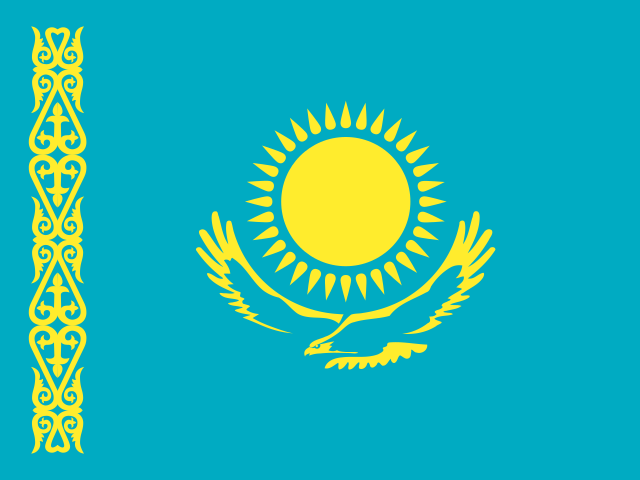
At the apex of the yurt sits the shanyrak, a heavy circular wooden crown through which hearth smoke escapes and sunlight enters. The shanyrak represents far more than an architectural keystone; it is the ultimate symbol of family continuity, ancestral lineage, and the cosmic connection between the earth and the heavens. Passed down from father to youngest son (kenzhe), the shanyrak is depicted on the state flag and coat of arms of Kazakhstan, embodying the common home of all ethnic groups within the republic.
Complementing the yurt is the ancient tradition of horseback eagle hunting (berkutchi). Reared from young chicks taken from mountain eyries, golden eagles develop an unbreakable bond of trust with their trainers. Dressed in fox-fur coats and felt boots, hunters gallop across frozen snowfields with a twelve-pound raptor balanced on a leather-clad forearm, launching the eagle to hunt mountain hares, marmots, and foxes across open terrain, preserving an intangible cultural heritage inscribed by UNESCO.
The Twentieth-Century Ordeal: Industrialization and Baikonur
The twentieth century brought sweeping, often agonizing disruptions to the Kazakh steppe under Soviet rule. Forced collectivization during the early 1930s dismantled traditional nomadic pastoralism with devastating speed, causing a catastrophic famine (Asharshylyq) that claimed over one million lives and forced hundreds of thousands of Kazakhs to flee into China and Central Asian republics. In the 1950s, Soviet Premier Nikita Khrushchev launched the Virgin Lands Campaign (Tselina), plowing up twenty-five million hectares of virgin northern steppe to plant spring wheat, transforming the region into a major grain belt while permanently altering the ecological balance and introducing millions of Slavic settlers.
Kazakhstan was also subjected to intense military industrialization. Near Semipalatinsk (Semey) in the northeast, the Soviet military established the “Polygon,” conducting four hundred and fifty-six nuclear tests between 1949 and 1989, exposing hundreds of thousands of local residents to radioactive fallout. In 1989, the grassroots Nevada-Semipalatinsk anti-nuclear movement, led by poet Olzhas Suleimenov, rallied public protests that forced the permanent closure of the test site in August 1991. Following independence, Kazakhstan took the courageous decision to voluntarily dismantle the world’s fourth-largest nuclear arsenal, establishing itself as a global leader in non-proliferation.
Simultaneously, the remote desert steppe of Baikonur became the cradle of human spaceflight. Established in 1955 as a classified rocket test facility, the Baikonur Cosmodrome launched Sputnik 1, the world’s first artificial satellite, on October 4, 1957. Four years later, on April 12, 1961, cosmonaut Yuri Gagarin launched from Baikonur aboard Vostok 1 to complete the first orbital human spaceflight in history. Today, Baikonur remains an active spaceport, launching crewed missions and cargo freighters to the International Space Station across the open desert sky.
The nomadic spirit also reverberates through Kazakh music and oral poetry, anchored by the dombyra, a long-necked two-stringed plucked lute crafted from birch or maple. Played with swift finger strumming, the instrument expresses the speed of running wild horses, galloping herds, and the whistling winds of the steppe through evocative musical compositions known as kuis. Legendary nineteenth-century composer Kurmangazy Sagyrbayuly elevated the kui into a high national art form, creating fiery orchestral works like “Adaí” that convey an unyielding thirst for freedom. During traditional verbal duels called aitys, improvisational bard-poets (aqyns) sit face-to-face with dombyras before packed audiences, trading rapid-fire rhymed verses addressing contemporary politics, social satire, and philosophy, preserving an ancient tradition of democratic public discourse recognized by UNESCO.
In the southwest, Kazakhstan has demonstrated environmental determination in the Aral Sea basin. Once the fourth-largest inland sea on Earth, the Aral catastrophically dried up during the late twentieth century due to massive Soviet cotton irrigation diversions from the Syr Darya and Amu Darya rivers. In 2005, Kazakhstan completed the monumental eight-mile Dike Kokaral dam across the Berg Strait, separating the North Aral Sea from the hyper-saline southern basin. The dam trapped the freshwater flows of the Syr Darya, raising northern water levels by several meters, lowering salinity, and reviving commercial fishing in coastal villages like Aralsk, marking one of Central Asia’s most significant ecological recovery initiatives.
Steppe Modernity: The Rise of Astana
In December 1997, Kazakhstan made the bold geopolitical decision to relocate its national capital from leafy Almaty in the earthquake-prone southern foothills to the windswept northern steppe city of Akmola, renamed Astana (briefly Nur-Sultan). Designed under a master urban plan conceived by renowned Japanese architect Kisho Kurokawa, modern Astana has evolved into a showcase of futuristic twenty-first-century architecture along the banks of the Ishim River.
The capital’s skyline features iconic structures designed by leading global architects. The Baiterek Tower, a ninety-seven-meter-tall monument crowned by a golden glass sphere, symbolizes the mythical tree of life (Bayterek) where the sacred bird Samruk laid a golden egg beyond human reach. Nearby stands the Khan Shatyr Entertainment Center, designed by British architect Norman Foster as a giant transparent tent soaring one hundred and fifty meters into the sky, clad in weather-resistant ETFE fluoropolymer cushions that maintain a tropical microclimate even during fierce winter blizzards. Foster also designed the Palace of Peace and Reconciliation, a sixty-two-meter-tall glass and granite pyramid that convenes the triennial Congress of Leaders of World and Traditional Religions, advancing international interfaith harmony.
The Steppe Feast: Culinary Heritage
Kazakh gastronomy reflects the resourcefulness and nutritional demands of pastoral nomadic life, centered on meat, milk, and dough. The paramount ceremonial meal is beshbarmak (meaning “five fingers,” referring to the traditional practice of eating with one’s hands). The dish features tender boiled horse meat and mutton served over broad, hand-rolled flat pasta sheets, bathed in a rich, onion-infused broth called tuzdyq and garnished with sliced qazy—a traditional artisanal horsemeat sausage spiced with black pepper and garlic, stuffed into natural casings and air-cured.
Dairy processing in the steppe produced extraordinary preservation techniques. Qurt, hard dried balls of salted, fermented sour curd, served as durable, high-protein rations that nomadic warriors carried in saddlebags for months without spoiling. The national celebratory beverages are kumis (fermented mare’s milk) and shubat (fermented camel’s milk). Naturally effervescent and slightly sour with low alcohol content, kumis is prized for its high vitamin content, lactic acid bacteria, and digestive qualities, served chilled from wooden bowls (kese) during warm summer gatherings.
Natural Riches and Future Horizons
Beneath its vast territory, Kazakhstan holds extraordinary natural wealth. With proven oil reserves ranking among the top fifteen globally, giant offshore fields like Kashagan in the Caspian Sea and onshore basins at Tengiz and Karachaganak drive substantial export revenues. Furthermore, Kazakhstan produces over forty percent of the world’s uranium, providing indispensable raw material for low-carbon nuclear power worldwide, alongside significant reserves of copper, ferroalloys, zinc, and rare-earth elements essential for modern technology.
Looking ahead, Kazakhstan is investing aggressively in economic diversification, digital logistics, and renewable energy. As a vital geographic bridge along the “Middle Corridor” (Trans-Caspian International Transport Route), the nation connects Chinese freight networks across the Caspian to the Caucasus, Türkiye, and Europe, bypassing northern corridors. In education, the state-funded Bolashak international scholarship program has sent tens of thousands of promising young Kazakhs to top universities globally, cultivating a multilingual, cosmopolitan generation. Grounded in ancestral steppe wisdom and animated by contemporary ambition, Kazakhstan strides forward across its boundless plains with enduring purpose.






Share what you know
Been there, grew up there, or know something we missed? Add a comment; corrections with a source are especially welcome.