
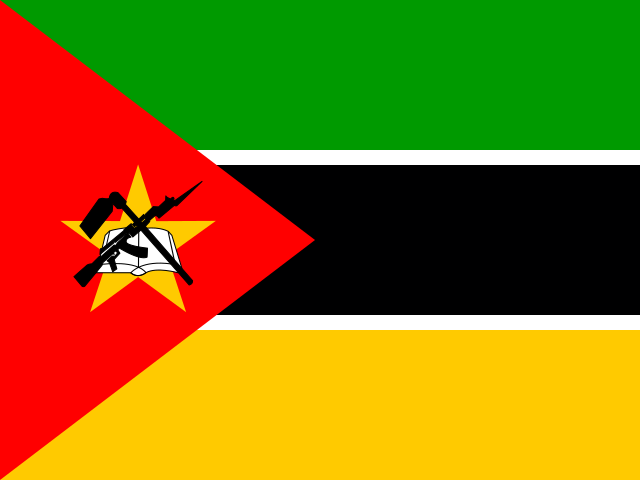
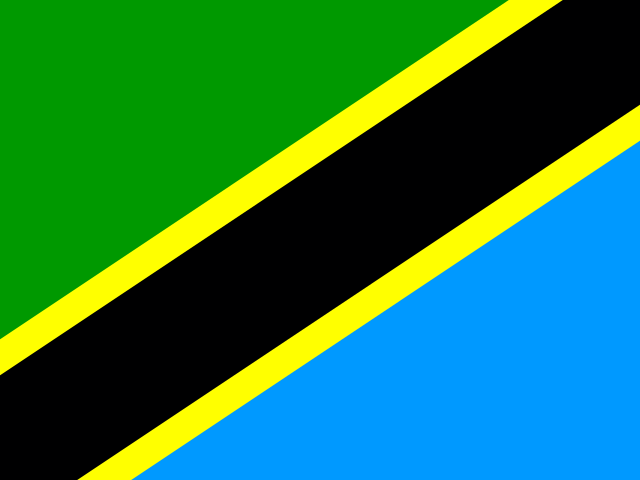
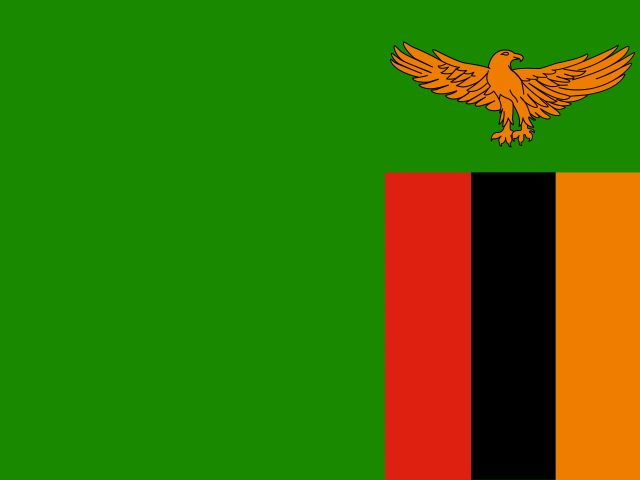


Stretching like an elongated ribbon along the southern trough of the Great Rift Valley, the Republic of Malawi occupies one hundred and eighteen thousand four hundred and eighty-four square kilometers in southeastern Africa. Landlocked and bordered by Tanzania to the northeast, Zambia to the northwest, and surrounded on the east, south, and southwest by Mozambique across more than one thousand four hundred kilometers of frontier, Malawi is defined above all by fresh water. More than a fifth of the national surface is covered by Lake Malawi (traditionally called Lake Nyasa), the third-largest lake on the African continent and the eighth-largest on Earth, which fills the tectonic rift trench for five hundred and eighty kilometers with sapphire-clear waters descending to depths of more than seven hundred meters.
Widely known across Africa as the “Warm Heart of Africa” due to the legendary welcoming hospitality of its people, Malawi is home to a population of approximately twenty million people comprising nine major ethnolinguistic groups, led by the Chewa, Lomwe, Yao, Tumbuka, and Sena. Despite enduring intense economic constraints and relying primarily on smallholder agriculture, the nation maintains deep political and cultural stability. From the underwater evolutionary laboratories of its endemic cichlid fisheries to the sheer granite peaks of Mount Mulanje and the sacred masquerades of the Nyau secret societies, Malawi presents an intimate dialogue between ancient tectonic geology and living Bantu cultural traditions.
The Rift Valley Trough and the Miracle of Mbuna Speciation
Malawi’s dramatic physical topography is the product of continental rifting that began tens of millions of years ago, as the African tectonic plate slowly cracked along the East African Rift system. The floor of this deep tectonic graben dropped hundreds of meters below sea level, while its flanking rims were uplifted into cool mountain tablelands: the Nyika Plateau in the north, rising to two thousand six hundred meters; the Zomba Plateau in the south; and the towering isolated granite massif of Mount Mulanje, which summits at three thousand and two meters at Sapitwa Peak—the highest elevation in south-central Africa.
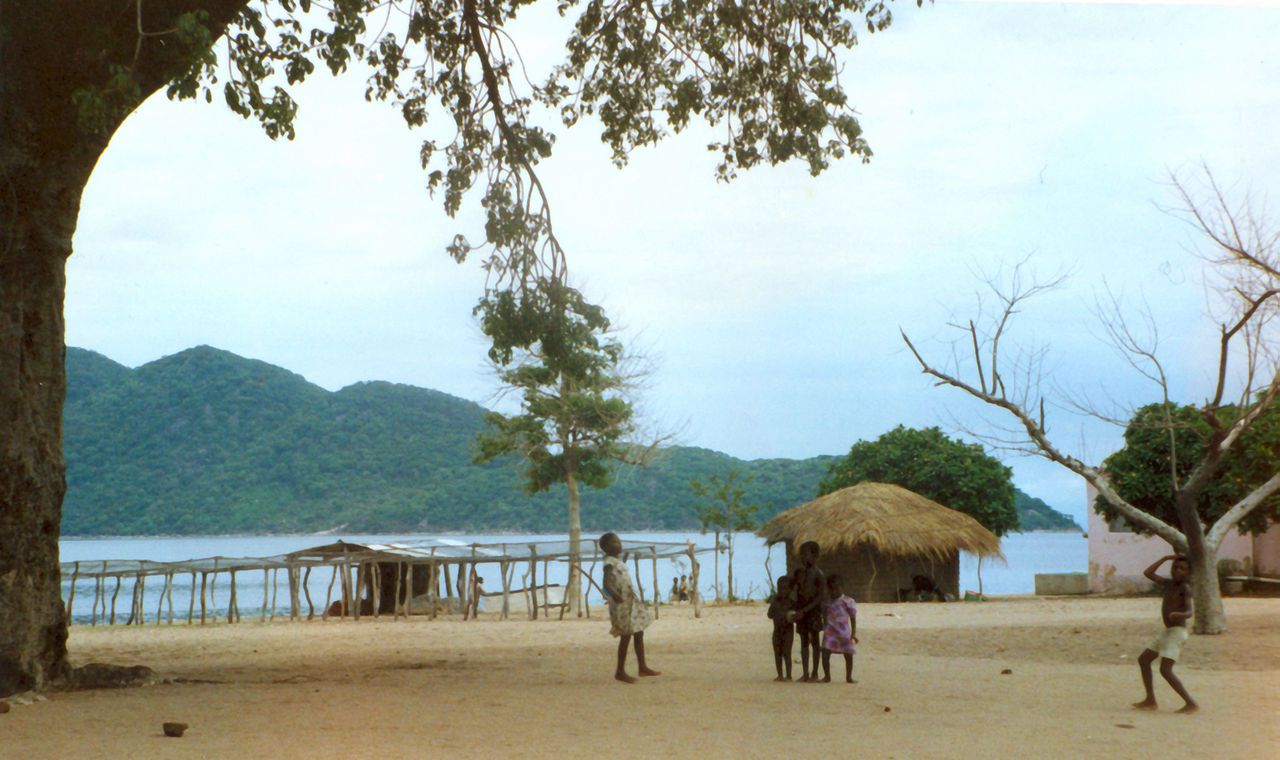
Filling the northern and central sections of this sunken chasm is Lake Malawi. Because the lake basin is enclosed by precipitous rift walls and receives water from seasonal mountain streams while discharging solely through the southern Shire River into the Zambezi basin, its aquatic environment evolved in biological isolation. The lake’s waters are meromictic—stratified into distinct thermal and chemical layers that do not turn over completely—resulting in oxygen-rich upper surface waters that lap against weathered granite boulder shores, underwater drop-offs, and golden sandy beaches.
This ecological fragmentation drove the most prolific explosive adaptive radiation of vertebrate species known to modern biology. Lake Malawi contains an estimated one thousand species of cichlid fish, more than nine hundred and ninety percent of which are strictly endemic to the lake. The most celebrated are the rock-dwelling cichlids, known locally in the Tonga and Chewa languages as mbuna (“rock fish”). Over scarcely a few hundred thousand years, ancestral riverine cichlids evolved specialized dental structures, jaw morphologies, and dazzling iridescent colorations—electric blues, brilliant yellows, and barred patterns—adapted to grazing microscopic algae from specific rocky surfaces at distinct water depths. In 1984, Lake Malawi National Park at Cape Maclear, surrounding the promontories and offshore granite islands of the Nankumba Peninsula, became the world’s first freshwater national park inscribed on the UNESCO World Heritage list.
For coastal fishing communities, the lake is the vital lifeline of daily protein. Every evening as dusk falls, hundreds of traditional wooden canoes and planked boats (ngalawa) venture out into the open waters, illuminating kerosene hurricane lamps or battery-powered LED lanterns that float on wooden rafts. Attracted by the glowing pools of light, dense schools of tiny, sardine-like freshwater fish called usipa (Engraulicypris sardella) and utaka rise from deep dark waters to be netted in fine seines. On morning shorelines, millions of usipa are spread across raised woven bamboo drying racks to cure under the equatorial sun, their silvery sheen visible from miles away.
Traversing this inland sea is a living legend of African maritime transport: the motor vessel MV Ilala. Built on the Clyde in Scotland, dismantled into thousands of numbered bolt parts, and transported by sea and overland rail to be reassembled on the lakeshore in 1949, the venerable passenger ferry has plied the waters of Lake Malawi weekly since 1951. Carrying deck passengers, crates of fresh mangoes, bags of mail, and bundles of dried fish between remote island communities like Likoma and Chizumulu and mainland ports from Monkey Bay to Chilumba, the ship remains an irreplaceable social lifeline where passengers sleep on open wooden benches beneath starry rift skies.

Mount Mulanje and the Tea Highlands of Thyolo
In the southern Shire Highlands, the topography transforms dramatically. Rising like a gigantic island out of the surrounding tea-covered plains, the Mulanje Massif encompasses over six hundred square kilometers of sheer granite syenite cliffs, high grassy basins, and cloud-veiled peaks. Locally known as “the Island in the Sky,” Mulanje creates its own orographic microclimate, capturing moisture-laden winds from the Indian Ocean to generate rainfall exceeding two thousand five hundred millimeters annually. Rushing mountain torrents cascade down precipitous vertical rock walls into deep, ice-cold granite plunge pools, feeding the headwaters of the Ruo and Phalombe rivers.
Mulanje harbors remarkable botanical endemism, most famously the endangered Mulanje cedar (Widdringtonia whytei), a colossal conifer that can reach forty meters in height and live for hundreds of years. Its fragrant, pale reddish wood, rich in natural oils that resist termites and fungal decay, was heavily exploited for colonial construction and timber boat building. High on the misty plateau basins of Chambe and Lichenya, historic wooden mountain huts maintained by the Mountain Club of Malawi offer shelter to hikers trekking across alpine grasslands dotted with endemic orchids and red-hot pokers (Kniphofia).
Encircling the base of Mount Mulanje and stretching across the neighboring district of Thyolo are Malawi’s historic tea plantations. Established by Scottish settlers and agricultural entrepreneurs in the 1890s using tea seedlings brought from Kew Gardens and the Royal Botanic Garden Edinburgh, Malawi was the first territory on the African continent to cultivate tea commercially. Today, vast undulating emerald-green carpets of manicured tea bushes roll across red laterite hillsides, where thousands of skilled pluckers with wicker baskets strapped to their backs harvest the “two leaves and a bud” from early dawn mists. Malawian black tea, renowned for its bright amber color and rich brisk flavor, remains a cornerstone of the national export economy and an essential component in international commercial tea blends.

From the Maravi Empire to David Livingstone’s Crusade
Human habitation in Malawi stretches back millennia to Stone Age hunter-gatherer populations. In central Dedza district, the Chongoni Rock-Art Area preserves the densest cluster of rock art in Central Africa across one hundred and twenty-seven granite rock shelters, designated a UNESCO World Heritage site in 2006. The oldest paintings, rendered in red pigment by ancient BaTwa pygmy hunter-gatherers, depict geometric symbols and animal silhouettes. These were succeeded by white schematic paintings created by Chewa women farmers, documenting female puberty initiation rites (chinamwali), rain-making ceremonies, and agricultural seasonal prayers that continue in surrounding villages today.
In the late fifteenth century, migrating Bantu clans belonging to the Phiri and Banda clans established the Maravi Empire, from which the modern name Malawi derives. The word maravi means “flames of fire,” referring either to the morning sun reflecting off the vast waters of the lake or to the fiery glow of night-time iron-smelting kilns across the hills. Under the sacred paramount king, the Kalonga, the Maravi federation controlled vast trade routes stretching from the Zambezi river valley to the Indian Ocean coast at Mozambique Island, trading ivory and iron implements with Arab-Swahili and Portuguese merchants.
In September 1859, Scottish medical missionary and explorer David Livingstone reached the southern shores of the lake aboard his steam launch, naming it “the Lake of Stars” after the flickering lanterns of fishermen at night. Livingstone was horrified by the brutal devastation wrought by East African slave raiders—particularly Swahili-Arab traders and allied Yao chiefs who raided Chewa and Nyanja villages to transport human caravans bound for the slave markets of Zanzibar and Kilwa. Livingstone’s impassioned public appeals to the British public to introduce “Commerce and Christianity” to eradicate the slave trade inspired Scottish Presbyterian missionary societies to establish major mission stations at Blantyre (named after Livingstone’s Lanarkshire birthplace) and Livingstonia high on the northern Khondowe plateau overlooking the lake.
In 1891, the British government declared the territory the British Central Africa Protectorate, subsequently renamed Nyasaland in 1907. Resistance to colonial rule, land alienation, and discriminatory hut taxes erupted in January 1915 in the uprising led by Baptist pastor John Chilembwe. Though Chilembwe was killed and the rebellion suppressed, his martyrdom inspired the modern nationalist independence movement led by medical doctor Hastings Kamuzu Banda. On July 6, 1964, Nyasaland achieved sovereign independence as Malawi, adopting a black, red, and green flag bearing a rising sun.
Gule Wamkulu: The Great Dance of the Ancestral Shadows
At the spiritual foundation of Chewa society in central and southern Malawi lies the sacred secret brotherhood known as Nyau and its ceremonial performance, Gule Wamkulu (“The Great Dance”). Inscribed on the UNESCO Representative List of the Intangible Cultural Heritage of Humanity in 2008, Gule Wamkulu is an extraordinary masked ritual dance performed at funerals, memorial rites (dambwe), chief installations, and initiation schools.
Chewa cosmology views the universe as an intimate dialogue between the living, the spirits of the ancestors, and the animal world. During Gule Wamkulu, initiated men enter sacred forest clearings (dambwe), where they transform into ancestral spirits and spirits of wild creatures by donning intricate carved wooden masks and elaborate wicker-frame body suits constructed from dry banana leaves, animal hides, and feathers. The performers are not seen as human dancers wearing costumes, but as literal ancestral spirits (zilombo) walking among the living.
The masquerade encompasses dozens of distinct characters, each embodying moral lessons, historical memories, and social satire. The Chadabwa represents eccentric misbehavior, reminding communities of social taboos; the Kasiyamaliro is a towering, benevolent wicker antelope figure covered in dry corn husks that carries the spirit of the deceased peacefully into the ancestral world; while characters like Simon Petro (Saint Peter) or Maria satirize nineteenth-century European missionaries and colonial administrators. Driven by the thunderous polyrhythms of five master drummers and the call-and-response choruses of initiated women, the dancers leap, spin on stilts, and enact complex social dramas that preserve communal ethics and historical memory.
Nsima, Tobacco, and the Smallholder Heart
Daily economic and domestic life across Malawi is centered on small-scale subsistence agriculture. More than eighty percent of the population lives in rural villages, cultivating small customary plots of less than one hectare. At the center of every home is white maize, which is harvested, dried, and ground in village hammer mills into fine white flour (ufa woyera).
The national staple dish is nsima, a thick, smooth porridge made by slowly whisking maize flour into boiling water until it thickens into a dense, pillowy paste. Scooped with a wooden paddle into steaming mounds, nsima is eaten twice daily by almost every Malawian family. Eaten with the right hand, diners break off a small piece of nsima, press it into a smooth patty with the thumb to form a small indentation, and dip it into the ndiwo—the accompanying relish. The relish typically consists of braised pumpkin leaves or sweet potato greens cooked with pounded groundnut paste (ndiwo yamasamba), fresh or dried lake fish (chambo or usipa), or tender stewed beans seasoned with salt and bird’s eye chilies.
In the commercial agricultural sector, Malawi’s primary source of foreign exchange for over a century has been burley tobacco, grown extensively by smallholder farmers across Lilongwe, Kasungu, and Mzimba districts and sold at the massive auction floors in Kanengo. However, global health shifts and anti-smoking regulations have prompted national economic diversification into soybeans, macadamia nuts, pigeon peas, and groundnuts, supported by irrigation expansion along the Shire River valley.
Along the lower course of the Shire River south of Lake Malombe, conservation governance has achieved one of southern Africa’s most acclaimed wildlife restorations in Liwonde National Park. Plagued for decades by intense poaching that decimated large mammals, Liwonde was placed under professional co-management with African Parks in 2015. Through community perimeter fencing, dedicated ranger patrols, and extensive translocations—including the historic relocation of five hundred elephants to Nkhotakota Wildlife Reserve and the reintroduction of cheetahs, lions, and black rhinoceroses—the park’s riverine floodplains, fever-tree woodlands, and palm savannahs have revived into a sanctuary teeming with hippos, Nile crocodiles, and hundreds of bird species.
From the crystal waters of Cape Maclear where iridescent mbuna graze ancient granite boulders to the cool pine ridges of the Zomba Plateau and the sacred drums of Gule Wamkulu, the Republic of Malawi maintains an inspiring dignity. Anchored in family, community, and generous hospitality, the Warm Heart of Africa preserves its peaceful heritage in the heart of the continent.






Share what you know
Been there, grew up there, or know something we missed? Add a comment; corrections with a source are especially welcome.