

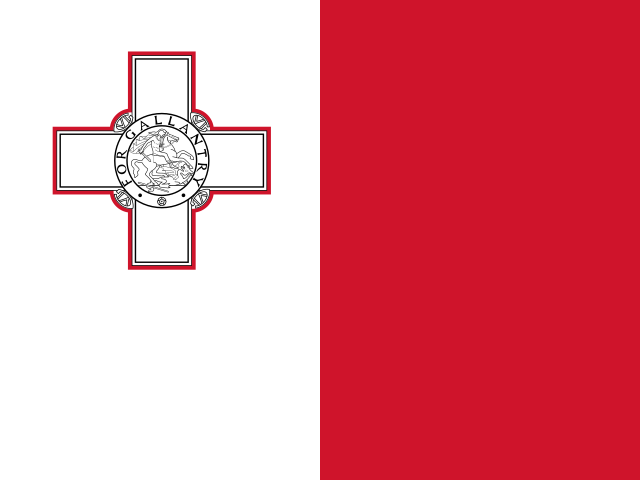

Anchored at the geographical and strategic center of the Mediterranean Sea, ninety-three kilometers south of Sicily (Italy) and two hundred and eighty-eight kilometers east of Tunisia, the Republic of Malta (Repubblika ta’ Malta) occupies an archipelago of three hundred and sixteen square kilometers. Comprising three inhabited islands—Malta, Gozo (Għawdex), and Comino (Kemmuna)—alongside uninhabited islets like Filfla and Saint Paul’s Island, Malta is one of the smallest and most densely populated sovereign nations on Earth, with over five hundred and thirty thousand residents living across honey-hued limestone promontories, deep natural sea rias, and terraced agricultural plateaus.
Few places on the globe hold a historical density to match Malta’s maritime crossroads. Positioned at the narrow waist dividing the western and eastern Mediterranean basins, the archipelago was coveted, fortified, and contested by every major Mediterranean naval power: Phoenicians, Carthaginians, Romans, Byzantines, Arabs, Normans, the Knights Hospitaller of Saint John, Napoleonic France, and the British Empire. This complex history created the Maltese language (Malti)—the only Semitic tongue in the European Union and the only Semitic language officially written in the Latin alphabet—combining an Arabic grammar and core lexicon with rich strata of Sicilian, Italian, and English vocabulary.

Globigerina Limestone and the Subterranean Landscape
Geologically, the Maltese archipelago is a block of Oligocene and Miocene sedimentary marine limestones uplifted between North Africa and the Eurasian plate. The islands are formed primarily from two distinct geological formations: Lower Coralline Limestone, a hard, weather-resistant stone that forms the sheer southern sea cliffs rising over two hundred meters above the waves at Dingli, and Globigerina Limestone (franka), a soft, fine-grained golden-yellow rock composed of microscopic fossil plankton shells. Easily quarried and sawn into smooth rectilinear blocks that harden upon exposure to sea air, Globigerina limestone is the universal building material of Malta, giving every village church, baroque townhouse, and fortress wall its warm, honey-colored patina.
The terrain is characterized by a low, undulating plateau tilting gently from southwest to northeast, broken by geological fault systems like the Victoria Lines fault. There are no permanent rivers or natural lakes across the archipelago; rainfall rapidly infiltrates the porous limestone to accumulate in fragile subterranean freshwater lenses floating upon denser seawater. To capture winter rains, Maltese farmers constructed thousands of kilometers of drystone rubble walls (ħitan tas-sejjieħ) over centuries, terracing steep hillsides to prevent soil erosion and collecting runoff in subterranean cisterns.
Along the coast, tectonic subsidence and rising sea levels drowned ancient river valleys, creating some of the world’s finest natural deep-water harbors. On the eastern coast, Grand Harbour (il-Port il-Kbir) and Marsamxett Harbour bite deep into the limestone mainland, separated by the narrow Sciberras peninsula. With shelter from treacherous Mediterranean gales and deep water capable of accommodating modern naval fleets and commercial cruise ships, Grand Harbour has functioned as the supreme maritime anchor of the central Mediterranean for over three thousand years.
Megaliths Older Than Stonehenge: Ħaġar Qim and the Hypogeum
Long before the rise of the Egyptian pyramids or the construction of Stonehenge, an advanced Neolithic temple-building civilization flourished on the Maltese archipelago between 3600 and 2500 BC. Inscribed on the UNESCO World Heritage list, the Megalithic Temples of Malta—including Ħaġar Qim, Mnajdra, Tarxien, and Ġgantija on Gozo—stand among the oldest free-standing stone architectural structures on Earth.
Perched on a windswept southern cliff overlooking the islet of Filfla stands the temple complex of Ħaġar Qim (“Standing Stones”). Built from colossal coralline and globigerina megaliths weighing up to twenty tons, the temple features an ingenious cloverleaf or trefoil ground plan of semicircular apses connected by central monumental passageways. Master stonemasons cut massive trilithon entrance doorways, drilled pitted decorative patterns into stone altars, and carved mushroom-shaped libation tables using only obsidian, flint blades, and hard diorite hammerstones.
At nearby Mnajdra, the lower temple demonstrates sophisticated astronomical orientation. On the vernal and autumnal equinoxes, the rising sun’s first rays pass directly through the monumental trilithon entrance to illuminate the central axis of the inner sanctuary, while on the summer and winter solstices, sunlight strikes specific engraved edges of stone slabs in the lateral chambers, establishing that Neolithic priest-astronomers used the temple as a solar calendar to govern seasonal planting and sacrificial rites.
Subterranean Neolithic architecture reached its absolute zenith at the Ħal Saflieni Hypogeum in Paola. Carved entirely out of solid limestone across three subterranean levels between 3300 and 2500 BC, this underground necropolis accommodated the remains of an estimated seven thousand individuals. Its chambers replicate the above-ground megalithic temples with carved false doorways, corbelled ceilings, and intricate red-ochre spiral wall paintings. The most astonishing feature is the “Oracle Chamber,” carved with acoustic perfection so that a low male voice chanting in a specific wall niche resonates throughout the entire subterranean complex with an eerie, hypnotic amplification.

The Great Siege of 1565 and the Sovereign Order of Saint John
In 1530, Holy Roman Emperor Charles V granted the Maltese islands to the Sovereign Military Order of the Hospital of Saint John of Jerusalem (the Knights Hospitaller), who had been expelled from Rhodes by Ottoman Sultan Suleiman the Magnificent. In return, the Emperor demanded a nominal annual feudal tribute: the delivery of a single trained Maltese falcon on All Saints’ Day.
The Knights transformed Malta into a maritime military bastion, patrolling Mediterranean sea lanes with heavily armed galleys and raiding Ottoman shipping. In May 1565, Suleiman dispatched an armada of over one hundred and eighty warships carrying nearly forty thousand elite Ottoman troops, janissaries, and corsairs under Mustapha Pasha and corsair admiral Dragut to annihilate the Order and conquer Malta as a staging ground for the invasion of southern Europe. Defending the rocky harbors was Grand Master Jean Parisot de Valette, commanding scarcely six hundred Knights, four hundred Spanish soldiers, and a few thousand hastily armed Maltese civilian militia.
The ensuing Great Siege of 1565 was one of the fiercest military contests in world history. For four months beneath the scorching summer sun, the defenders held out against relentless artillery bombardments that rained over one hundred thousand cannonballs onto the stone bastions. Fort Saint Elmo on the tip of the Sciberras peninsula held out for an agonizing twenty-eight days until every defender was slain, costing the Ottomans six thousand soldiers and the life of Dragut. At Fort Saint Michael and Fort Saint Angelo across Grand Harbour in Birgu, Knights and Maltese citizens fought hand-to-hand on breached ramparts, beating back waves of janissaries with explosive incendiary hoops and boiling oil until a relief force from Sicily arrived in September, forcing the shattered Ottoman fleet to withdraw.
Following this victory that saved Christian Europe from Mediterranean encirclement, de Valette founded a new fortified capital on the Sciberras ridge on March 28, 1566: Valletta, named in his honor and proclaimed “a city built by gentlemen for gentlemen.” Designed by papal military architect Francesco Laparelli on a strict Renaissance grid with underground sewers, sheer stone ramparts, and imposing palazzi, Valletta remains one of Europe’s most intact historic capitals, crowned by Saint John’s Co-Cathedral, whose gilded baroque interior holds Caravaggio’s supreme masterpiece, The Beheading of Saint John the Baptist.
In the island’s interior, high on a central plateau, stands the ancient fortified capital of Mdina, known as the “Silent City.” Inhabited since the Bronze Age and fortified successively by Phoenicians and Romans (who called it Melite), Mdina was reduced to its present perimeter under ninth-century Arab rule with the construction of a deep defensive moat. Entering through its baroque stone gateway, visitors encounter a preserved medieval enclave of narrow, twisting alleys engineered to break the line of sight for attacking archers. The city is lined with Siculo-Norman palazzi featuring carved limestone corbels and double-arched mullioned windows, most famously the fourteenth-century Palazzo Falson. At night, when day-trippers depart, lamp-lit Mdina falls into deep stone silence, commanding uninterrupted views across the illuminated towns of the central plain to the sea.
Across the five-kilometer Gozo Channel lies Malta’s sister island of Gozo (Għawdex). More rural, tranquil, and agricultural than the main island, Gozo is crowned by its own fortified acropolis: the Cittadella in Victoria (Rabat). Along the northern coast of Gozo at Qbajjar and Xwejni extends a surreal coastal landscape: hundreds of rectangular salt pans carved directly into the yellow coastal limestone bedrock by hand. Filled with seawater by winter waves and summer sea surges, the pans are dried by intense Mediterranean sun and dry winds, allowing local families to harvest pure sea salt crystals using traditional wooden scrapers and brushes, an artisanal craft practiced continuously since Roman times.

The Island Fortress of World War II: The George Cross Island
In 1798, Napoleon Bonaparte captured Malta without firing a shot en route to Egypt, ending two hundred and sixty-eight years of rule by the Knights. However, French plundering of church treasures provoked a nationwide rebellion by the Maltese, who allied with the British Royal Navy under Lord Nelson to blockade French troops inside Valletta. Under the Treaty of Paris in 1814, Malta voluntarily became a British Crown Colony, developing into the supreme naval dockyard and headquarters of the British Mediterranean Fleet.
During World War II, Malta’s strategic position across Axis convoy routes connecting Italy with Erwin Rommel’s forces in North Africa turned it into the most heavily bombarded target in military history. Between June 1940 and August 1942, German Luftwaffe and Italian Regia Aeronautica bombers dropped more than fifteen thousand tons of explosives across the tiny archipelago, flying over three thousand air raids that destroyed three-quarters of the buildings in Grand Harbour. The population lived underground in ancient limestone catacombs and hand-cut tunnels, enduring severe starvation and typhoid outbreaks.
The turning point arrived in August 1942 with Operation Pedestal (known locally as the Santa Marija Convoy), when five heavily battered merchant ships, including the American tanker SS Ohio, limped into Grand Harbour with critical fuel, flour, and aircraft parts. In recognition of the supreme collective courage of the Maltese civilian population, King George VI awarded the George Cross—the highest civilian gallantry decoration in the British realm—to the “island fortress of Malta, to bear witness to a heroism and devotion that will long be famous in history” on April 15, 1942. Today, the George Cross is proudly incorporated into the upper canton of the national flag.
Living Festas, Luzzu Boats, and Mediterranean Gastronomy
Following peaceful independence from Britain on September 21, 1964, and the declaration of a republic ten years later, Malta joined the European Union in 2004 and adopted the euro in 2008. The modern economy has evolved into a diversified service powerhouse, leading European ship registration under the Maltese maritime flag, developing world-class pharmaceutical manufacturing and aircraft maintenance facilities, and hosting global iGaming and financial technology enterprises alongside an international film industry that utilizes the colossal Mediterranean deep-water filming tanks at Fort Ricasoli.
Yet everyday life in Malta remains anchored in parish identity and religious celebration. Between May and September, every town and village across Malta and Gozo celebrates its annual festa honoring its patron saint. The narrow streets are decorated with towering gilded statues, velvet banners, and arches of colored light bulbs. Brass bands parade through the squares while rival parish factories compete to produce ground-shaking synchronized fireworks (murtali) that illuminate night skies. The climax of the festa is the triumphal procession, where teams of young men carry the heavy wooden statue of the saint out of the church amid showers of paper confetti.
In fishing harbors like Marsaxlokk and Marsaskala, fishermen continue to pilot traditional wooden luzzu boats. Painted in primary marine hues of bright yellow, red, cobalt blue, and green, each luzzu features a carved or painted pair of eyes on the bow—an ancient Phoenician and Egyptian talisman known as the Eye of Osiris or Horus, believed to guide boats safely through treacherous fog and protect fishermen from evil spirits.
Maltese culinary traditions blend Mediterranean ingredients with North African aromatics. The national specialty is fenek (rabbit), either braised in garlic, bay leaves, and red wine or served as a rich sauce over pasta. Every morning, bakeries across the islands bake hundreds of pastizzi—flaky, diamond-shaped phyllo pastries filled with either creamy salted ricotta cheese (pastizzi tal-irkotta) or spiced mushy peas (pastizzi tal-piżelli), washed down with Kinnie, a bittersweet local soft drink flavored with bitter chinotto oranges and aromatic wormwood herbs.
The daily cornerstone of any Maltese meal is ħobż tal-Malti, traditional artisan sourdough bread baked in wood-fired stone ovens. Featuring a thick, dark, blistered crust that crackles when sliced and an airy, chewy crumb with a distinct lactic sourdough tang, it is the foundation of ħobż biż-żejt (“bread with oil”). Thick slices of warm bread are rubbed generously with ripe sweet summer tomatoes (kunserva tomato paste in winter), drizzled with peppery local extra virgin olive oil, and topped with pickled capers, crushed garlic, chopped mint, sea salt, flaked tuna, and pitted Gozitan olives, capturing the pure essences of the Mediterranean sun and soil in a single rustic bite.
From the prehistoric megaliths of Ħaġar Qim and the golden limestone ramparts of Valletta to the azure waters of the Blue Lagoon in Comino, the Republic of Malta embodies a magnificent Mediterranean dialogue: an island nation forged through millennia of resistance, maritime mastery, and enduring communal faith.






Share what you know
Been there, grew up there, or know something we missed? Add a comment; corrections with a source are especially welcome.