


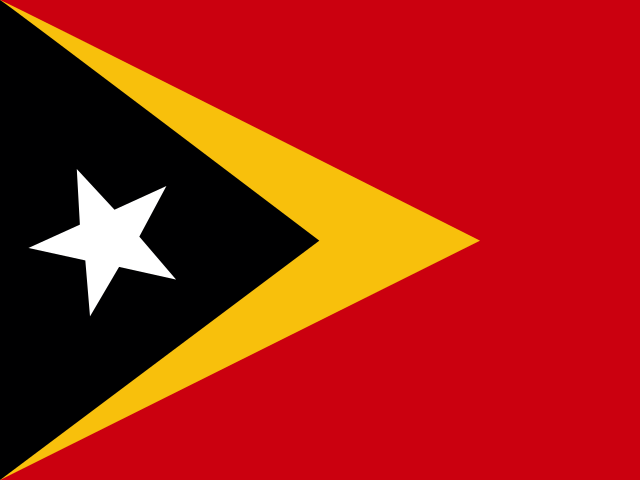

Rising like a fractured limestone fortress out of the meeting currents of the Indian and Pacific oceans, the Democratic Republic of Timor-Leste occupies the eastern half of the island of Timor, situated at the southeastern tip of the Indonesian archipelago and five hundred kilometers north of Australia. Encompassing 14,919 square kilometers, the sovereign territory also includes the coastal enclave of Oecusse (Ambeno) within Indonesian West Timor, the biodiverse oceanic island of Atauro twenty-five kilometers north of Dili across the Wetar Strait, and the sacred coral islet of Jaco. Emerging from centuries of Portuguese colonial rule followed by a harrowing twenty-four-year resistance against foreign military occupation, Timor-Leste achieved the formal restoration of its independence on May 20, 2002, becoming the first newly recognized sovereign nation of the twenty-first century. Today, the seaside capital of Dili faces calm northern straits beneath the gaze of the monumental Cristo Rei statue, anchoring a society that marries ancient animist cosmology with devout Catholic conviction and an unyielding commitment to participatory democracy.
The cultural identity of Timor-Leste is rooted in a compelling myth of geomorphological genesis: the legend of Lafaek, the sacred grandfather crocodile. According to ancient oral lore, a grateful crocodile befriended a young boy and, upon reaching the end of its natural life, offered its gigantic scaled body to become a permanent homeland for the boy’s descendants. The animal’s ridged back rose out of the ocean to form the rugged, spine-like mountain chains of Timor, while its ridges and wrinkles became the peaks and gorges. Consequently, Timorese people revere the saltwater crocodile (Crocodylus porosus) not as dangerous vermin, but as an ancestral forebear, granting the reptile customary legal protections and sacred respect throughout coastal lagoons and estuaries.
Spine of the Ancestors: Mount Tatamailau and the Cloud Forests
Unlike many neighboring Indonesian islands characterized by active volcanic cones, the geology of Timor is fundamentally non-volcanic, formed by the colossal tectonic collision where the northern edge of the Australian continental plate has wedged beneath the Banda volcanic arc. This intense crustal buckling thrust ancient marine sediments, deep-sea limestones, and metamorphic basement rocks thousands of meters into the equatorial sky, creating a jagged, fractured landscape where razor-backed mountain ridges drop steeply into torrential river gorges that flash flood during the summer wet season and dry to stony beds during the winter drought.

The backbone of the nation is the Ramelau Range, crowned by Mount Tatamailau (known colloquially as Mount Ramelau), which rises to 2,986 meters above sea level in Ainaro municipality. In the Mambai language, the mountain’s indigenous name translates to “Grandfather of All,” revered as the sacred resting place where the souls of departed ancestors ascend to watch over their living kin. The trail to the summit winds past high-altitude eucalyptus woodlands (Eucalyptus urophylla), mountain meadows dotted with wild blueberries, and groves of native casuarina trees. At the windswept summit, an imposing three-meter-high alabaster statue of the Virgin Mary, erected in 1997, looks outward across a sea of rolling cloud banks, drawing thousands of Catholic pilgrims each October who climb through the freezing mountain darkness to pray and witness the sunrise illuminate both the northern and southern coastlines simultaneously.
The high central plateau between Ermera, Ainaro, and Liquiçá forms the premier coffee-producing heartland of Timor-Leste. Introduced by Portuguese planters in the early nineteenth century, coffee became the lifeline of the rural economy. In the cool mountain mists beneath towering shade trees of albizia and silver oak, smallholder farmers cultivate Híbrido de Timor—a natural spontaneous cross between Coffea arabica and Coffea canephora (Robusta) discovered in Timor in 1927. Renowned for its natural resistance to coffee leaf rust (Hemileia vastatrix), this cultivar became foundational to global agronomy, while Timor’s high-altitude shade-grown Arabica coffee beans are hand-harvested and sun-dried on burlap mats by farmer cooperatives, commanding premium fair-trade prices in international specialty markets.
The Sacred Realm: Uma Lulik, Tara Bandu, and Customary Law
Beneath the institutional framework of a modern parliamentary republic, Timorese daily life is governed by Lulik—an untranslatable Austronesian concept encompassing sacred spiritual power, divine ancestral cosmos, cosmic equilibrium, and taboos. Lulik resides in sacred geographic features such as mountain crags, ancient banyan trees, and water springs, but finds its most deep architectural expression in the Uma Lulik, or sacred spirit house.
In rural villages across the eastern Lautem municipality, traditional Fataluku communities construct Uma Lulik as architectural marvels. Raised high above the ground on four or six massive ironwood stilts to separate the sacred domain from profane soil, these houses feature soaring conical or high-peaked thatched roofs woven from coconut fronds and sugar palm fiber. The timber beams are lashed together with vegetal rattan without nails, embellished with intricate relief carvings of ancestral anthropomorphic figures, geometric sunbursts, and sacred nautilus shell discs. Inside the elevated dark chamber, village elders preserve the clan’s sacred heirlooms—including ancient Portuguese bronze brass cannons, antique woven textiles (tais), sacred swords, and stone totems—which serve as the tangible conduits through which clan elders communicate with ancestral spirits during birth, harvest, and funerary rituals.
Customary environmental governance is maintained through Tara Bandu, an ancient ritual prohibition system that has experienced a powerful national renaissance since independence. Under Tara Bandu, village leaders, clan elders, and local government officials convene to establish binding community rules regulating the sustainable harvest of natural resources—such as prohibiting tree cutting in vital watershed forests, establishing seasonal bans on hunting wild deer, or designating protected reef zones to allow marine fish stocks to regenerate. Codified through public animal sacrifices and the hanging of symbolic animal bones and woven vegetal cords on sacred boundary posts, Tara Bandu carries immense moral authority; community members believe that violating the pact incurs severe ancestral punishment and spiritual illness, creating an extraordinarily effective indigenous conservation framework that combines customary tradition with modern conservation science.
Parallel to customary law is the central role played by livestock in ancestral socio-economic contracts. In rural communities, water buffalo (karau) and native pigs represent the supreme medium of customary exchange, required during barlaque (marriage alliance negotiations) and elaborate funerary ceremonies. A family’s social standing is measured not by paper bank balances, but by the number of horn-spread buffalo it can muster to honor affinal kin, seal disputes, and nourish village elders during community feasts. When an elder passes away, the sacrifice of buffaloes ensures that the deceased soul is provided with transport and cattle herds in the ancestral realm, reinforcing kinship bonds that knit highland lineages together across generations.
Marine Marvels of the Coral Triangle: Atauro and Jaco Island
Offshore, Timor-Leste occupies a privileged ecological position within the heart of the Coral Triangle, the epicenter of global marine biodiversity. In the deep marine channels flanking the island, the seafloor plunges dramatically into submarine canyons exceeding three thousand meters in depth, creating a vital oceanic migratory corridor for blue whales, sperm whales, pilot whales, and spinner dolphins journeying between the Banda Sea and the Indian Ocean.

Nowhere is this marine richness more astonishing than around Atauro Island. In 2016, a comprehensive marine ecological survey conducted by Conservation International documented an average of 253 reef fish species per ecological site on Atauro’s coastal barrier reefs—the highest average biodiversity recorded anywhere on planet Earth, surpassing the previous record holders in the Great Barrier Reef and Raja Ampat. The island’s crystalline inshore waters harbor thriving coral formations, dugongs, and nesting sea turtles, supported by traditional fishing communities that have established community-managed marine protected areas enforced through customary Tara Bandu laws.

In the far east of Lautem lies Nino Konis Santana National Park, established in 2007 as the country’s first national park, named in honor of the revered armed resistance commander born in Tutuala. Spanning 1,236 square kilometers of primary monsoon forest, uplifted limestone terraces, and coastal lagoons, the park protects critical habitats for twenty-five endemic bird species, including the critically endangered yellow-crested cockatoo (Cacatua sulphurea) and the Timor green pigeon. Within the park’s karst limestone cliffs near Tutuala lie the ancient rock shelters of Ile Kére Kére. Dated back over three thousand years to the Austronesian maritime expansion, the cave walls preserve extraordinary polychrome rock paintings executed in red and yellow ochre, depicting high-prowed seafaring outrigger boats, martial dancers brandishing shields, hand stencils, and radiating sunbursts that document the deep antiquity of oceanic voyaging in the Timor Sea.
Anchoring the marine sector of the park is Jaco Island, an uninhabited ten-square-kilometer limestone coral formation separated from Tutuala beach by a narrow, high-current marine passage. Revered by the local Fataluku people as an inviolable sacred site (Tono), customary law strictly prohibits anyone from erecting permanent dwellings or residing on the island overnight, preserving its dazzling white coral sand beaches and old-growth littoral forest in absolute ecological purity.
Sandalwood, Resistance, and the Heroic Path to Sovereignty
For centuries before European arrival, Timor was renowned across Asia for its fragrant white sandalwood (Santalum album), prized in Chinese imperial courts and Indian temples for sacred carvings, cosmetic oils, and incense. Portuguese navigators and Dominican friars first made contact with the island around 1515, establishing early trading settlements at Lifau in Oecusse before relocating their colonial capital to Dili in 1769. Under Portuguese rule, the colonial administration governed largely through indigenous kings (liurai), who traded sandalwood and coffee for firearms, silk, and alcohol while preserving their customary clan autonomy in the rugged interior.
The defining ordeal of modern Timorese history began in late 1975. Following the Carnation Revolution in Lisbon and the abrupt withdrawal of the Portuguese colonial administration, Timorese political parties declared the independence of the Democratic Republic of Timor-Leste on November 28, 1975. Nine days later, on December 7, the Indonesian military launched a full-scale airborne and naval invasion of Dili, unilaterally annexing the territory as its twenty-seventh province. What followed was a quarter-century of military occupation marked by forced relocations, widespread famine, and brutal counter-insurgency campaigns that claimed the lives of an estimated one hundred to two hundred thousand Timorese citizens—nearly one-third of the pre-invasion population.
Faced with overwhelming military forces, the Timorese launched a three-front resistance strategy that has become a legend of modern anti-colonial struggle. In the rugged mountains, the Armed Forces for the National Liberation of East Timor (FALINTIL), led by Commander Kay Rala Xanana Gusmão, waged an elusive guerrilla campaign from hidden rock caves and cloud-forest camps. In the towns and schools, the clandestine youth movement organized peaceful underground resistance and intelligence networks. On the international stage, diplomatic leaders José Ramos-Horta and Bishop Carlos Ximenes Belo championed the cause at the United Nations, their tireless non-violent advocacy earning them the Nobel Peace Prize in 1996.
The turning point arrived on November 12, 1991, when Indonesian troops opened fire on a peaceful memorial procession of unarmed students at the Santa Cruz cemetery in Dili, murdering over two hundred young people. Smuggled video footage captured by British journalist Max Stahl was broadcast globally, horrifying international audiences and galvanizing global civil society. Following the collapse of the Suharto dictatorship in Jakarta, the United Nations organized a historic popular consultation on August 30, 1999. Defying severe intimidation from military-backed militias, 78.5 percent of the Timorese electorate voted decisively to reject autonomy and embrace full independence. Following a destructive scorched-earth campaign by departing militias that destroyed eighty percent of national infrastructure, the United Nations Transitional Administration in East Timor (UNTAET) assisted the population in rebuilding state institutions, culminating in the international recognition of statehood on May 20, 2002.
The Petroleum Fund, Heritage Tais, and the ASEAN Horizon
The financial foundation of post-independence reconstruction has been anchored by offshore oil and natural gas fields beneath the Timor Sea, particularly the Bayu-Undan field. Demonstrating exceptional fiscal prudence, Timor-Leste established the Petroleum Fund in 2005, modelled after Norway’s sovereign wealth fund. Designed to protect the domestic economy from inflation and ensure that fossil fuel revenues benefit future generations, all petroleum royalties are deposited directly into the fund, which grew to exceed seventeen billion dollars, financing universal free primary education, rural rural electrification, paved highways, and modern health clinics across remote mountain districts.
Concurrently, the nation is actively diversifying its economy away from petroleum dependence. Organic agriculture, particularly specialty coffee and premium vanilla, anchors rural livelihoods. In 2021, UNESCO inscribed Tais—the traditional handwoven textile of Timor-Leste—on the Representative List of the Intangible Cultural Heritage of Humanity in Need of Urgent Safeguarding. Woven on traditional backstrap looms by women using hand-spun local cotton and natural botanical dyes extracted from roots, barks, and crushed leaves, each municipality produces distinct geometric patterns and colors that serve as visual markers of clan identity, dowry wealth, and reconciliation ceremonies.
Internationally, Timor-Leste has achieved historic diplomatic integration, gaining in-principle admission as the eleventh member state of the Association of Southeast Asian Nations (ASEAN). Bridging the cultural worlds of Southeast Asia and the Pacific, speaking Portuguese and Tetum alongside sixteen living indigenous idioms, and drawing upon five centuries of cultural synthesis, Timor-Leste proves that an unshakeable devotion to ancestral heritage, community solidarity, and democratic human rights can overcome the heaviest trials of history to build an inspiring, sovereign future upon the sacred ground of the crocodile.






Share what you know
Been there, grew up there, or know something we missed? Add a comment; corrections with a source are especially welcome.