
In Atlacholoaya, Morelos, Inés Ramírez prepares green mole for the Día de Muertos offering in a clay pot she prefers. In a 2021 account, she describes setting the dish out for her sister and other relatives.[13] The scene begins in one household, but it opens a wider question: what work and objects turn a festival into an occasion people can share?
That plate opens a question larger than any one custom. What do people prepare, make, carry or arrange when a festival brings memory and renewal into the present? In Kolkata, the answer begins with unfired clay images that will later be immersed. For Nowruz, it may be a table of sprouting seeds and named objects. In Mexico, an ofrenda makes remembrance specific to the people it honours. The work differs; none of these practices stands in for the others.
Kolkata: an image made for Durga Puja
UNESCO’s account follows Durga Puja from the months of preparing unfired Ganga clay images to the painting of the eyes at Mahalaya, then to immersion at the festival’s end. These are separate moments of making and ritual. The finished public display is only one part of a longer sequence.[1]

The workshop photograph shows clay images in progress at Kumartuli. Sculpting the form and painting its eyes belong to different stages; UNESCO specifically places the eye-painting at Mahalaya. The images are unfired and made of Ganga clay. Their material and timing matter: the form is prepared well before the public celebration, then a later ritual act completes this part of the sequence.[1] UNESCO describes the festival as a collaborative practice in which participants from different social and economic backgrounds contribute. Making, organising and attending are distinct roles, but each helps produce the public event.
During the festival, temporary pandals transform streets into places for gathering. Designers, sculptors, decorators, drummers, priests and organising committees contribute different skills. UNESCO describes collaboration as part of the living practice. The pavilion may be temporary, but the knowledge behind its construction and organisation has to be passed on.[1]
Durga also appears in objects made at a smaller scale. The British Museum holds a painted clay śara, a disc made in Kalighat around the 1980s, depicting the goddess and associated figures. Its collection record places the object within Bengali traditions of portraying Durga in clay. A small devotional object and a public pandal differ in scale and purpose, yet both bring the goddess into a particular setting.[3]
The festival’s continuity lies partly in people beginning again: preparing images, planning a pavilion, arranging music and organising the event. A temporary structure can demand sustained work. It is the skills and relationships that carry forward, not the same installation left standing year after year. The work is distributed across a neighbourhood and its groups; the completed pandal is only the visible point where those contributions meet. When the structure comes down, the knowledge needed to build the next one remains with the people who made it.
The public pandal makes one kind of labour visible; the accessibility work that follows asks who can take part once the space is built. A celebration is shaped by both its makers and the people it is designed to welcome.[1][4]
Access is part of making room
In October 2026, UNESCO reported an accessibility initiative involving the Government of West Bengal, the UN in India, IIT Kharagpur and disability organisations. Its guidelines cover infrastructure, information, programming, emergency planning, volunteer training and attitudes. The work began with consultations and training, bringing disabled people’s experience into decisions about how events are organised.[4]
That changes the design question. A ramp can help someone enter, but clear information, a usable programme and emergency arrangements affect whether they can take part throughout the visit. UNESCO describes training for organisers and volunteers alongside physical changes. Organisers also need to consider how a visitor finds the accessible route, understands what is happening and gets help if plans change. Those details shape an event from the first announcement through the journey home.[4]
Recife and Olinda: frevo in the street
In Pernambuco, Carnival has a sound and movement with a local history: frevo. IPHAN traces it to the late nineteenth century, when music and dance emerged in Recife and Olinda amid popular street life and rapid social change. The form grew through the encounters of military bands, newly freed people, capoeira practitioners and a new working class.[14]
Frevo is not only a tune played over a procession. IPHAN describes it as musical, choreographic and poetic expression, with three recognised forms: frevo de rua, frevo de bloco and frevo-canção. Its dance, the passo, is associated with capoeira movement; the records describe arms and legs improvising in the street while bands and groups moved through the city.[14]
The example widens the meaning of a festival. Public celebration can be entertainment, but it can also preserve an urban art shaped by people contesting and using public space. Frevo was registered as Brazilian intangible cultural heritage in 2007 and recognised by UNESCO in 2012. Its history belongs to Pernambuco, even as the form has travelled elsewhere in Brazil.[14]
Nowruz: a table set for spring
Nowruz, often translated as “new day,” marks renewal around the arrival of spring. It is observed across a wide region, with different names and local practices. UNESCO’s multinational inscription includes traditions beyond Iran; its 2024 extension includes Nauryz practices of Kazakh communities in Mongolia. An Iranian haft-sin is one expression, not a template for every household that marks the season.[2][5]
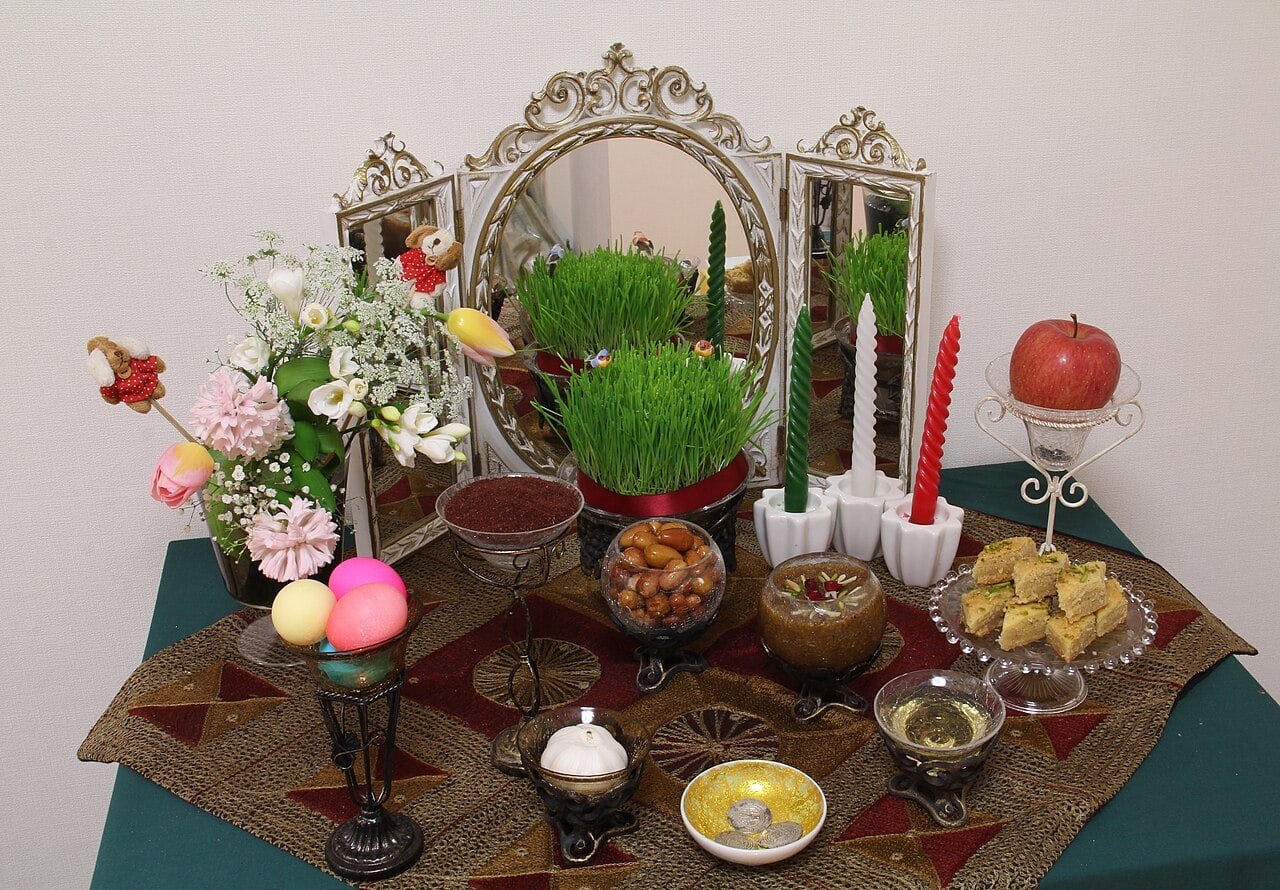
The haft-sin, or seven-S table, gathers foods and objects whose Persian names begin with the letter sin. The Smithsonian describes items such as apples, sprouts, garlic and vinegar, with families making their own selections and explaining their meanings in different ways.[7]
Farhang Foundation gives several names in Persian: sib for apple, sir for garlic, serkeh for vinegar, and sabzeh for growing shoots. The shared initial sound links objects that do not share it in English. Preparing the table involves language as well as choosing and arranging things.[8] The names carry associations that may be easier to explain at home than to translate for a visitor. A table can be both a seasonal display and a lesson in vocabulary, family memory and the meanings attached to ordinary foods.
The green shoots take time. Farhang describes soaking wheat or lentils, letting them germinate, then spreading them in a dish before the celebration. The sabzeh has to be started in advance; it cannot be made instantly on the day. A growing plant joins fruit, vessels and other things collected for the table.[8] The preparation begins before the calendar turns to the festival day: seeds are soaked, watched and transferred into a dish. The time required is part of the object’s meaning. It gives the household something living to tend while the rest of the table is assembled.
Farhang also records associations: sabzeh with rebirth, samanu, a sweet wheat-germ pudding, with abundance, and senjed, dried oleaster fruit, with love. Other objects may be included, and a table need not look exactly the same in every home. The meanings belong to a tradition of interpretation, not a compulsory checklist.[8] What is placed there is also shaped by time: shoots need days to grow, while the other objects can be gathered closer to Nowruz. The table brings a living plant, familiar foods and language into one seasonal arrangement.[7][8]
22 March: Nauryz in Mongolia
UNESCO’s 2024 Nowruz record gives a specific account of Kazakh communities in Mongolia, who celebrate Nauryz on 22 March. The description includes welcoming sunrise, lighting two candles, filling containers with milk, yoghurt or water, and preparing koje, a soup. These actions make renewal practical: vessels are filled, food is prepared and the day is marked. The record also notes efforts to settle disputes and debts as part of entering the new year.[5]
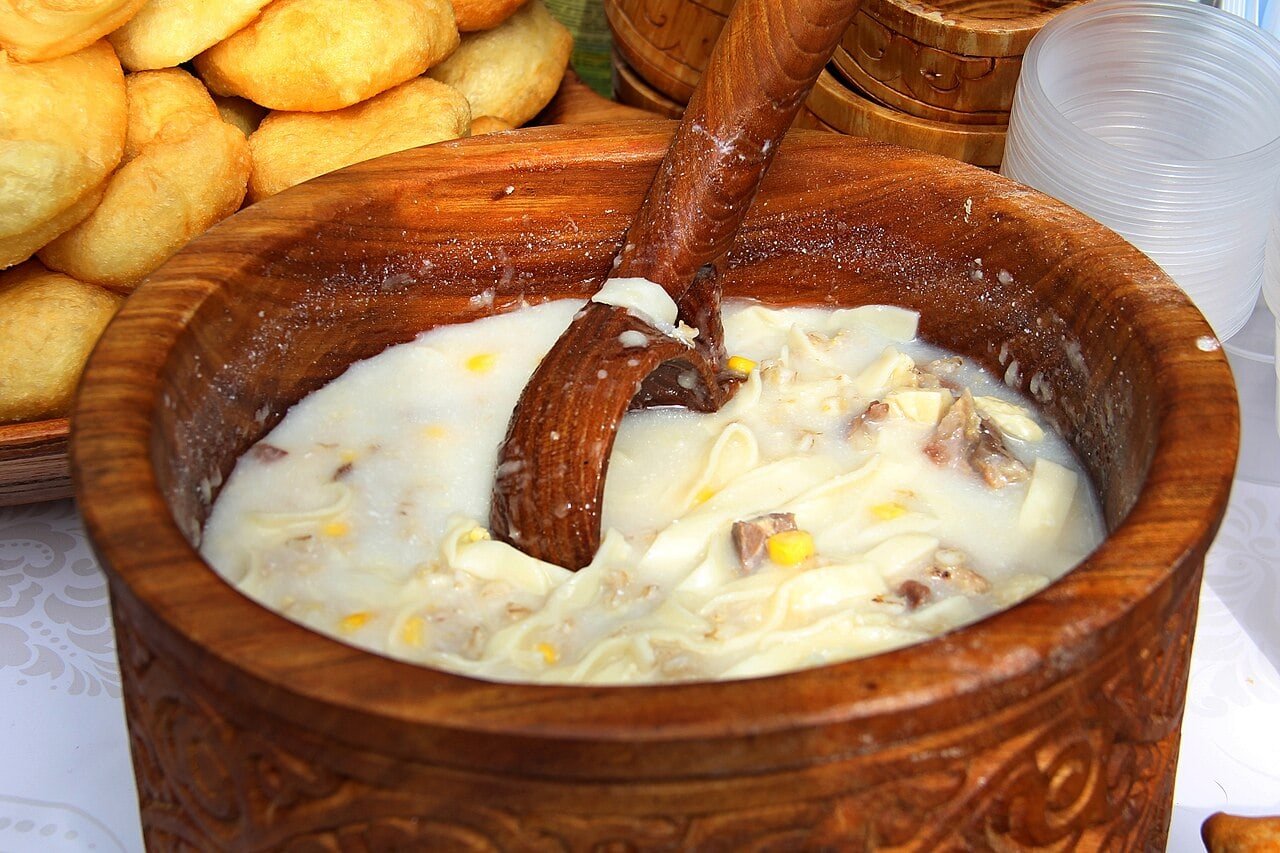
The bowl shows Kazakh Nauryz kozhe, a food associated with the festival. It does not document the Mongolian household in UNESCO’s account.[5]
The UNESCO record describes a particular Kazakh Nauryz practice in Mongolia. Beside the Iranian haft-sin, it shows that a shared spring observance can take different forms: one account follows named objects on a household table; the other records a dated gathering with welcome, soup and reconciliation. Neither stands for every Nowruz celebration.[5][7][8]
Día de Muertos: an offering for particular people
UNESCO’s inscription describes an Indigenous festivity dedicated to the dead, observed through a sequence around late October and early November. It associates different days of observance with categories of deceased, including children and adults. This is not a single-night return shared in the same form by every family; the inscription concerns living Indigenous practices within Mexico, with regional differences.[6] Families may prepare food, clean graves and arrange offerings, but the details vary. The calendar matters because the return is not described as one identical event for all the dead: the days and offerings acknowledge different relationships.[6][9]

An ofrenda is an offering arranged for the dead. Mexico’s National Institute of Anthropology and History describes objects that may include water, candles, flowers, incense, food, paper cut-outs and things associated with the deceased. The contents vary by region and family. A photograph of one altar cannot stand for all of them.[9]
A photograph can still hold a particular relationship in view. The objects are not simply festive decoration: a picture names a person, a food may recall a preference, and a candle or flower takes its place within an arrangement. An offering makes remembrance material and shareable without making every family’s grief or affection identical. The person remembered is not interchangeable with a category of the dead; the family’s choice of objects can make that relationship legible to others who come to help prepare it.
UNESCO describes these observances in relation to Indigenous practices and Catholic feast days. That layered history resists two easy stories: that the present celebration is an untouched ancient custom, or that a modern parade explains the whole tradition. The practices have histories, regional forms and present-day participants.[6]
A photographer records a smaller gathering
Photographer Miguel Gandert recalled, in a Smithsonian interview, encountering families and schoolchildren while looking for coffee on the morning of 31 October. His account follows altars for children who had died and offerings carried to graves. It is a report of a particular moment and people, not a summary of how every family observes Día de Muertos.[10]
Folklorist Norma Cantú describes the observance as a tradition that has changed over centuries and varies with geography, social conditions and beliefs. Her account helps explain why no single visual formula can represent the whole practice. Change and variation are part of its history.[11]
The gathering Gandert describes is different from a large public installation, though both may exist within a festival season. An altar in a home, an offering at a grave and a public event have different purposes. Paying attention to the scale and setting keeps a photograph from turning someone’s act of remembrance into a general spectacle.
Inés Ramírez keeps making the mole
The INAH account describes a local preference for green mole and tamales nejos, alongside additions made for particular relatives. A customary food and an individual appetite can sit on the same offering: the first connects a household to community, while the second marks someone specific.[13]
In her account, ingredients that were once toasted and ground by hand with a metate could later be taken to a mill. Ramírez still values the clay pot and describes her green mole as chicken broth thickened with ground chile.[13] The tools changed; the dish remained tied to a particular household and its own way of remembering.
That detail keeps the story from turning a festival dish into a fixed recipe. A mill changes the labour of preparation; the clay pot, ingredients and person remembered still belong to Ramírez’s own account. The offering is neither a museum display nor a universal menu. It is something prepared for particular people, then placed within a larger season of remembrance.
Across these accounts, a public event, a visit to a grave and a family offering have different purposes. UNESCO and Smithsonian sources describe variation in where people gather and how they remember; one photograph or menu cannot stand for every family’s observance.[6][10]
A 2020 virtual programme at the Smithsonian National Museum of the American Indian paired explanations of Día de Muertos with food and making. Museum folklorist Cynthia Vidaurri discussed the holiday; chef Neftali Duran introduced associated foods; artists Evelyn Orantes and Joaquin Newman demonstrated paper marigolds.[12]
The work behind a gathering
A temporary pandal, a frevo procession, a spring table and an ofrenda all bring people together through different kinds of work. Some work is public and collective; some takes place at home and carries a private memory. Ramírez’s account gives that difference a human scale. A festival can be shared without asking everyone to bring the same history, recipe or reason for being there.[1][5][6][13] The comparison is useful because it does not flatten the occasions into one universal ritual. Kolkata’s image-making joins craft to a public calendar; Recife’s frevo carries a city’s street music and dance; Nowruz is marked across many communities with distinct local customs; an ofrenda may hold one family’s memories in view. What visitors encounter is the visible part of work that began earlier—in homes, workshops, meetings and rehearsals. The forms differ, and so do the meanings people bring to them. A careful account can notice the shared labour while leaving each celebration rooted in its own history.


Share what you know
Been there, grew up there, or know something we missed? Add a comment; corrections with a source are especially welcome.