

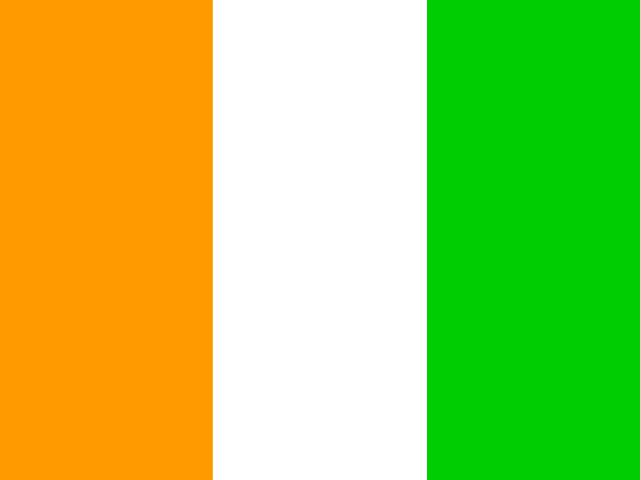


A Name Made from Two Languages
Burkina Faso carries its own introduction in its name. Adopted in 1984, it joins Burkina, from Mooré, with Faso, from Dioula: a name often rendered in English as “Land of Upright People.” It is a chosen national ideal, not a description that can be applied to every citizen or a claim that one language or community defines the country. The name replaced Upper Volta, a colonial title for the territory situated upstream in the Volta basin. Those names point in different directions: one expresses an ideal of shared civic belonging; the other locates the country within a physical landscape whose waters connect it to a much wider West Africa.[1][reference needed]
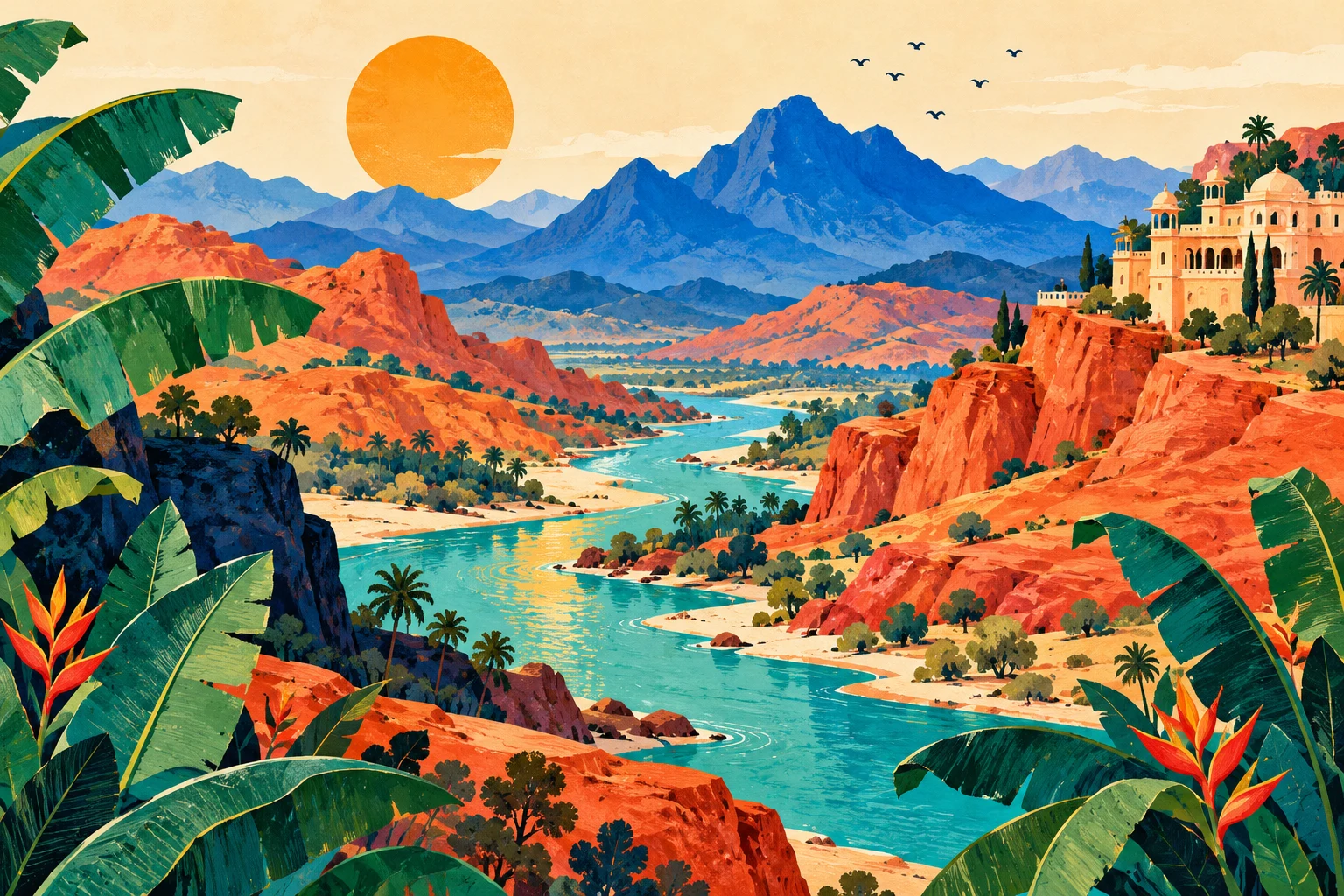
That meeting of languages and waters is a useful way into Burkina Faso. It is a landlocked country in West Africa, bordered by Mali and Niger to the north and east, and by Benin, Togo, Ghana and Côte d’Ivoire to the south and west. The northern reaches sit in the Sahel’s dry belt; farther south, rainfall and vegetation generally increase, passing through open savanna and cultivated country toward woodland. The shift is gradual rather than a simple line on a map. The four national river basins—Comoé, Mouhoun, Nakanbé and Niger—also make clear that this country’s waters flow into systems shared with its neighbours.[3][4]
The rivers are seasonal and heavily shaped by monsoonal rainfall. The Mouhoun, known historically as the Black Volta, flows northeast before turning south toward Ghana; the Nakanbé, historically the White Volta, runs through the central part of the country. The Nazinon, once called the Red Volta, is another tributary in the Volta system. In the north and east, seasonal tributaries feed the Niger basin; in the southwest, the Comoé flows toward Côte d’Ivoire. The Volta rivers continue south through Ghana to the Gulf of Guinea. To live inland here is still to live within a regional water geography, even where a river is dry for months at a time.[4][reference needed]
Precolonial Polities and the Court of the Mogho Naba
Before European colonial borders were surveyed across West Africa, the central plateau was anchored by the Mossi kingdoms, an enduring confederation of centralised states that took shape from the eleventh century onward. Polities such as Tenkodogo, Ouagadougou, and Yatenga defended their territories with disciplined cavalry armies, turning back imperial incursions from the Songhai Empire and regional sultanates. At the political center of the Mossi world stood the Mogho Naba, the sovereign ruler whose court in Ouagadougou balanced executive authority with customary councils and ancestral spiritual rites.[5][6]
Every Friday morning in Ouagadougou, the royal court reenacts the Faux Départ (False Departure), a centuries-old theatrical ceremony commemorating an emperor who prepared to ride to war against a rival prince before his royal ministers and Queen Mother persuaded him to remain and preserve civic peace. Even in the twenty-first century, Mogho Naba Baongho continues to serve as an influential moral authority and mediator, consulted by political leaders, trade unions, and civil society during national crises. While Mossi communities constitute roughly half of the country’s populace, precolonial Burkina Faso encompassed scores of autonomous societies, from Gurunsi and Lobi agriculturalists to Senufo craftsmen and pastoral Fulani herdsmen.[5][reference needed]
Archaeological monuments scattered across the southern savannas reveal that West African trade routes were operating long before colonial intervention. In the Gaoua region, the Ruins of Loropéni present towering stone ramparts rising up to six metres high, built without mortar between the eleventh and seventeenth centuries. Constructed by the Lohron or Koulango peoples, this stone fortress guarded the transshipment of alluvial gold mined along the southern river basins before caravans carried it north into the trans-Saharan trade network. Further east, in the royal village of Tiébélé, the Kassena people developed unique earthen compounds where women paint the exterior walls with intricate geometric frescoes using black graphite, white kaolin clay, and volcanic soil.[5][6]
Colonial Boundaries and Revolutionary Ideals
French military expeditions conquered the territory in the late nineteenth century, creating the colonial territory of Upper Volta within French West Africa. In 1932, French administrators dissolved the colony and partitioned its territory among French Sudan (now Mali), Niger, and Côte d’Ivoire to extract forced labor for coastal cocoa plantations, only to reconstitute Upper Volta as a unified territory in 1947 after persistent protests by Mossi chiefs and local elites. Independence was formally achieved in August 1960 under President Maurice Yaméogo, though decades of economic dependency, military coups, and civilian instability followed.[2][8]
In August 1983, a charismatic young army captain, Thomas Sankara, seized power in a revolutionary coup that sought to dismantle neo-colonial economic structures. Sankara initiated an ambitious program of social transformation: mass vaccination campaigns that immunized millions of children against measles and meningitis, aggressive reforestation projects to halt the southward encroachment of the Sahara, and initiatives promoting domestic food self-sufficiency. Sankara required civil servants to wear Faso dan fani—traditional handwoven cotton fabric produced on domestic village looms—and banned the importation of luxury vehicles. In August 1984, he renamed the republic Burkina Faso to signal a break from colonial nomenclature.[1][9]
Sankara’s radical presidency ended in October 1987 when he was assassinated in a military coup led by his close ally, Blaise Compaoré. Compaoré’s long rule spanned twenty-seven years, navigating between authoritarian centralization and managed electoral reforms. When he attempted to modify the constitution in October 2014 to extend his presidential tenure, massive popular protests and youth mobilizations swept through Ouagadougou, forcing his resignation. However, political stability remained precarious, punctuated in 2022 by two successive military coups amid deteriorating security conditions across northern and eastern borderlands.[9][25]

In recent years, the transitional government led by Captain Ibrahim Traoré has reoriented national foreign policy. In 2024, Burkina Faso, Mali, and Niger withdrew from the Economic Community of West African States (ECOWAS) to form the Confederation of Alliance of Sahel States (AES), seeking mutual defense and economic sovereignty. A subsequent constitutional revision elevated national languages to official status while designating French as a working language, reflecting an ongoing effort to align state institutions with indigenous cultural realities.[10][11][12][reference needed][reference needed]
Linguistic Diversity and Religious Plurality
The human landscape of Burkina Faso is defined by remarkable linguistic and religious pluralism. Mooré, the language of the Mossi majority, is spoken by more than half of the national population, serving as the dominant spoken medium across the central plateau. In commercial hubs and western markets, Dioula functions as an essential vehicular language of trade, linking merchants to wider Mande-speaking networks across Mali and Côte d’Ivoire. Furthermore, Fulfulde is spoken by pastoralist Fulani communities throughout northern and eastern districts, while dozens of other Gur and Mande tongues—including Gulmancema, Dagara, Bissa, and Bobo—flourish in regional hearths.[1][15]
Religious life reflects a long history of intercommunal coexistence. According to the national census of 2019, approximately sixty-four percent of the population identifies as Muslim, twenty-six percent as Christian (predominantly Roman Catholic), and nine percent as adherents of traditional animist religions. These census categories, however, capture only formal affiliations. In daily practice, family life often bridges faiths; it is common for extended households to include both Muslim and Christian members who celebrate religious holidays such as Tabaski and Christmas together. Sacred groves, ancestral spirit shrines, and crocodile ponds maintained by traditional earth priests (tengsoba) remain respected fixtures of rural civic life, reinforcing social harmony across ancestral landscapes.[3][15]
Sudano-Sahelian Architecture and Cultural Arts
In western Burkina Faso, the city of Bobo-Dioulasso serves as an essential economic crossroads and a prominent center of Islamic learning. At the heart of the historic Dioulassoba neighborhood stands the Grand Mosque, completed during the closing decades of the nineteenth century. Constructed in the distinctive Sudano-Sahelian architectural style, the mosque features thick, tapered earthen walls made of sun-dried mud bricks and river clay, bristling with horizontal wooden beams (toron) that serve as permanent scaffolding for regular community replastering. Inside, cool earthen prayer halls provide natural thermal insulation against blistering Sahelian heat.[3][5]

Music and oral performance hold a vital place in community social life. Among the Senufo and Bwaba communities in the south and west, the balafon—a wooden xylophone constructed from resonant rosewood keys mounted over graduated calabash gourds—serves as the melodic heartbeat of village gatherings. Recognized by UNESCO as Intangible Cultural Heritage of Humanity, balafon music accompanies agricultural work parties, harvest festivals, and funerary ceremonies, with griot musicians transmitting historical epics and ancestral proverbs through complex polyrhythms.[19]
In Ouagadougou, artistic expression extends to modern visual culture. Since 1969, the capital has hosted the Panafrican Film and Television Festival of Ouagadougou (FESPACO), the largest African cinema festival in the world. Every two years, filmmakers, critics, and audiences from across Africa and the diaspora assemble in Ouagadougou to celebrate cinematic storytelling, awarding the coveted Golden Stallion of Yennenga trophy to pioneering works of African cinema. Alongside cinema, traditional bronze casting using the lost-wax technique and cotton textile weaving (Faso dan fani) maintain lively artisanal workshops throughout the capital.[18][20]
In the far southwest, the Cascades Region around Banfora presents a striking departure from the dry northern plains. Here, higher annual precipitation nourishes lush gallery forests, commercial sugarcane plantations, and fruit orchards of mangoes and papayas. The landscape is sculpted by ancient geological formations, most notably the Domes of Fabédougou. These colossal sandstone towers, sculpted by wind and fluvial erosion over centuries, resemble giant beehives rising above the wooded savanna. Nearby, the Karfiguéla Waterfalls cascade down stepped sandstone terraces along the Comoé River, providing irrigation water for local rice paddies and creating a cool, verdant sanctuary within the West African interior.[3][4][reference needed]
Sahelian Agronomy, Pastoral Life, and Resilience
Over eighty percent of the workforce in Burkina Faso is engaged in subsistence farming and pastoral livestock rearing. Across the central plateau and southern savanna, agricultural life follows the strict rhythm of the rainy season (hivernage), which lasts from June to September. Farmers cultivate rain-fed fields of pearl millet, white sorghum, cowpeas, and maize. In the wooded savannas around Bontioli and Banfora, cash crops such as cotton, sugarcane, and cashew nuts support regional trade, while wild shea trees (karité) provide nuts harvested by women to produce nutrient-rich shea butter exported globally for cosmetics and food production.[17][reference needed]

To combat soil degradation and cyclical drought across the dry Sahelian fringe, farmers have pioneered innovative agro-ecological methods. Traditional zaï pits—shallow planting holes filled with organic compost and crop manure that trap sparse rainwater and foster subterranean termite aeration—were revived by visionary farmer Yacouba Sawadogo. This grassroots soil restoration technique has reclaimed thousands of hectares of severely degraded laterite hardpan across the Yatenga region, transforming desertified scrubland into thriving agroforestry groves and productive grain fields. Concurrently, pastoralist Fulani communities migrate cattle herds along historic transhumance routes between dry northern pastures and southern river valleys, negotiating water access and grazing rights with farming villages.[17][22]
Everyday sustenance across the country centers on traditional grain preparations. The national staple is tô, a stiff porridge prepared by vigorously stirring boiled water with pearl millet or sorghum flour until it reaches a dense, dough-like consistency. Served piping hot, tô is accompanied by rich, savory sauces made from pounded baobab leaves (sauce feuille), ground peanut paste, or fresh okra. In town squares and roadside markets, vendors roast poulet bicyclette—lean, flavorful free-range local chickens seasoned with chili, garlic, and bouillon cubes—served alongside alloco (fried sweet plantains) or benga (slow-cooked cowpea beans).[17]
Social gatherings are frequently anchored by dolo, a traditional fermented red sorghum beer brewed by female artisans known as dolotières. Brewed over open wood fires in large clay vats across several days, dolo is served lukewarm in hollowed calabash bowls at communal drinking cabarets. In recent decades, rural economies have also been transformed by an explosive gold rush. Artisanal miners have dug thousands of hand-hewn shafts across ancient auriferous belts, propelling gold past raw cotton to become the nation’s single largest source of export earnings, drawing young workers from subsistence fields into volatile resource frontiers.[17][22]
In recent years, these delicate rural balances have been tested by regional climate change and armed insurgencies that have displaced hundreds of thousands of people across northern and eastern districts. In 2026, international humanitarian agencies reported critical emergency needs for food, clean water, and primary education among displaced households. Despite these severe trials, community solidarity remains palpable in neighborhood associations, mutual-aid farming cooperatives, and urban markets, demonstrating that the aspirational ideal of an upright, resilient people remains a living commitment across Burkina Faso.[22][23][24]






Share what you know
Been there, grew up there, or know something we missed? Add a comment; corrections with a source are especially welcome.