
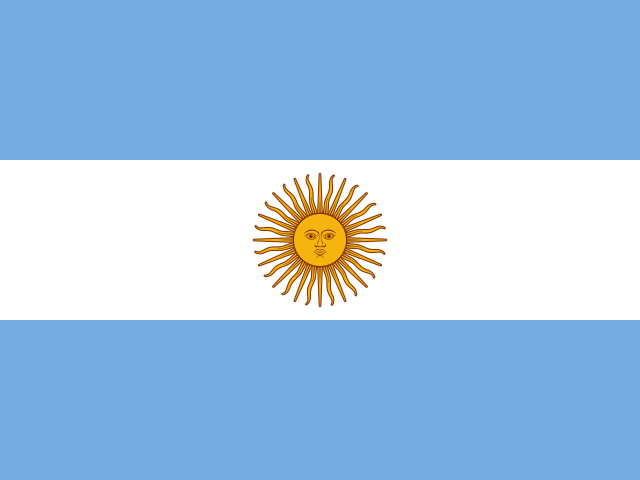
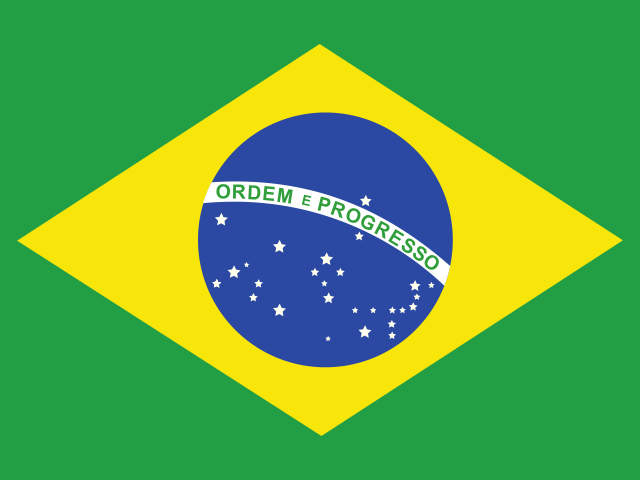


Lockstitched into the geographical heart of South America, the Republic of Paraguay is an inland sovereign state framed and divided by two of the continent’s mightiest river systems: the Paraguay River and the Paraná River. Bordered by Argentina to the south and southwest, Brazil to the east and northeast, and Bolivia to the northwest, the country covers 406,752 square kilometers of varied ecological terrain. Because of its landlocked position nearly a thousand kilometers from oceanic shores, Paraguay developed an inward-facing, fiercely independent national culture, anchored by an exceptional bilingual reality where indigenous Guaraní is spoken with pride alongside Spanish across all sectors of society.
The geography of Paraguay is split down its longitudinal axis by the Paraguay River into two starkly contrasting realms. To the east lies the Eastern Region (Región Oriental or Paraneña), a rolling landscape of subtropical Atlantic rainforest remnants, fertile red clay soils (tierra colorada), and humid agricultural valleys where ninety-seven percent of the country’s seven million inhabitants reside. To the west stretches the Gran Chaco (Región Occidental), a vast, semi-arid alluvial wilderness of thorn scrub, quebracho woodlands, and palm savannas that constitutes over sixty percent of national territory while housing less than three percent of the population.
The Jesuit Reductions and Guaraní Baroque Art
The cultural and spiritual history of southeastern Paraguay is inextricably linked with the Jesuit Missions of the Guaraní, established between 1609 and 1767 by the Society of Jesus. Designed as autonomous communal settlements (reductions) to protect indigenous Guaraní populations from the predatory slave-raiding expeditions of Portuguese bandeirantes from São Paulo and the Spanish encomienda forced labor system, these settlements represented an unprecedented social experiment. In their peak eighteenth-century era, thirty mission towns housed over one hundred thousand Guaraní citizens in self-sufficient agrarian communities featuring printing presses, musical conservatories, iron foundries, and cooperative storehouses.
In 1993, UNESCO inscribed the Jesuit Missions of La Santísima Trinidad de Paraná and Jesús de Tavarangue on the World Heritage List. Trinidad, founded in 1706 and designed by the Milanese Jesuit architect Giovanni Battista Primoli, was one of the largest and most ambitious missions. Constructed from locally quarried red sandstone, the complex was organized around an expansive central plaza flanked by arcaded Guaraní family quarters, a communal school, workshops, a cemetery, and a monumental main church.

The stone carvings at Trinidad represent a remarkable synthesis of European High Baroque architectural forms and indigenous Guaraní artistic sensibilities. Guaraní stonemasons sculpted intricate friezes along the church nave depicting angels playing local musical instruments, including the baroque harp, maracas, and bamboo flutes, with facial features reflecting indigenous aesthetics. Nearby at Jesús de Tavarangue, unfinished monumental stone arches demonstrate the transition toward massive mudéjar-inspired trefoil doorways, halted abruptly when King Charles III of Spain expelled the Jesuits from all Spanish domains in 1767, precipitating the gradual abandonment of the mission towns.
The legacy of this communal era remains evident in Paraguay’s distinctive linguistic status. Unlike other Latin American republics where indigenous languages were marginalized or confined to isolated highland communities, Guaraní was adopted as the primary spoken language of the entire colonial population, including European settlers and criollos. Codified alongside Spanish in the 1992 Constitution as an official national language, Guaraní is spoken in daily life by more than eighty percent of the population, functioning as an indispensable marker of national identity and social solidarity.
The Gran Chaco: Wilderness, Hardwood, and Water
West of the Paraguay River lies the Gran Chaco, an alluvial plain sloping gently downward from the Andean foothills toward the river. Known historically as the ‘Green Hell’ (El Infierno Verde) due to its scorching summer temperatures that routinely exceed forty-four degrees Celsius, dense thorn forests, and scarce surface freshwater, the Chaco is an ecological wilderness of extraordinary resilience. It is dominated by slow-growing hardwood species, most famously the red quebracho (Schinopsis balansae), whose dense timber—so heavy it does not float in water—earned its name from the Spanish quiebra-hacha (‘axe-breaker’). For over a century, the bark of the quebracho was harvested for industrial tannin extraction, exported globally for leather processing.
Despite its arid reputation, the northern and western Chaco shelters diverse wildlife, including jaguars, pumas, giant armadillos, tapirs, and the Chacoan peccary (taguá), an endemic pig-like mammal thought to be extinct until living herds were identified by scientists in 1975. In the far north along the Bolivian and Brazilian borders, the Chaco transitions into the Pantanal Paraguayo along the upper reaches of the Rio Negro, forming a seasonal wetland maze where millions of migratory waterfowl, jabiru storks, and yacare caimans gather during annual flooding cycles.
In the 1920s and 1930s, the central Chaco became home to thousands of German-speaking Mennonite refugees fleeing religious persecution in the Soviet Union and North America. Settling around Fernheim, Menno, and Neuland (anchored by the regional hub of Filadelfia), the Mennonites cleared thorn scrub, engineered deep groundwater wells, and established highly productive agricultural and dairy cooperatives that now supply over half of Paraguay’s milk, cheese, and commercial beef production.
The strategic value of this vast scrubland was bitterly contested between 1932 and 1935 in the Chaco War (Guerra del Chaco) between Paraguay and Bolivia, the deadliest twentieth-century interstate conflict in the Americas. Driven by mistaken beliefs of massive subterranean oil reserves in the Chaco Boreal, the two landlocked nations mobilized modern armies into the waterless scrub. Despite being outnumbered, Paraguayan forces under General José Félix Estigarribia used superior knowledge of the terrain, mobile tactical warfare, and deep water discipline to capture most of the contested region, confirmed by the 1938 Peace Treaty that granted Paraguay three-quarters of the Chaco Boreal.
Asunción and the Scars of National Reconstruction
Founded on August 15, 1537, by Spanish conquistador Juan de Salazar de Espinosa along a natural bay on the eastern bank of the Paraguay River, Asunción is one of the oldest European cities in South America. Known as the ‘Mother of Cities’ (Madre de Ciudades), Asunción served as the launchpad for colonial expeditions that founded dozens of settlements across the Río de la Plata basin, including the second and permanent refounding of Buenos Aires in 1580.

The architectural face of Asunción reflects the ambition and tragedy of the nineteenth century. Under the authoritarian modernization of Presidents Carlos Antonio López and his son Francisco Solano López, European architects were hired to transform the sleepy colonial town into a neoclassical capital. The crowning achievement of this era was the Palacio de los López, constructed on the riverfront between 1857 and 1867 under the direction of English architect Alonso Taylor. Featuring grand Corinthian colonnades, wide verandas, and a central observation tower, the palace was designed as the executive residence of Francisco Solano López.
Before the palace was fully completed, catastrophe engulfed the nation in the War of the Triple Alliance (1864–1870), in which Paraguay fought alone against an allied coalition of Brazil, Argentina, and Uruguay. The war resulted in the near-total destruction of the country: Paraguay lost approximately forty percent of its sovereign territory and suffered apocalyptic demographic collapse, losing over sixty percent of its total population and an estimated eighty to ninety percent of its adult male population to combat, starvation, and cholera. Allied forces bombarded and looted Asunción, using the half-finished Palacio de los López as a military barracks.
Following the war, Paraguayan society was rebuilt through the resilience of its surviving women (Las Residentas), who tilled the fields, rebuilt households, and preserved the Guaraní language and oral traditions. The Palacio de los López was eventually restored and inaugurated as the formal seat of the presidency in 1892, serving as a powerful symbol of national survival. Nearby, the National Pantheon of the Heroes (Panteón Nacional de los Héroes)—modeled after Les Invalides in Paris—enshrines the mortal remains of the nation’s historical defenders, guarded continuously by ceremonial military sentries.
Hydroelectric Giants: Itaipu and Yacyretá
In the late twentieth century, Paraguay transformed its geographic disadvantage of landlocked inland waterways into a formidable geopolitical and economic asset by harnessing the extraordinary hydraulic energy of the Paraná River. Flowing along the eastern and southern boundaries of the country, the Paraná is the second-longest river system in South America after the Amazon, carrying massive volumetric discharge through deep geological gorges.

On the border with Brazil near Ciudad del Este sits the Itaipu Binacional Dam, one of the modern wonders of civil engineering. Constructed between 1975 and 1982 pursuant to the 1973 Treaty of Itaipu, the hollow-gravity concrete dam stretches 7.9 kilometers in length and rises 196 meters high—equivalent to a sixty-five-story building. Housing twenty colossal turbine-generator units with an installed capacity of fourteen thousand megawatts, Itaipu consistently rivals China’s Three Gorges Dam for annual electricity generation, producing over one hundred billion kilowatt-hours in peak hydrological years.
Under binational treaty terms, the generated power is split equally between Paraguay and Brazil. Because Paraguay’s domestic electricity demand consumes only a fraction of its fifty-percent entitlement, the country exports the remainder to Brazil, generating hundreds of millions of dollars in annual sovereign royalties. Combined with the Yacyretá Dam, a second massive binational hydroelectric facility built jointly with Argentina downstream on the Paraná River, Paraguay produces nearly one hundred percent of its electricity from renewable hydropower, making it one of the largest net electricity exporters in the world.
The abundance of cheap, green electricity has catalyzed new economic activities, including industrial light manufacturing under the national Maquila regime, aluminum transformation, and modern data center operations, while providing a clean foundation for national industrialization.
Agrarian Economies and Tereré Social Rituals
Paraguay’s contemporary commercial economy is anchored in large-scale agribusiness. The fertile volcanic soils of the eastern departments—including Alto Paraná, Itapúa, and Canindeyú—have been transformed into a productive agricultural belt producing soybeans, corn, and wheat. Paraguay ranks as the world’s fourth-largest exporter of soybeans, supplying global markets in Europe, the Middle East, and Asia. Alongside soy, livestock production in both the Eastern Region and the Chaco supports a cattle herd exceeding thirteen million head, placing the nation among the top ten global beef exporters.
Agricultural exports rely heavily on the Paraguay-Paraná Waterway (Hidrovía Paraguay-Paraná), a 3,400-kilometer navigable river corridor linking Cáceres in Brazil through Paraguay and Argentina to the Atlantic mouth of the Río de la Plata. To transport grain, meat, and mineral ores downriver, Paraguay has developed the third-largest commercial river barge fleet in the world, trailing only the United States and China, operating tugboats and push-barges that overcome the historical constraint of landlocked geography.
Despite economic modernization, daily life in Paraguay remains deeply grounded in community rituals centered around tereré, an infusion of yerba mate (Ilex paraguariensis) prepared with ice water and medicinal herbs (yuyos or pohã ñana). Inscribed by UNESCO on the Representative List of the Intangible Cultural Heritage of Humanity in 2020, tereré is far more than a refreshing beverage suited to the tropical climate; it is a sacred social ritual of equality and trust.
In offices, family courtyards, and construction sites, groups gather around a thermal flask (termo), sharing a single cow’s horn cup (guampa) fitted with a silver or metallic straw (bombilla). A designated server (cebador) continually refills the guampa with ice water enriched with crushed mint, lemon verbena, or sarsaparilla, passing it in turn to each participant. Refusing a offered guampa is considered a social breach, while saying gracias indicates that one has had enough. Tereré fosters open dialogue, transcends political divides, and reinforces communal bonds across generations.
Culinary traditions also celebrate indigenous Guaraní staples. The national bread is chipa, a savory ring-shaped bread made from cassava starch (almidón de mandioca), lard, eggs, aniseed, and hard farm cheese (queso paraguay), baked in traditional domed earthen ovens (tatakuá). On holidays, families prepare sopa paraguaya—the world’s only solid soup—a rich, savory sponge cake crafted from yellow cornmeal, milk, cheese, sautéed onions, and lard, which according to folklore was invented when President Carlos Antonio López’s chef accidentally cooked a traditional corn soup until the liquid evaporated, creating a delicious baked bread that pleased the president.
Artistic expression in Paraguay is distinguished by ñandutí (‘spider web’ in Guaraní), a traditional needle lace originating in the colonial town of Itauguá. Inspired by seventeenth-century Tenerife lace, Guaraní artisans transformed the craft into a polychromatic textile art, stitching radial circular rosettes that depict native flora, spiderwebs, animal tracks, and agricultural tools in bright cotton threads. In music, the thirty-six-string Paraguayan harp (arpa paraguaya) serves as the national instrument. Adapted from baroque Jesuit prototypes to be lightweight and constructed entirely of native cedar and pine without pedals, the harp was popularized worldwide through the guarania, an evocative slow musical genre created in 1925 by composer José Asunción Flores to express the melancholic soul, romantic yearning, and resilience of the Paraguayan nation.
The Republic of Paraguay endures as a proud island surrounded by land, where red sandstone ruins whisper stories of Jesuit utopias, where the Guaraní language lives on in everyday conversation, where colossal hydroelectric turbines power regional industry, and where the communal sharing of tereré unites a resilient people facing the future with quiet dignity.






Share what you know
Been there, grew up there, or know something we missed? Add a comment; corrections with a source are especially welcome.