






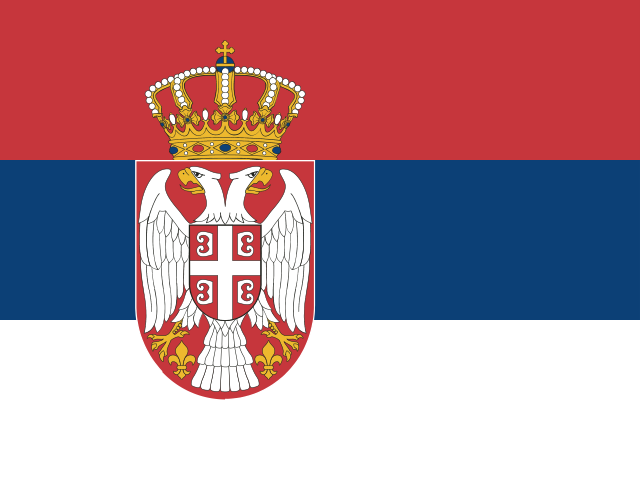

Positioned squarely at the continental crossroads where the fertile agricultural lowlands of Central Europe’s Pannonian Basin meet the rugged karst massifs of the Balkan Peninsula, the Republic of Serbia is a land defined by great rivers, deep limestone canyons, medieval fortified sanctuaries, and enduring resilience. For two millennia, the territory of Serbia served as an essential imperial frontier and transport artery, linking Western Europe to Byzantium and the Levant along the ancient Via Militaris. From the broad, flat grain plains of Vojvodina in the north to the forested hills of Šumadija and the dramatic alpine gorges of the Dinaric Alps and Carpathian-Balkan arcs in the south, Serbia’s landscape mirrors the dramatic cross-currents of European civilization.
The hydrological spine of the nation is formed by the Danube River, which traverses five hundred and eighty-eight kilometers of Serbian territory. Entering the country from Hungary and Croatia, the Danube flows across the Pannonian plain, absorbs major continental tributaries—including the Tisa, the Sava, and the Morava—and cuts through the southern Carpathians before forming the eastern international border with Romania. These river basins have sustained human settlement since the dawn of European civilization, sheltering some of the oldest Neolithic communities on the continent, including the Mesolithic fishermen of Lepenski Vir (9500–6000 BCE) and the advanced agrarian copper-smelting Vinča culture (5700–4500 BCE).
The Confluence Fortress: Kalemegdan and the Soul of Belgrade
At the strategic core of the country, rising high on a white limestone ridge above the meeting point of the Sava and Danube rivers, stands Belgrade Fortress (Kalemegdan). This monumental defensive complex forms the historical and spiritual heart of Serbia’s capital, Belgrade (Beograd, literally “White City”), so named by early Slavic settlers for the gleaming white limestone walls that crowned the river bluff. Because of its commanding position at the gateway between Central Europe and the Balkans, the fortress was contested with fierce intensity across recorded history, having been besieged more than one hundred and fifteen times and leveled to the ground over forty times by Celts, Romans, Goths, Huns, Byzantines, Hungarians, Austrians, and Ottomans.
Originally fortified as the Roman legionary castrum of Singidunum in the first century CE to guard the Danubian limes, the fortress was expanded in the early fifteenth century by Serbian Despot Stefan Lazarević into a magnificent late-medieval fortified capital with double curtain walls, deep moats, and stone bastions. Later transformed by Austrian and Ottoman military engineers into an expansive Vauban-style fortress complex, Kalemegdan is divided into the Upper Town (Gornji Grad) and Lower Town (Donji Grad). Prominent surviving landmarks include the medieval Despot Stefan Gate, the Ottoman Zindan Gate with its rounded artillery towers, the eighteenth-century Clock Tower (Sahat Kula), and the Roman Well (Rimski Bunar), an imposing thirty-five-meter-deep subterranean stone cistern excavated into the bedrock.

Standing on the western ramparts of the Upper Town, looking out across the vast confluence toward Great War Island and the plains of Zemun, stands Pobednik (The Victor). Sculpted by master Croatian artist Ivan Meštrović in 1913, this monumental fourteen-meter-tall bronze sculpture depicts a triumphant male warrior holding a downward sword and a falcon, erected to commemorate Serbia’s victories in the Balkan Wars and World War I. Today, the surrounding parklands of Kalemegdan are filled with open-air chess tables where retirees deliberate over tactical maneuvers beneath chestnut trees, art pavilions, and the Military Museum, whose outdoor moats display historical cannons, tanks, and siege weaponry spanning half a millennium.
Immediately south of the fortress unfolds modern Belgrade, one of the oldest continuously inhabited urban centers in Europe. From the pedestrian thoroughfare of Knez Mihailova Street, lined with nineteenth-century neoclassical and Art Nouveau facades, the city stretches toward the bohemian cobbled quarter of Skadarlija, where traditional kafanas (taverns) host acoustic tamburica orchestras. Crowning the Vračar plateau to the south rises the Church of Saint Sava, one of the largest Eastern Orthodox temples in the world, whose monumental central dome spans thirty meters in diameter, sheltering magnificent gold-ground interior mosaics covering fifteen thousand square meters of vaulted ceilings.
The Iron Gates of Đerdap and the Bastions of Golubac
Downstream from Belgrade, as the Danube approaches the border with Romania, the wide river narrows dramatically to force its way through the mountain barrier where the Carpathian Mountains meet the Balkan Range. Here lies the Đerdap Gorge (the Iron Gates), an awe-inspiring canyon system stretching over one hundred kilometers. Inscribed as a UNESCO Global Geopark in 2020, Đerdap is Europe’s longest and deepest river gorge, featuring sheer limestone bluffs that rise over three hundred meters vertically from the water, narrowing the river channel in places to less than one hundred and fifty meters while depths plunge to over eighty meters.
Guarding the western entrance to this canyon chasm stands Golubac Fortress, one of the most formidable and visually spectacular medieval river strongholds in Europe. Constructed in the fourteenth century atop a sheer granite cliff plunging directly into the Danube, Golubac was designed to control all maritime navigation into the gorge. The fortress comprises ten massive stone towers connected by multi-tiered curtain walls, divided into three internal defensive wards designed to allow defenders to retreat upward toward the highest citadel tower (the Hat Tower, or Šešir-kula) in the event of an amphibious breach.

Golubac witnessed ferocious medieval clashes between the Kingdom of Hungary, the Serbian Despotate, and the expanding Ottoman Empire. In 1428, during a protracted siege led by Hungarian King Sigismund of Luxembourg against Ottoman Sultan Murad II, the celebrated Polish knight Zawisza the Black (Zawisza Czarny), renowned across Europe for his chivalric courage, refused to abandon his rearguard post on the fortress riverbanks and died in heroic hand-to-hand combat against Ottoman troops. Following an extensive archaeological restoration completed in 2019 that diverted modern highway tunnels around the castle walls, Golubac stands restored to its medieval splendor, its stone battlements reflecting in the broad, lake-like expanse of the impounded Danube waters.
Further along the gorge at the narrow passage of Cazane, archaeological excavations in the 1960s prior to the construction of the massive Đerdap I hydroelectric dam uncovered Lepenski Vir. This remarkable prehistoric settlement revealed trapezoidal stone dwellings, sculpted stone hearths, and monumental sandstone boulders carved with enigmatic fish-human hybrid faces dating back nine thousand years, representing the earliest documented monumental stone art in Europe.
The Spiritual Foundations of Studenica and the Raška School
In the forested river valleys of central Serbia, along the slopes of Mount Radočelo, lies the spiritual and artistic heart of the medieval Serbian state: Studenica Monastery. Inscribed as a UNESCO World Heritage site in 1986, Studenica was founded in 1190 by Grand Prince Stefan Nemanja, the progenitor of the Nemanjić dynasty that ruled Serbia for two centuries, presiding over its transition from a regional principality into a powerful medieval empire.
Studenica represents the pinnacle of the Raška architectural school, a distinctive synthesis that married Western Romanesque architectural forms with Eastern Byzantine monumental decorative traditions. The central Church of the Virgin (Bogorodičina crkva) is constructed entirely of polished white Radočelo marble. Its exterior is adorned with Romanesque arched friezes, bifora windows, and sculpted stone portals depicting Christ, the Apostles, and fantastic mythical beasts, while its interior is vaulted beneath a soaring Byzantine central cupola.

Inside the church walls survive the masterwork frescoes painted in 1209 under the personal direction of Saint Sava, the youngest son of Stefan Nemanja and the first Archbishop of the autocephalous Serbian Orthodox Church. Among these, the monumental Crucifixion fresco painted on a deep lapis lazuli background is celebrated by art historians worldwide as a masterwork of European pre-Renaissance painting, conveying human pathos, dignity, and monumental emotional depth that anticipated the Italian Trecento masters like Giotto by nearly a century. Within the monastery complex also stands the King’s Church (Kraljeva crkva), built in 1314 by King Stefan Milutin, preserving brilliantly preserved fresco cycles illustrating the Life of the Virgin Mary.
Studenica served as the prototype for dozens of monastic foundations established across the Serbian heartland during the thirteenth and fourteenth centuries, including Žiča (the coronation church of the Serbian kings), Sopoćani (renowned for its sublime classical frescoes), Mileševa (home to the celebrated “White Angel” fresco), and the monumental fourteenth-century Visoki Dečani and Gračanica monasteries, preserving an incomparable artistic treasury that survived centuries of Ottoman imperial rule.
From the Field of Blackbirds to Modern Statehood
The historical memory of Serbia is deeply shaped by the Battle of Kosovo Polje (the Field of Blackbirds), fought on Saint Vitus’s Day (Vidovdan), June 28, 1389. On an open plain near Pristina, an alliance of Serbian and Balkan Christian forces led by Prince Lazar Hrebeljanović met the invading Ottoman army commanded by Sultan Murad I. Both leaders perished on the battlefield: Sultan Murad was assassinated inside his tent by the Serbian knight Miloš Obilić, while Prince Lazar was captured and executed. Although militarily inconclusive, the catastrophic loss of Serbia’s aristocratic warrior nobility weakened the medieval state, leading to the fall of the fortified capital of Smederevo in 1459 and four centuries of Ottoman imperial rule.
The memory of Kosovo was immortalized in the Serbian epic cycle—poetic oral ballads chanted by blind bards (guslari) accompanied by the single-stringed horsehair gusle. This epic poetry celebrated themes of Christian martyrdom, tragic sacrifice, and an unwavering commitment to the “Heavenly Empire” (Nebesko carstvo) over earthly surrender, preserving national consciousness through generations of foreign subjugation.
The dawn of modern Serbian statehood began in the forested hills of Šumadija in February 1804 with the First Serbian Uprising, led by Đorđe Petrović (known as Karađorđe, or “Black George”). Karađorđe organized rebel hajduk bands, liberated Belgrade, and established a functioning governing senate before Ottoman armies retook the territory in 1813. Two years later, in 1815, Miloš Obrenović launched the Second Serbian Uprising, combining guerrilla warfare with astute diplomatic negotiation with the Ottoman Porte to secure hereditary Serbian autonomy, laying the foundation for full national independence recognized internationally at the Congress of Berlin in 1878.
The twentieth century brought severe upheaval. Following catastrophic casualties during World War I—in which Serbia lost more than a quarter of its total pre-war population—the country became the anchor of the Kingdom of Serbs, Croats and Slovenes (later the Kingdom of Yugoslavia) in 1918. Following brutal Axis occupation in World War II, Josip Broz Tito established the socialist Federal People’s Republic of Yugoslavia, with Belgrade serving as the non-aligned federal capital. The violent dissolution of Yugoslavia in the 1990s and subsequent regional conflicts caused severe political and economic dislocation, from which modern Serbia has emerged as a forward-looking European democracy navigating a multifaceted diplomatic balancing act between East and West.
Šumadija Orchards, Gastronomy, and the Slava Custom
Beyond its urban centers and historical fortresses, the soul of rural Serbia lives in the undulating green orchards of Šumadija and the broad wheat fields of the northern autonomous province of Vojvodina. Vojvodina, historically integrated within the Austro-Hungarian Empire, presents an elegant Central European aesthetic: broad village squares, baroque Catholic and Orthodox church steeples, and rich fertile chernozem soils that make Serbia one of the leading grain and sunflower producers in Southeastern Europe.
In central Serbia, the hills of Šumadija are blanketed in vast plum orchards (šljiva). Serbia ranks among the largest plum producers in the world, and the fruit is the foundation of the national spirit: šljivovica (plum brandy). Inscribed by UNESCO in 2022 on the Representative List of the Intangible Cultural Heritage of Humanity, the social practices and artisanal distillation of šljivovica are integral to domestic life. Hand-harvested plums—particularly ancient indigenous cultivars like Požegača and Crvena Ranka—are naturally fermented in wooden vats before being double-distilled in traditional copper alembics (veseli stroj, or “merry machine”). Aged in dense oak barrels for years until it develops an amber color and smooth notes of vanilla and almond, šljivovica is present at every major life event, from births and weddings to memorial feasts.
At the center of family life is the Krsna Slava (Patron Saint’s Day), an indigenous religious and social tradition practiced exclusively by Serbian Orthodox families, also inscribed by UNESCO. Inherited patrilineally from father to son, the Slava celebrates the family’s protective saint with a lavish festive banquet for relatives, godparents (kumovi), and neighbors. The centerpiece of the feast is the slavski kolač, a round, decorated ritual wheat bread stamped with the sacred cross and Christian monogram (IS HS NI KA), ritually turned and broken with red wine alongside koljivo—sweetened boiled wheat flavored with honey, walnuts, and nutmeg, symbolizing resurrection and ancestral memory.
The culinary table is rich with generous Balkan hospitality. Meals begin with meze featuring thin slices of cured pork loin (pečenica), beef prosciutto from the mountain village of Mačkat, and creamy, salted kajmak—a rich clotted dairy spread crafted by skimming the top layer of cooled boiled milk. Main courses feature grilled meats prepared over beech charcoal, including ćevapi (minced beef and pork sausages served in fluffy somun flatbread with chopped raw onions), pljeskavica (spiced meat patties often stuffed with kajmak and bacon), and sarma—fermented whole sour cabbage leaves rolled around seasoned minced meat and slow-cooked in clay pots with smoked pork ribs.
Today, Serbia balances its rich agrarian traditions with a thriving high-tech and industrial sector. Belgrade and Novi Sad have evolved into major regional centers for software engineering, video game development, and automotive component manufacturing, buoyed by prestigious engineering universities and an educated, multilingual workforce. Supported by modern transport corridors linking Central Europe to the Aegean Sea, Serbia stands confident in its cultural heritage, bridging historical civilizational divides with hospitality, creativity, and enduring sovereign vitality.






Share what you know
Been there, grew up there, or know something we missed? Add a comment; corrections with a source are especially welcome.