



Known throughout East Africa as the Land of a Thousand Hills (Mille Collines), the Republic of Rwanda occupies a dramatic highland plateau wedged between the Albertine Rift Valley and the vast savannah basins of the Upper Nile. Perched at average elevations exceeding one thousand five hundred meters above sea level, this landlocked equatorial nation is defined by intensely cultivated terraced ridges, emerald tea plantations, volcanic peaks mantled in alpine bamboo, and deep tectonic waters. Despite possessing one of the highest rural population densities in Africa, Rwanda sustains some of the continent’s most meticulously preserved montane rainforests and world-renowned wildlife sanctuaries.
The physical geography of Rwanda is shaped by active tectonic forces associated with the East African Rift System. The country serves as a continental hydrological divide, splitting waters between two of Africa’s greatest river systems: streams west of the central mountain crest drain into the Congo River basin, while the rivers of the east—led by the Nyabarongo and the Akagera—flow into Lake Victoria to form the primary source of the White Nile. Across this undulating topography, the subtropical highland climate moderates tropical heat, yielding year-round temperate temperatures and two distinct rainy seasons that nourish volcanic soils enriched by prehistoric eruptions.
The Virunga Volcanoes and Montane Primate Conservation
Along Rwanda’s northern frontier bordering Uganda and the Democratic Republic of the Congo, the horizon is dominated by the monumental cones of the Virunga Mountains. This volcanic chain consists of eight major volcanoes, five of which lie within or along the borders of Rwanda: Mount Karisimbi, the country’s highest point at four thousand five hundred and seven meters; Mount Bisoke with its emerald crater lake; Mount Muhabura; Mount Gahinga; and Mount Sabyinyo, whose jagged peak marks the international tripoint. These summits are protected within Volcanoes National Park (Parc National des Volcans), Africa’s oldest national park, originally gazetted in 1925 to shield native primates from poachers.
The slopes of the Virungas exhibit striking ecological zonation determined by altitude. Lower elevations support dense bamboo forests (Yushania alpina), which provide the primary feeding grounds for endangered golden monkeys (Cercopithecus kandti). Higher up, between two thousand six hundred and three thousand six hundred meters, the landscape transitions into subalpine Hagenia-Hypericum woodlands draped in hanging mosses, epiphytic orchids, and giant lobelias. Above the tree line, afro-alpine moorlands blanket the volcanic craters in tussock grasses, everlasting flowers (Helichrysum), and dramatic giant senecios (Dendrosenecio) adapted to freezing nightly temperatures.

Volcanoes National Park is celebrated worldwide as the sanctuary where American primatologist Dian Fossey conducted eighteen years of pioneering field research on mountain gorillas (Gorilla beringei beringei) from 1967 until her death in 1985. Fossey established the Karisoke Research Center in the saddle between Karisimbi and Bisoke, habituating gorilla groups, demystifying their gentle social structures, and waging campaigns against wire snares and commercial poachers. Today, Rwanda’s community-centered ecotourism model is recognized as a global conservation triumph. High-value, low-impact gorilla trekking permits fund ranger patrols and park management, while ten percent of gross tourism revenue is channeled directly into surrounding agricultural communities through revenue-sharing schemes that construct schools, health clinics, and clean water points.
This conservation success is celebrated annually in the village of Kinigi during the Kwita Izina ceremony. Inspired by centuries-old Rwandan royal naming rituals for newborn human children, Kwita Izina brings together rangers, local trackers, community elders, and international conservationists to publicly bestow names upon every wild mountain gorilla born in the Virungas over the preceding twelve months. Through rigorous habitat protection and veterinary monitoring by the Gorilla Doctors team, the Virunga mountain gorilla population has steadily grown, resulting in the species being downlisted from critically endangered to endangered.
Lake Kivu, the Albertine Rift, and Subterranean Energy
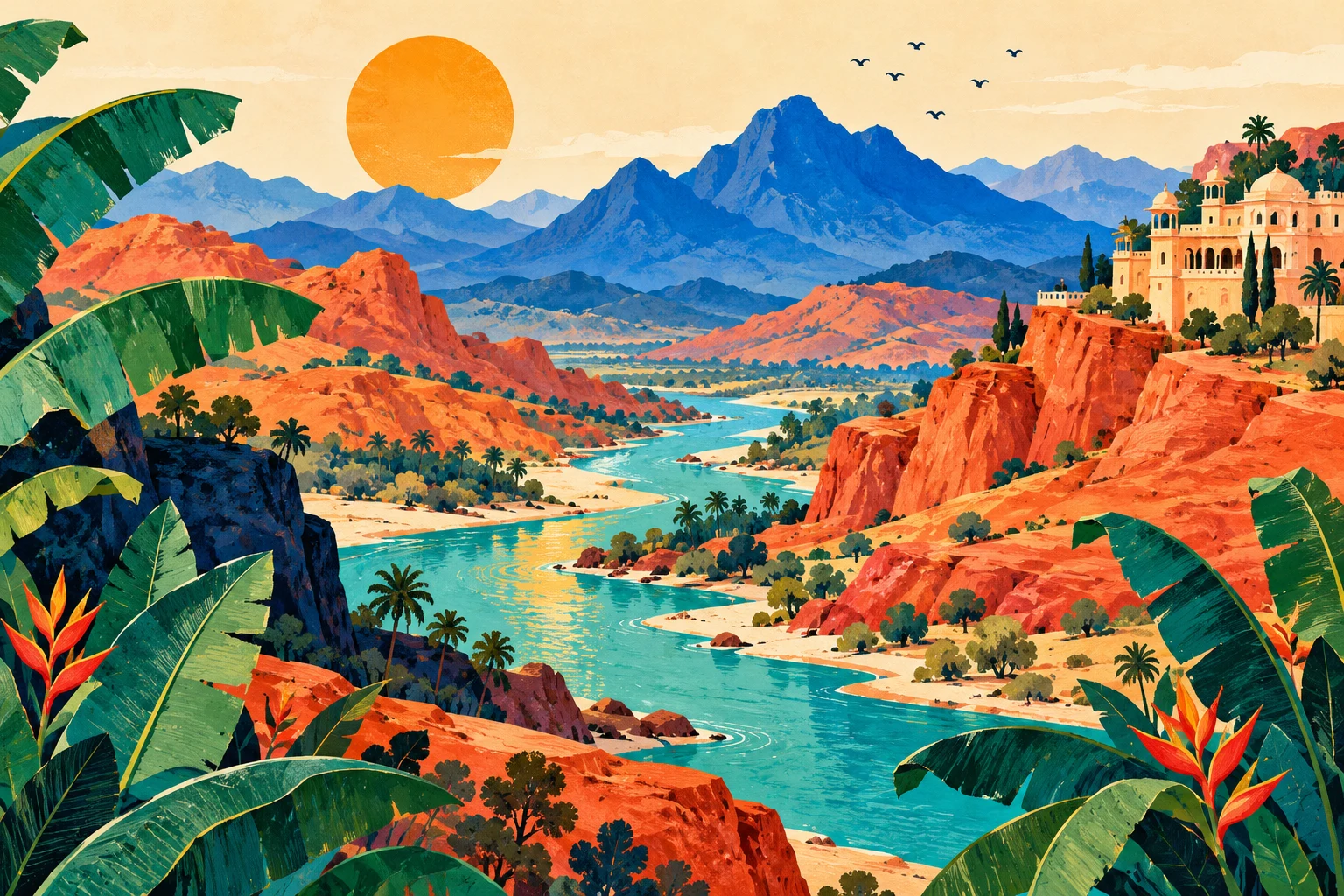
Forming Rwanda’s western border with the Democratic Republic of the Congo, Lake Kivu occupies one of the deepest grabens of the Albertine Rift. Situated at one thousand four hundred and sixty meters above sea level and reaching depths of four hundred and eighty meters, Kivu is an extraordinary limnological wonder. The lake’s irregular shoreline is carved into hundreds of drowned river valleys, steep peninsulas, and sheltered coves, backed by emerald green hillside terraces cultivated with coffee bushes, bananas, sweet potatoes, and climbing beans.
Unlike many tropical lakes, Lake Kivu is completely free from bilharzia (schistosomiasis) parasites and dangerous populations of hippopotamuses or crocodiles, making its clear freshwater ideal for navigation and artisanal fisheries. Every evening, traditional wooden trimaran fishing boats—locally known as isambaza canoes—glide out into the darkening waters from lakeside ports like Rubavu (Gisenyi), Karongi (Kibuye), and Rusizi (Cyangugu). Three wooden canoes are lashed together with long, flexible eucalyptus poles, from which kerosene and LED lanterns are suspended over the water to attract swarms of tiny silver sardine-like fish (Limnothrissa miodon), which are netted by hand and dried on shore for local markets.

Beneath its serene surface, however, Lake Kivu possesses an unusual geochemical character: it is a meromictic lake whose deep water layers do not mix with surface strata. Over thousands of years, volcanic vents on the lake floor have saturated the deep waters with approximately sixty billion cubic meters of dissolved methane gas and three hundred billion cubic meters of carbon dioxide. If triggered by an undersea seismic eruption, this gas accumulation could theoretically release a catastrophic limnic eruption. Rather than leaving this hazard unaddressed, Rwandan engineers and international energy consortia pioneered a world-first technology: the KivuWatt offshore gas-extraction facility. Anchored several kilometers offshore, a floating processing platform siphons gas-rich water from three hundred and fifty meters depth, separates pure methane through depressurization, and pipes the cleaned fuel to an onshore thermal power station, transforming a geological risk into an engine providing a significant percentage of Rwanda’s national electricity grid.
Nyungwe Forest and the Primeval Albertine Canopy
In the southwestern corner of the country, stretching along the mountainous watershed between the Congo and Nile rivers, lies Nyungwe National Park. Inscribed as a UNESCO World Heritage natural site in 2023, Nyungwe covers more than one thousand square kilometers and represents the largest intact block of mid-altitude montane rainforest remaining in Central Africa. Because this highland region escaped the aridification of the last glacial maximum, Nyungwe served as an ancient Pleistocene biological refugium, preserving floral and faunal lineages that have evolved uninterrupted for millions of years.
The forest is renowned for its exceptional primate biodiversity, sheltering thirteen distinct primate species. Among them are habituated troops of eastern chimpanzees (Pan troglodytes schweinfurthii) that forage across the fig trees of the Cyamudongo forest enclave, and colossal semi-habituated super-troops of Rwenzori colobus monkeys (Colobus angolensis ruwenzorii), which often congregate in groups exceeding four hundred individuals—the largest documented wild primate aggregations in Africa. The park also hosts over three hundred species of birds, including twenty-nine Albertine Rift endemics such as the elusive red-collared babbler, Grauer’s rush warbler, and the resplendent Ruwenzori turaco with its vivid crimson underwings.

One of the park’s most striking features is its suspended canopy walkway, constructed seventy meters above the forest floor across a deep valley near Uwinka. Suspended between massive emergent trees, the metal walkway allows visitors and field biologists to traverse the upper canopy stratum, observing sunbirds, hornbills, and flowering epiphytes from eye level. Nyungwe also performs an indispensable hydrological service for Rwanda: the rainforest acts as a colossal ecological sponge, capturing moisture from Atlantic and Indian Ocean air masses, mitigating soil erosion across western valleys, and releasing crystal-clear streams that feed seventy percent of Rwanda’s surface freshwater.
On the park’s western boundary, the forest gives way to the emerald slopes of the Gisakura tea estate. Here, cool mountain air and acidic volcanic soils yield premium orthodox black teas celebrated for their bright golden liquor and brisk flavor. Hand-plucked by local cooperatives, Rwandan high-grown specialty teas and Bourbon arabica coffees have emerged as the nation’s premier agricultural exports, fetching record prices at international auctions in Mombasa and specialty roasting houses in Europe and North America.
The Mwami Monarchy, Colonial Division, and Historical Memory
Centuries before European contact, Rwanda possessed a sophisticated, centralized monarchical state: the Kingdom of Rwanda, ruled by a sacred king known as the Mwami. Centered at the royal court of Nyanza, the mwami governed through an intricate administrative hierarchy comprising three distinct provincial leaders: the chief of the pastures, the chief of the land, and the military commander. The royal compound at Rukari featured a massive domed palace woven entirely from reeds, bamboo, and thatch, flanked by herds of sacred long-horned Inyambo cattle. Bred for their majestic lyre-shaped horns and white coats, Inyambo cattle were trained to respond to royal poetry and rhythmic whistling during elaborate court ceremonies, symbolizing wealth, status, and spiritual harmony.
European colonization in the late nineteenth and early twentieth centuries severely fractured Rwandan social cohesion. First colonized by Imperial Germany in 1897 and later mandated to Belgium following World War I, colonial authorities governed through a system of indirect rule. Heavily influenced by nineteenth-century European racial pseudo-theories, Belgian administrators transformed fluid socio-economic categories—Hutu (agriculturalists), Tutsi (pastoralists), and Twa (potters and forest foragers)—into rigid, hereditary racial classifications. In the 1930s, the colonial administration issued mandatory identity cards specifying ethnicity, systematically elevating a Tutsi elite to administrative positions while disenfranchising the Hutu majority.
This institutionalized division sowed bitter seeds that erupted in cycles of intercommunal violence following independence in 1962. Decades of discrimination and state-sponsored hatred culminated in the catastrophic 1994 genocide against the Tutsi. Over one hundred days between April and July 1994, extremist political factions and militia orchestrated the systematic slaughter of more than eight hundred thousand Tutsi and moderate Hutu, while the international community failed to intervene. The genocide shattered the nation’s social fabric, leaving hundreds of thousands of orphans, widows, and refugees, and reducing basic state infrastructure to ruins.
In the aftermath of the catastrophe, Rwanda undertook a monumental and unprecedented journey of national reconciliation and social reconstruction. Facing an overwhelming backlog of hundreds of thousands of genocide suspects that conventional courts could not process for centuries, Rwanda revived a modernized version of an indigenous community justice system: the Gacaca courts. Convened outdoors on village grass, Gacaca courts empowered community members to elect local judges of high moral integrity, present evidence, cross-examine suspects, and facilitate public confessions and forgiveness. Between 2002 and 2012, Gacaca courts tried nearly two million cases, fostering communal truth-telling, accountability, and collective healing.
Indigenous Civic Traditions and the Modern Rwandan Model
Central to Rwanda’s post-genocide renaissance has been the deliberate reintegration of pre-colonial cultural concepts into contemporary governance and public administration. Among the most impactful is Umuganda, a traditional practice of mutual community assistance. On the final Saturday morning of every month, commercial activity across Rwanda halts as citizens, from local villagers to government ministers, assemble in their neighborhoods for three hours of collective public work. Together, communities clear drainage canals, pave rural feeder roads, construct community classrooms, and plant millions of trees to combat hillside erosion. Umuganda has not only saved the national treasury tens of millions of dollars in infrastructure maintenance; it has fostered social solidarity and made Kigali internationally renowned as one of the cleanest, safest, and most orderly capital cities in the world.
Another foundational civic philosophy is Imihigo, derived from an ancient pre-colonial warrior practice where leaders made public pledges before the mwami and their community, outlining the valorous deeds they vowed to achieve. In modern Rwanda, Imihigo has been transformed into a binding annual performance contract signed between public officials—from district mayors to cabinet ministers—and the national president. Officials are evaluated against measurable indicators in health, agricultural production, education, and poverty reduction, with results publicized nationally, establishing a culture of public accountability and delivery unusual in the region.
This administrative discipline has propelled a sweeping economic and digital modernization. Rwanda has positioned itself as an African leader in technology adoption, rolling out thousands of kilometers of high-speed fiber-optic broadband across rural districts. The country pioneered the world’s first national commercial drone delivery network in partnership with Zipline, utilizing autonomous fixed-wing drones to deliver emergency blood supplies and vaccines to remote hilltop hospitals in minutes. Rwanda was also among the first nations in the world to implement a nationwide ban on non-biodegradable single-use plastic bags in 2008, followed by a ban on single-use plastics, anchoring its commitment to sustainable green growth.
In Kigali, modern conference centers, innovation accelerators like Norrsken House East Africa, and global sports venues host premier continental summits. Across the country, the traditional communal dance of Amaraba and the thundering polyrhythms of the royal Ingoma drummers continue to resonate at cultural celebrations, embodying the resilience, dignity, and collective determination of a nation that stared into the abyss of devastation and rebuilt itself into a unified, forward-looking hub of African innovation.






Share what you know
Been there, grew up there, or know something we missed? Add a comment; corrections with a source are especially welcome.