



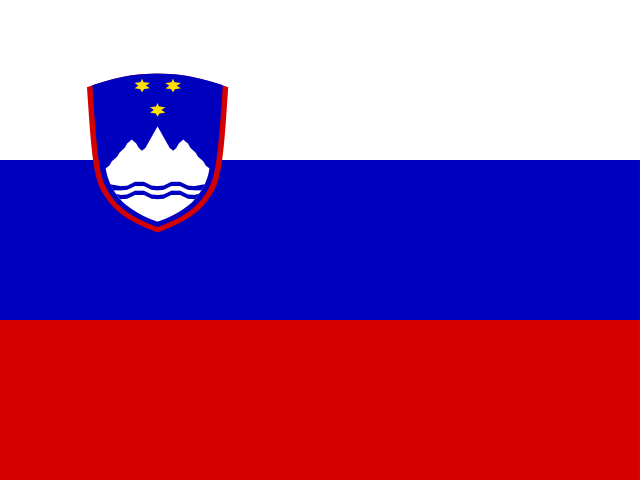

Occupying the spectacular geographic junction where the snow-crested limestone massifs of the Eastern Alps meet the Dinaric Alps, the Pannonian Basin, and the Mediterranean shores of the Adriatic Sea, the Republic of Slovenia (Slovenija) is a Central European masterwork of ecological balance and cultural refinement. Covering slightly over twenty thousand square kilometers, this compact nation presents an astonishing concentration of biomes: jagged alpine crags rising nearly three thousand meters, subterranean limestone labyrinths carved by rushing underground rivers, lush beech and fir forests that cloak over sixty percent of the national territory, and sunlit coastal salt pans where artisanal sea salt has been harvested by hand for seven centuries.
Slovenia’s physical landscape is defined by the convergence of four major European geographic systems. To the northwest, the Julian Alps, the Kamnik-Savinja Alps, and the Karawanks form a formidable alpine barrier bordering Austria and Italy, anchored by the three-headed summit of Mount Triglav at two thousand eight hundred and sixty-four meters. To the southwest, the landscape transitions into the classical Karst (Kras) plateau, an arid limestone tableland that gave its name to all karst geological formations globally, where surface rivers vanish into subterranean sinkholes (ponors) before emerging near the Adriatic coast. To the east and northeast, the forested hills soften into the undulating vineyards and agricultural lowlands of the Pannonian plain along the Drava and Mura rivers near Hungary, while the south borders Croatia along the forested slopes of the Kolpa River.
The Glacial Splendor of Lake Bled and the Julian Alps
Tucked into the foothills of the Julian Alps in northwestern Slovenia, Lake Bled (Blejsko jezero) is the celebrated visual symbol of the nation. Formed at the end of the last ice age when the retreating Bohinj glacier gouged out a deep tectonic depression that was subsequently filled by melting alpine ice and thermal springs, Lake Bled spans over one hundred and forty hectares, reaching depths of thirty meters. The lake’s waters maintain a striking blue-green clarity, naturally warmed by sublacustrine thermal springs along its northeastern edge that keep the water comfortable for summer swimming.
Resting in the western basin of the lake is Bled Island (Blejski otok), Slovenia’s sole natural island. For millennia, this tear-shaped limestone islet served as a sacred sanctuary: archaeological excavations revealed pre-Christian Slavic temple foundations dedicated to Živa, the Slavic goddess of love and fertility. In the seventeenth century, master builders erected the current Baroque Pilgrimage Church of the Assumption of Mary. Arriving visitors ascend from the water via the monumental South Staircase, comprising ninety-nine steep stone steps constructed in 1655; according to enduring local wedding custom, a groom must carry his bride up all ninety-nine steps in his arms in complete silence to ensure marital bliss.

Inside the church hangs the famous “Wishing Bell” (zvon želja), cast in Padua in 1534. Legend holds that ringing the bell three times while focusing on a heartfelt wish will cause it to be granted by the Virgin Mary. Transportation across the lake to the island is conducted strictly by traditional wooden flat-bottomed boats known as pletnas. Propelled by standing oarsmen (pletnarji) using a specialized two-oar steering technique (stehrudern), the right to pilot a pletna is a hereditary privilege granted by Habsburg Empress Maria Theresa in the eighteenth century, passed down exclusively from father to son among local families to preserve the lake from noisy motorboat pollution.
Perched high on a precipitous one-hundred-and-thirty-meter sheer limestone cliff overlooking the northern shore of the lake stands Bled Castle (Blejski grad). Mentioned in written records as early as 1004 CE when Holy Roman Emperor Henry II gifted the estate to Bishop Albuin of Brixen, Bled Castle is the oldest documented castle in Slovenia. The multi-tiered stone fortress features Romanesque ramparts, Gothic towers, a seventeenth-century frescoed chapel, and a functioning Gutenberg-era printing press where craftsmen print handmade souvenir certificates using hand-cast lead type.
The Karst Labyrinth and the Cave Fortress of Predjama
Southwest of the alpine interior lies the Karst plateau, where water and soluble limestone have collaborated over geological epochs to construct an incomparable subterranean universe. Beneath Slovenia’s surface lie more than fourteen thousand cataloged caves, with dozens of new caverns discovered every year. Foremost among these natural monuments is the Škocjan Caves (Škocjanske jame), inscribed on the UNESCO World Heritage list in 1986. Here, the Reka River plunges underground into an immense subterranean limestone canyon spanning over two kilometers, roaring through vast underground chambers including the colossal Martel’s Chamber, one of the largest subterranean river canyons in the world.
A short distance away in the Inner Carniola region, built directly into the gaping mouth of a vertical one-hundred-and-twenty-three-meter karst cliff, stands Predjama Castle (Predjamski grad). Inscribed in Guinness World Records as the largest cave castle in the world, Predjama is an astonishing work of defensive military architecture that seamlessly fuses man-made stone walls with living limestone bedrock.

Originally founded in the twelfth century, the castle is immortalized in Slovenian folklore as the stronghold of the rebellious fifteenth-century robber baron Erasmus of Predjama (Erazem Predjamski). When Erasmus killed a relative of Habsburg Emperor Frederick III in a duel of honor in Vienna, imperial forces laid siege to Predjama Castle, expecting to starve the baron into submission. However, unbeknownst to the imperial army, behind the castle’s rear walls lay Erasmus’s Secret Tunnel (Erazmov rov)—a natural vertical fissure leading through the limestone cliff to an exit in the Vipava Valley miles away. While Austrian troops froze outside during the winter siege, Erasmus used the secret passage to smuggle fresh roasted meat, cherries, and produce into the castle, taunting the besieging general by pelting his soldiers with fresh fruit from the battlements.
The castle interior illustrates the stark realities of cave habitation: natural dripping stone ceilings serve as ceilings for living quarters, natural fissures were adapted as water collection cisterns, and stone dungeons (the Luegger hole) were hollowed out of solid rock. Today, visitors can explore four tiers of living quarters, the armory, the torture chamber, and peer into the dark cavern behind the castle where colonies of bats hibernate during winter months.
Complementing its karst caverns is the Lipica Stud Farm (Kobilarna Lipica), situated on the wind-swept limestone meadows near the Italian frontier. Founded in 1580 by Habsburg Archduke Charles II of Inner Austria, Lipica is the original cradle of the celebrated Lipizzaner horse breed. For more than four centuries, master equestrians have bred and trained these intelligent, athletic white stallions for classical dressage and the Spanish Riding School of Vienna. In 2022, UNESCO inscribed the Lipizzan horse breeding traditions on the Representative List of the Intangible Cultural Heritage of Humanity, honoring the enduring partnership between human craftsmanship and equestrian breeding across the Karst pastures.
Deeper within Triglav National Park lies Lake Bohinj (Bohinjsko jezero), Slovenia’s largest natural glacial lake. Far wilder and quieter than its sister lake at Bled, Bohinj is encased in vertical limestone walls that rise directly from its crystal-clear shoreline toward the alpine plateaus of Komna and Fužina. At the western head of the lake, the Savica Waterfall bursts from a cavern sixty meters high on a sheer cliff face, feeding the lake with emerald meltwater. Bohinj is steeped in the folklore of Zlatorog (Goldenhorn), a mythical white chamois buck with golden horns who guarded an enchanted garden and hidden treasure on the slopes of Mount Triglav, standing in folk memory as an enduring guardian of alpine nature.
The Emerald Waters of Soča and Triglav National Park
In the western Julian Alps, rising from a karst spring in the Trenta Valley beneath the limestone massif of Mount Jalovec, flows the Soča River (known in Italian as the Isonzo). The Soča is celebrated worldwide for its breathtaking emerald and turquoise color, a remarkable optical phenomenon created by microscopic particles of suspended calcium carbonate reflecting sunlight through crystal-clear glacial runoff.
The river traverses Triglav National Park, Slovenia’s sole national park, which covers eight hundred and forty square kilometers encompassing nearly the entire Slovenian Julian Alps. At the Great Soča Gorge (Velika korita Soče), the river slices through a narrow, seven-hundred-meter-long limestone canyon barely several meters wide, where vertical white walls drop fifteen meters down to luminous pools of turquoise water. The river is the native sanctuary of the endemic marble trout (Salmo marmoratus), a prized predatory salmonid adorned with olive-green marbling that can grow to over a meter in length, saved from near extinction through dedicated Slovenian captive breeding and river rehabilitation programs.

The sublime natural beauty of the Soča Valley contrasts sharply with its somber military history. During World War I, between May 1915 and November 1917, the valley was the epicenter of the Battles of the Isonzo—twelve brutal campaigns fought between the Austro-Hungarian and Italian armies in freezing alpine conditions. Hundreds of thousands of soldiers perished on vertical mountain ridges like Krn and Rombon, immortalized in Ernest Hemingway’s classic novel A Farewell to Arms. Today, the Walk of Peace (Pot miru) links outdoor military museums, cavern fortifications, and mountain cemeteries along the river, serving as an international trail dedicated to peace and historical remembrance.
Plečnik’s Ljubljana: The Humanist Capital
At the center of the country lies Ljubljana, Slovenia’s cultural, political, and academic capital. Home to roughly three hundred thousand residents, Ljubljana is one of Europe’s most livable and green urban centers, characterized by broad pedestrian riverbanks, willow-shaded cafes, and a commanding medieval castle perched on a central forested hill.
Ljubljana’s urban aesthetic is the masterwork of a single architectural visionary: Jože Plečnik. Inscribed as a UNESCO World Heritage site in 2021 under the title “The works of Jože Plečnik in Ljubljana – Human Centred Urban Design,” Plečnik transformed the provincial Habsburg town between the two World Wars into a cohesive, classical capital for the newly formed nation. Rather than pursuing grandiose modernist tabula rasa clearance, Plečnik worked with surgical sensitivity, repurposing Roman ruins, local limestone, and classical columns to create public spaces on an intimate, human scale.
Plečnik’s defining masterpiece is the Triple Bridge (Tromostovje) spanning the Ljubljanica River. Flanking a historic 1842 stone arch bridge with two graceful pedestrian spans, Plečnik created an elegant fan-shaped crossing crowned with balustrades, stone lamps, and steps descending to water terraces. Directly adjacent, Plečnik designed the colonnaded Central Market, stretching along the riverbank in classical two-story arcades that house spice merchants, butchers, and bakeries. Other monumental works include the National and University Library (NUK)—built of textured red brick interlaid with rough limestone blocks symbolizing the rough stone of knowledge refined through intellect—and the monumental Žale Cemetery, designed as an arcadian garden of sacred farewell chapels.
Carniolan Honeybees, Gastronomy, and the Green Ethos
Slovenian culture is rooted in a deep reverence for nature, embodied by its legendary beekeeping tradition (čebelarstvo). Slovenia is the ancestral homeland of the Carniolan honeybee (Apis mellifera carnica), celebrated globally for its gentleness, disease resistance, and superb navigational orientation. In 2022, UNESCO recognized Slovenian beekeeping on the Representative List of the Intangible Cultural Heritage of Humanity, following Slovenia’s successful diplomatic initiative at the United Nations in 2017 to establish May 20 as World Bee Day, commemorating the birth of Anton Janša, the eighteenth-century pioneer of modern apiculture.
Across rural villages, beekeepers house hives in traditional painted bee houses (čebelnjaki). The wooden front boards of the hives (panjske končnice) are adorned with charming nineteenth-century folk paintings depicting religious scenes, historical battles, and humorous social satires (such as a fox shaving a hunter). Honey is woven into daily gastronomy, featured in medica (honey liqueur) and medeni kruhki (honey spice cookies).
The culinary landscape of Slovenia is an exquisite cross-pollination of alpine, Mediterranean, and Pannonian influences, partitioned into twenty-four distinct gastronomic regions. The national culinary jewel is potica, a festive rolled yeast-dough pastry filled with finely ground walnuts, tarragon, cottage cheese, or poppy seeds, baked in a traditional fluted ceramic mold called a potičnik. In the Karst region, the dry bora wind (burja) cures kraški pršut (dry-cured ham), hung in stone cellars for over a year and served with intense Terran red wine. In the Julian Alps, mountain chalets serve štruklji (rolled dough dumplings with cottage cheese or buckwheat) and Kranjska klobasa (Carniolan pork sausage seasoned with garlic and sea salt).
Democratic Sovereignty and Sustainable Future
For more than six centuries, Slovenian lands were governed within the Habsburg Monarchy, where Slovenes preserved their distinct Slavic language and culture through the Protestant Reformation led by Primož Trubar, who printed the very first Slovenian books (Catechismus and Abecedarium) in 1550. Following the collapse of Austria-Hungary in 1918, Slovenia joined the Kingdom of Yugoslavia, and later the socialist Federal People’s Republic of Yugoslavia following World War II.
In December 1990, in a historic plebiscite, ninety-five percent of Slovenian voters chose full national independence. When Slovenia proclaimed its sovereign statehood on June 25, 1991, the Yugoslav People’s Army launched an armed intervention. The resulting Ten-Day War was marked by tactical brilliance and civic determination: Slovenian territorial defense forces surrounded Yugoslav garrisons, blocked armored columns with civilian trucks, and achieved a decisive ceasefire with minimal loss of life, securing international recognition. In 2004, Slovenia became the first former Yugoslav republic to join the European Union and NATO, adopting the Euro in 2007.
Today, the Republic of Slovenia is an international leader in circular bioeconomy and environmental sustainability, boasting over sixty percent forest cover and the highest percentage of protected Natura 2000 territory in the European Union. In 2016, Ljubljana became the first European Green Capital in Central and Southeastern Europe, having pedestrianized its entire historic core and achieved Europe’s highest municipal waste recycling rate. Balancing high-tech precision manufacturing—from light electric aircraft by Pipistrel to advanced pharmaceuticals by Krka and Lek—with untouched alpine peaks and pristine rivers, Slovenia advances into the twenty-first century as an inspiring model of green sustainability, cultural elegance, and sovereign grace.






Share what you know
Been there, grew up there, or know something we missed? Add a comment; corrections with a source are especially welcome.