




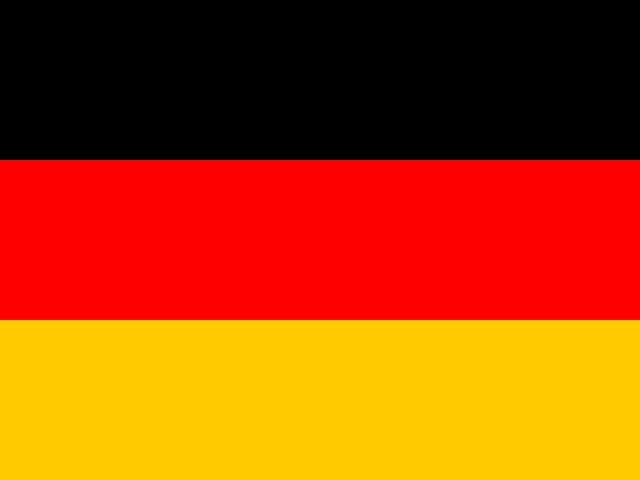

Dresden’s skyline gathers around the Elbe, a river that carries the story north past cities and industrial towns toward Hamburg and the North Sea. Along the way it crosses states with their own histories and governments. Germany lies in the middle of Europe, bordered by nine countries; Berlin is its capital, but the country has no single centre that can stand for all its parts. Ports, university towns, factories, villages and regional capitals give the map many points of gravity. Follow the routes between them and Germany comes into view as a federation held together by movement, decentralized economic power, and shared democratic institutions.[1][2][5][6]
That pattern is visible in the state itself. Germany is a federation of sixteen Länder, or constituent states, each with its own constitution, parliament and government. The national government handles matters that need common rules; the states have their own responsibilities and take part in federal decisions through the Bundesrat, where state governments are represented. Education, policing and cultural affairs are among the areas in which the Länder have important roles. A student changing states may encounter a different school calendar or curriculum; a law passed in Berlin can depend on state administrations to become ordinary practice. Local difference here is built into the political design.[3][4]
The federal map is not a tidy set of equal pieces. Berlin, Hamburg and Bremen are city-states; North Rhine-Westphalia contains the Ruhr, one of the country’s great industrial urban regions. Saxony, Thuringia and Brandenburg have their own histories and centres, while Hamburg and other northern coastal states look toward the North Sea and Baltic Sea. State borders mark real political layers: the Länder administer fields such as education, policing and culture, and their governments participate in federal lawmaking through the Bundesrat. For a visitor, crossing a state border may feel subtle; for the people who live there, it can change which institutions shape school, transport or public life.[2][21][37]
A country crossed by rivers and routes
Germany’s landscapes run from tidal flats and low plains in the north to the wooded central uplands and the Alps in the south. The Rhine cuts through western Germany toward the Netherlands; the Elbe links Saxony, Saxony-Anhalt and Hamburg before reaching the North Sea; the Danube begins in the Black Forest and flows east across the continent. Rivers have been working corridors: they carried timber, grain, coal, people and ideas, and their ports helped towns become trading centres. The Rhine is not just a line on a map but a chain of cities, vineyards, industries and bridges, each with its own relationship to the water.[5][6][7]
In the north, the land opens into broad agricultural plains and a coast cut by estuaries, islands and the shallow Wadden Sea. The Baltic shore is different: bays, lagoons and chalk cliffs make a more sheltered edge, while the islands of Rügen and Usedom face a shared sea with Denmark, Poland and Sweden. Farther south, the Harz, Thuringian Forest, Black Forest and Bavarian Alps interrupt the routes and give the country its varied horizons. The Alps are a small part of Germany’s total territory, but they influence its image abroad; many Germans live far from them, in landscapes of flat horizons, river valleys, forests or dense city streets.[8][9]

Those changes of terrain help explain why Germany is a country of short transitions. A journey can move from a harbour city to farmland, from a lowland river to a forested ridge, then into a basin where manufacturing and housing have grown close together. The landscape is not preserved outside human life: rivers have been straightened, forests managed, wetlands drained and coasts fortified. At the same time, floodplains, national parks and protected areas show the costs of treating land only as infrastructure. In the Elbe valley and along the North Sea coast, living with water means balancing shipping, settlements, habitats and rising flood risk.[10][11]
Germany’s central position has made movement both ordinary and politically charged. Its borders have shifted, its neighbours have changed, and trade routes have connected it to the continent’s north, south, east and west. Today, freight trains, motorways and river ports tie factories and farms to markets across Europe. At the same time, people cross the country for work, study and family, while many towns preserve a strong local character. A place can feel unmistakably German and still be shaped by a border only a short drive away.[12]
One language, many local voices
German gives public life a shared language, but it is not spoken in one uniform sound. Regional dialects and accents tell of local histories, and the everyday names for familiar things can change as a traveller moves from north to south. Standard German is useful across the country, yet local speech can signal familiarity, humour, intimacy or pride. In cities, multilingual life is part of the street: Turkish, Arabic, Polish, Russian, Ukrainian and many other languages are heard alongside German, reflecting several generations of migration and new arrivals.[13][14]
Some languages have long histories within Germany and are protected as minority or regional languages. Danish is spoken by a minority in Schleswig-Holstein; Frisian varieties are associated with communities along the North Sea; Sorbian is spoken in parts of Lusatia, across Saxony and Brandenburg; and Low German remains a regional language across the north. The map of these languages is not a set of sealed blocks. Speakers may live elsewhere, switch languages by setting, or have inherited a language they are working to relearn. Lusatia’s Sorbian communities, for example, have maintained a Slavic language and cultural life within a state whose public language is German.[15][16]
The standardization of modern written German itself emerged from transformative historical crossroads. In the mid-fifteenth century, Johannes Gutenberg invented movable metal type printing in Mainz along the Rhine, sparking an information revolution across Europe. Seven decades later, in 1521, Protestant reformer Martin Luther translated the New Testament from ancient Greek into vernacular German while taking refuge at the Wartburg Castle above Eisenach. By deliberately weaving together the expressive spoken idioms of Upper and Central German chancelleries and marketplace merchants, Luther produced a foundational text that catalyzed the Protestant Reformation while establishing a unifying linguistic baseline for a fragmented land of hundreds of independent principalities and duchies.[12][13]
Along the northern maritime coast, this decentralization was reinforced by the Hanseatic League (*Hanse*), a medieval commercial alliance of merchant guilds and market towns spanning the North and Baltic Seas. Free imperial cities like Lübeck, Hamburg, and Bremen operated with civic independence from regional feudal aristocrats, constructing monumental Brick Gothic (*Backsteingotik*) churches, guildhalls, and canal-side warehouses that reflected maritime trade wealth in herring, timber, and grains.[7][12]
Germany’s recent history also left different vocabularies for everyday life. From 1949 to 1990, the Federal Republic and the German Democratic Republic developed under different political systems, and the Berlin Wall made that division physical. The peaceful protests of 1989, the opening of the border and reunification on 3 October 1990 brought the states together again. But a shared passport and national parliament did not make the experiences of the East and West identical. The institutions, workplaces and family histories built across four decades continued to shape opportunity, memory and expectations after the border disappeared.[17][18]

Reunification is often described through the images of crowds at the Wall. The longer story is less cinematic: changing factories, new administrations, people leaving some eastern towns for work, families staying, returning or moving in the other direction. Statistical comparisons still show differences in population and income between eastern and western states, though neither side is internally uniform and Berlin itself complicates the divide. These differences are not a verdict on either half of the country. They are evidence that political unity can arrive faster than economic and social convergence, and that the work of making a shared future carries on in particular places.[19][20]
Industrial transformation: from the Ruhr to the Mittelstand
In western Germany, the Ruhr valley represents one of the world’s most consequential transformations of an industrial landscape. During the late nineteenth and twentieth centuries, the Ruhr basin was the coal-and-steel powerhouse of Europe, fueling imperial expansion, wartime machinery, and the post-war West German *Wirtschaftswunder* (Economic Miracle). Today, the massive extraction plants have fallen quiet, replaced by pioneering industrial heritage parks and cultural centers.[21][22]

Nowhere is this shift more dramatic than at the Zollverein Coal Mine Industrial Complex in Essen, a UNESCO World Heritage site. Designed in the Bauhaus-influenced New Objectivity (*Neue Sachlichkeit*) style by architects Fritz Schupp and Martin Kremmer, Zollverein’s towering red-steel winding frame and rectilinear brick halls once processed twelve thousand tonnes of hard coal daily. Now, former washing plants house the Ruhr Museum, gas-holders serve as scuba diving tanks, and rail sidings have re-wilded into birch-studded public parks, demonstrating how industrial decline can be met with visionary cultural re-purposing rather than erasure.[22][23]
Beyond heavy industry, the backbone of Germany’s commercial strength lies in the *Mittelstand*—hundreds of thousands of small and medium-sized family-owned enterprises, many located in small provincial towns rather than major metropolises. Specializing in precision machinery, electrical engineering, medical technology, and specialized chemical components, these companies often dominate global niche markets as ‘hidden champions’. Paired with Germany’s dual vocational education system (*Duale Ausbildung*), which combines classroom theory with paid workplace apprenticeships, the Mittelstand anchors regional prosperity and cushions the national economy against international financial shocks.[24][25][26]
The constitutional framework and civic pluralism
Modern German democratic life is anchored in the Basic Law (*Grundgesetz*), promulgated on 23 May 1949 in Bonn as a provisional charter for the Federal Republic. Deliberately engineered by constitutional architects in the aftermath of totalitarian terror and the horrors of the Holocaust, the Basic Law places human dignity as its foundational imperative: ‘Human dignity shall be inviolable. To respect and protect it shall be the duty of all state authority.’[27] This constitutional order establishes a robust system of checks and balances through an independent Federal Constitutional Court (*Bundesverfassungsgericht*) in Karlsruhe, while embedding Germany firmly within the project of European integration and multilateral cooperation.[27][28]
Civic life is also navigating evolving demographic and religious patterns. Historically divided between the Roman Catholic south and west and the Protestant (Evangelical Church in Germany, EKD) north and east, Germany has grown increasingly secular, with over forty percent of the population now having no formal church affiliation.[33] Simultaneously, decades of immigration—beginning with the Turkish ‘guest workers’ (*Gastarbeiter*) of the 1960s and continuing through recent humanitarian arrivals from Syria and Ukraine—have created a diverse civic mosaic. Over five million Muslims call Germany home, establishing mosques, cultural institutions, and community charities across urban districts.[35]
Jewish community life has also experienced a meaningful renaissance following the devastating trauma of the Shoah, augmented significantly by the arrival of hundreds of thousands of Jewish immigrants from the former Soviet Union since the 1990s. Active synagogues, schools, and cultural festivals thrive in Berlin, Frankfurt, and Munich, supported by state protections against antisemitism and a deep societal commitment to remembrance culture (*Erinnerungskultur*).[34] In urban centres, civic debate centers heavily on social equity, affordable housing shortages, and tenant rights, as renters contend with rising living costs in major metropolitan markets.[36]
The bread basket and the communal table
German food traditions are grounded in agricultural diversity, seasonal harvests, and master craftsmanship. Central to daily sustenance is German bread culture (*Deutsche Brotkultur*), inscribed on UNESCO’s nationwide register of intangible cultural heritage. German bakers produce more than three thousand distinct varieties of breads and rolls, reflecting deep regional traditions: dense, sourdough-fermented whole rye loaves in the north; crusty multi-grain breads (*Mehrkornbrot*); and dark, steamed Westphalian pumpernickel, baked slowly for up to twenty-four hours in low-temperature steam ovens.[29][30]
Regional specialties highlight the distinct culinary heritage of the Länder. In the southwest, Swabian kitchens prepare *Maultaschen*—tender pasta pockets filled with seasoned minced meat, spinach, and breadcrumbs, jokingly nicknamed *Herrgottsbscheißerle* (‘little God-cheaters’) because the pasta casing historically concealed meat from God during Lenten fasting.[30][32] In Bavaria, beer gardens operate under historic communal rules allowing guests to bring their own picnic baskets of pretzels and *Obatzda* (spiced Camembert spread) provided they purchase their draft beer from the brewery tap.[30]
In Berlin, post-war ingenuity birthed *Currywurst* in September 1949, when food kiosk owner Herta Heuwer blended British curry powder, Worcestershire sauce, and tomato puree over grilled pork sausage in the Charlottenburg district, creating a beloved working-class snack that became a national cultural icon.[31] Paired with delicate white asparagus (*Spargel*) feasts during springtime and crisp Riesling wines cultivated along the steep slate slopes of the Moselle and Rhine valleys, Germany’s food and communal rituals reflect a society where profound regional variety, painstaking industrial craft, and thoughtful civic solidarity form an enduring continental home.[5][29][30][32]






Share what you know
Been there, grew up there, or know something we missed? Add a comment; corrections with a source are especially welcome.